Temperature24 – 28 °C
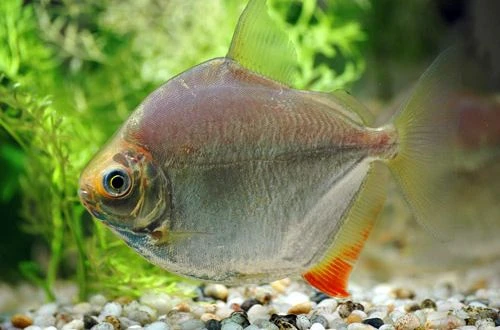
Other scientific names: Metynnis eigenmanni
Metynnis argenteus, known as the Silver Dollar or Silver Metynnis, belongs to the family Serrasalmidae, also called the Piranha family. This fish got its name due to its widespread popularity among North American aquarists. Indeed, young individuals, due to their rounded and flattened body shape, outwardly resemble the 1-dollar silver coins that were common in the USA in the 19th century. The silvery coloration only enhances this resemblance.
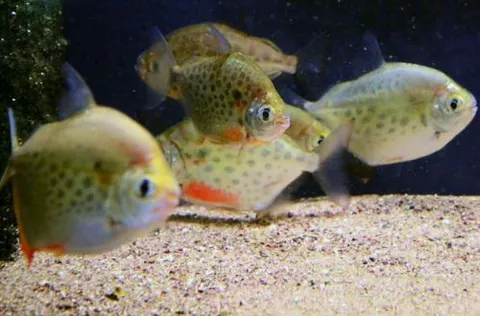
The Silver Metynnis is a large fish with a disc-shaped body, strongly compressed laterally. Its coloration is silvery, sometimes with a slight greenish tint under certain lighting, and a red color is observed on the anal fin. Small dots or speckles are often found on the sides of the body.
The species appears to be endemic to the Rio Tapajós drainage in Brazil, a tributary of the Amazon. The fish live in groups in water bodies with abundant vegetation, preferring mostly plant-based food, but may occasionally feast on small worms or insects.
This fish is peaceful and active, but it should not be kept with smaller species, as they may be attacked, and very small tankmates risk becoming prey. They should be kept in schools, with a group consisting of at least 5 individuals.
For comfortable keeping, a spacious aquarium, heavily planted, is necessary. However, vegetation should be placed along the walls, leaving enough open space for swimming. It's better to use artificial plants or fast-growing live species. The substrate should be sandy, supplemented with low decorative elements such as pieces of wood, roots, or snags. Silver Dollars are demanding regarding water quality, so an efficient filter is key to successful keeping. A heater made of shatterproof materials is recommended, as these active fish can accidentally break glass equipment or dislodge it. It is important to ensure all underwater equipment is securely fastened.
The diet of these fish should consist of foods with a high content of plant components. Specialized flakes or pellets are recommended. Protein products such as bloodworms or brine shrimp can be used as a supplement. It is important to remember that Silver Dollars can prey on smaller fish or their fry.
The Silver Metynnis is one of the few characin species that does not eat its own offspring, which eliminates the need for a separate breeding tank, provided no other fish species are present in the aquarium. Spawning is stimulated by maintaining a temperature in the range of 26–28°C, as well as water parameters: pH 6.0–7.0 with a hardness of at least 10 dH. If these are not met, several floating plants should be placed in the aquarium, as spawning will occur precisely in these thickets. The female lays up to 2000 eggs, which sink to the bottom. Fry emerge from them after just 3 days. They rush to the surface and will live there until they grow, and the thickets of floating plants will provide them protection in case the parents decide to feast on them. Fry should be fed micro-food.
The Silver Metynnis is highly resilient and generally does not encounter health problems if water quality requirements are met.
When selecting individuals, attention should be paid to the cleanliness of the scales and the absence of fin damage, as fish are prone to injuries when startled. Healthy Metynnis should be active, have clear eyes, and even breathing. Avoid purchasing fish with signs of lethargy, whitish coatings, or an unnaturally bloated abdomen. In the store, fish are often timid and may hide, but they should show feeding interest when food is offered. It is recommended to acquire a group of 5–6 individuals at once, as solitary keeping leads to significant stress and timidity.
The essentials: size, tank volume, water parameters and care
An adult reaches 15–18 cm in length. Plan the tank around the maximum size: the fish quickly outgrows a cramped setup.
The recommended volume is 300 L. A smaller tank speeds up nitrate build-up and raises stress levels.
Temperature 24–28 °C, pH 6–7, hardness 4–18 dGH. Stability matters more than exact values: sudden swings are harder on the fish than a small deviation from the ideal.
Around 10 years when kept properly. Lifespan depends directly on tank volume, water quality and a varied diet.
Temperament: semi-peaceful (dangerous to smaller ones). Not a predatory species, but small fish that fit in its mouth will eventually be eaten.
Recommended setup: small group (5–6 individuals). Ignoring this is a common cause of stress and disease.
Diet type: plant-based (algae, vegetables). Feed small portions that are finished within a couple of minutes — overfeeding does more harm than underfeeding.
The scientific name of the species is Metynnis argenteus, family Piranhas (Serrasalmidae). It also appears in the literature as: Metynnis eigenmanni.
Matched by family, categories and overlapping keeping conditions
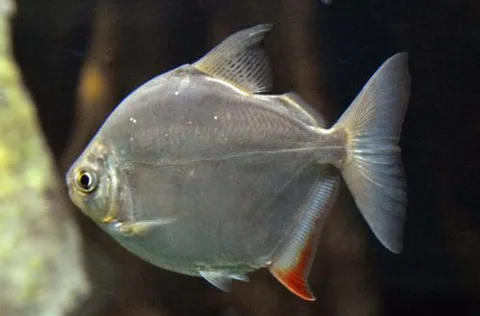
Metynnis hypsauchen
The Common Metynnis, also known by its scientific name Metynnis hypsauchen, belongs to the family Serrasalmidae, which also includes piranhas. However, unlike its formidable relatives, this fish exhibits much more…
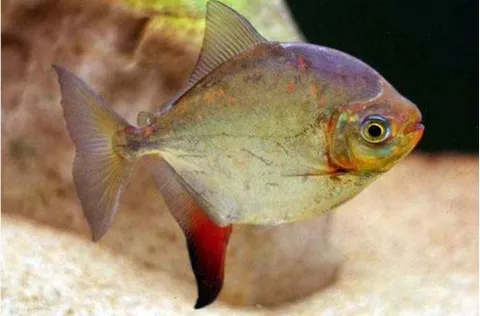
Myloplus rubripinnis
The Moon Myloplus, or Redhook Myloplus (scientific name Myloplus rubripinnis), belongs to the family Serrasalmidae, also known as the Piranha family. This is a large schooling fish that exhibits a peaceful temperament…
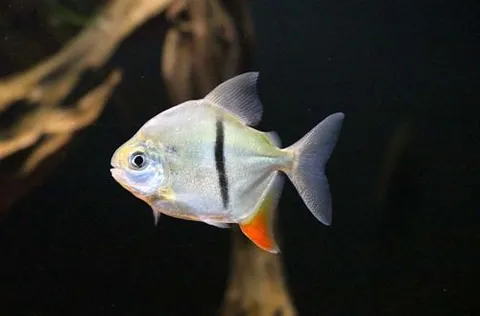
Myloplus schomburgkii
Myloplus schomburgkii, also known as the Schomburgk's Myloplus or Disk Tetra, bears the scientific name Myloplus schomburgkii and belongs to the family Serrasalmidae (Piranhas). This species is a herbivorous relative of…
Metynnis lippincottianus
Metynnis lippincottianus, or Lippincott's Metynnis, is a member of the family Serrasalmidae. Although this fish belongs to the piranha group, its temperament is significantly more peaceful than that of its famous…