Temperature23 – 27 °C
Natural range
- Amazon River Basin
- Brazil area
- Peru area
- Colombia area
CharacinsConservation status: Least concern LC
Other scientific names: Metynnis anisurus, Metynnis dungerni, Metynnis goeldii, Metynnis heinrothi, Metynnis orbicularis, Metynnis roosevelti
Metynnis lippincottianus, or Lippincott's Metynnis, is a member of the family Serrasalmidae. Although this fish belongs to the piranha group, its temperament is significantly more peaceful than that of its famous relatives, making it easier to keep. If you are looking for an aquatic inhabitant that looks predatory but is not, and can make an impression, then this species will be an ideal choice.
- Required aquarium volume
- 200 L
- Size in aquarium
- 13 cm
- Temperature
- 23 – 27 °C
- Temperament
- Semi-peaceful (including aggression during spawning / intraspecific conflicts)
Parameters
Water pHSlightly acidic (6) – Neutral (7)
Water dHVery soft (1) – Medium hardness (10)
Water salinityno salt (freshwater)
Size in aquarium13 cm
Lifespan10 years
TemperamentSemi-peaceful (including aggression during spawning / intraspecific conflicts)
Toward small fishnot a predator
Required aquarium volume200 L
Lightingdimmed
Substrateany (no restrictions)
Water flowmoderate
FeedingPlant-based (algae, vegetables)
CareSmall group (5–6 individuals)
Description
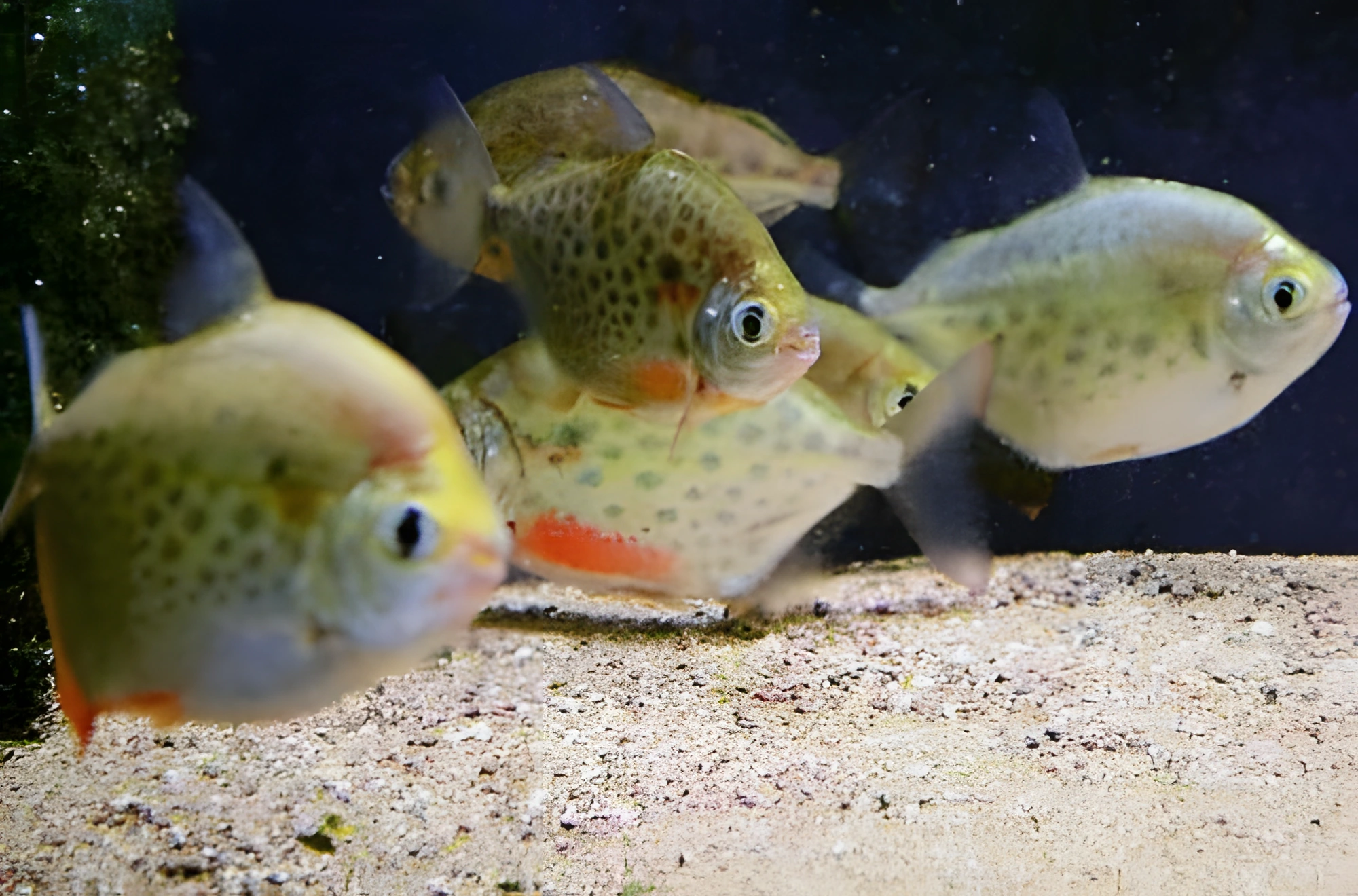
Adults reach approximately 13 cm in length. Young fish are often confused with another related species, the Silver Dollar, when sold, as they are very similar in appearance. However, with age, the differences become more apparent, and the fish acquires a resemblance to the Spotted Metynnis. Both of these species are almost identical, having a similar discoid body shape, strongly compressed laterally, as well as a spotted pattern on a silvery or gray background, a reddish anal fin, and a reddish lower part of the head and chest. Distinguishing them is extremely important, as their keeping requirements are different. Lippincott's Metynnis can be identified by a characteristic dark spot behind the head, which stands out against other, paler speckles. In males, unlike females, the first rays of the anal fins are slightly elongated, forming a distinct appendage, and during spawning, the red pigment becomes noticeably brighter.
Habitat
This species originates from South America. Its exact distribution in nature is still not established, but it is believed to be found throughout the middle and lower reaches of the Amazon River basin. Metynnis prefers to inhabit both main channels and numerous tributaries, especially in areas with dense riparian vegetation.
Behavior and Compatibility
This schooling fish prefers to live in groups of no less than 5 individuals. It is peaceful towards other species if they are comparable in size or slightly larger. Any fish that can fit into their mouth will be considered food. Therefore, species that inhabit the water column or the bottom should be chosen as tankmates.
Care and Maintenance
For a small group of Metynnis, an aquarium of at least 200 L will be required, and it is important that its width and length exceed its height. The design follows a simple principle: the more vegetation, the better. However, this is where the main difficulty lies: the diet of Lippincott's Metynnis does not allow for the use of most live aquarium plants, as they will be eaten or severely damaged. In such a situation, artificial plants will be an excellent solution. Among other important aspects to consider are subdued lighting and the presence of a moderate internal current. Long-term and successful keeping of these fish directly depends on maintaining stable water parameters within an acceptable range of temperatures and hydrochemical characteristics. The stability of the aquatic environment is ensured by the uninterrupted operation of the installed equipment and systematic performance of mandatory maintenance procedures. These include weekly partial water changes with fresh water and timely removal of organic waste.
Diet
Although this species is considered omnivorous, its natural diet implies that the daily menu in an aquarium environment should include both plant-based foods and protein-containing supplements. The latter include bloodworms, small earthworms, insect larvae, and so on.
Breeding and Reproduction
To date, there have been no recorded successful breeding cases of this species in home aquariums.
Diseases
This fish is known for its unpretentiousness and hardiness. Health problems usually arise due to injuries, inadequate nutrition, or unsuitable water parameters. If signs of illness appear, such as lethargy, changes in body shape, or loss of appetite, it is often sufficient to normalize the living conditions for the fish's body to cope with the problem itself. However, in some cases, medication may be required. More detailed information on symptoms and treatment methods can be found in the "Aquarium Fish Diseases" section.
How to choose
When selecting individuals, attention should be paid to the cleanliness of the skin and fins: there should be no ulcers, white film, or signs of damage on the body. Healthy fish are active, stay in a school, and have a good appetite. Avoid specimens with sunken bellies, signs of emaciation, or unnatural behavior, such as constant swimming at the surface or listing to one side. Given the external similarity to closely related species, it is important to ensure that the seller has correctly identified the fish, as requirements for keeping conditions may vary.
Frequently asked questions
The essentials: size, tank volume, water parameters and care
How big does Lippincott's Metynnis get?
An adult reaches 13 cm in length. Plan the tank around the maximum size: the fish quickly outgrows a cramped setup.
What size aquarium does Lippincott's Metynnis need?
The minimum recommended volume is 200 L. A smaller tank speeds up nitrate build-up and raises stress levels.
What water parameters does Lippincott's Metynnis need?
Temperature 23–27 °C, pH 6–7, hardness 1–10 dGH. Stability matters more than exact values: sudden swings are harder on the fish than a small deviation from the ideal.
How long does Lippincott's Metynnis live?
Around 10 years when kept properly. Lifespan depends directly on tank volume, water quality and a varied diet.
Is Lippincott's Metynnis aggressive?
Temperament: semi-peaceful (including aggression during spawning / intraspecific conflicts). Keep this in mind when choosing tank mates.
How many Lippincott's Metynnis should be kept together?
Recommended setup: small group (5–6 individuals). Ignoring this is a common cause of stress and disease.
What does Lippincott's Metynnis eat?
Diet type: plant-based (algae, vegetables). Feed small portions that are finished within a couple of minutes — overfeeding does more harm than underfeeding.
What is the scientific name of Lippincott's Metynnis?
The scientific name of the species is Metynnis lippincottianus, family Piranhas (Serrasalmidae). It also appears in the literature as: Metynnis anisurus, Metynnis dungerni, Metynnis goeldii.