Температура16 – 24 °C
Ареал в природе
- Vietnam area
- Southern China area
КарповыеОхранный статус: Вызывает наименьшие опасения LC
Другие научные названия: Barbus aureus, Barbus hainani, Barbus semifasciolatus, Capoeta semifasciolata, Puntius semifaciolatus, Puntius semifasciolata
Из семейства Cyprinidae происходит Золотой Барбус, известный в науке как Barbodes semifasciolatus. Эта рыбка является одной из наиболее востребованных в пресноводных аквариумах. Интересно, что её золотистая окраска — это результат искусственной мутации, появившейся в 60-х годах 20-го века благодаря целенаправленной селекционной работе.
- Необходимый объём аквариума
- 100 л
- Размер в аквариуме
- 7 см
- Температура
- 16 – 24 °C
- Темперамент
- Мирный, активный/подвижный
Параметры
pH водыСлабокислая (6) – Слабощелочная (8)
dH водыМягкая (4) – Очень жёсткая (18)
Солёность водыбез соли (пресноводные)
Размер в аквариуме7 см
Продолжительность жизни5 лет
ТемпераментМирный, активный/подвижный
К мелкой рыбене хищник
Необходимый объём аквариума100 л
Освещениеприглушённое
Субстратпесчаный (обычный, светлый)
Течение водынет или стоячая (отсутствие потока)
ПитаниеРастительные с мясными добавками
СодержаниеГруппа (8–10 особей)
Описание
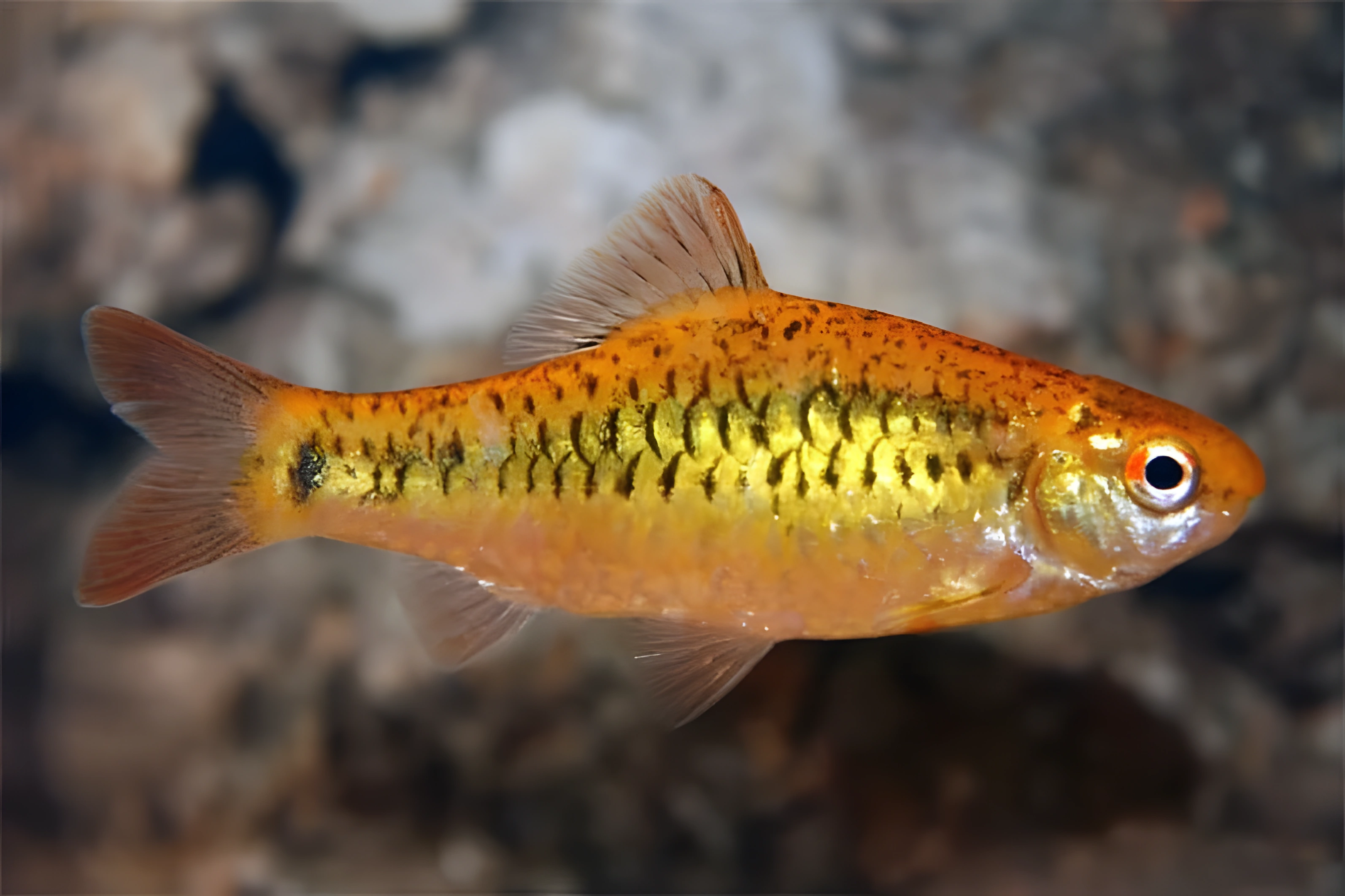
Adult individuals of this species generally reach a length of about 7 cm. Sexual dimorphism is subtle, making it challenging to distinguish males from females visually. As previously mentioned, the wild form displays a silvery hue with a greenish sheen, and a reddish tint may be present on the belly. In contrast, the selectively bred variety boasts a rich orange-yellow coloration, with the edges of some scales appearing darker.
Среда обитания
Wild populations of this species are found across Vietnam, southern China, northern Laos, and the far-eastern regions of Russia. These fish inhabit small rivers and various stagnant water bodies, including swamps, river backwaters, ditches, and irrigation canals. They typically prefer shallow, coastal areas that feature dense aquatic vegetation.
Поведение и совместимость
This peaceful and active fish coexists well with other species of similar size and temperament. They thrive in schools. Within a group of 8–10 individuals of both sexes, an internal hierarchy forms, compelling males to compete for the attention of females, which in turn intensifies the vibrancy of their coloration.
Содержание и уход
The 'Golden' form of the Barb is recognized as one of the most resilient and low-maintenance species in contemporary aquaristics. For a group of 8-10 fish, a tank volume of at least 100 liters is recommended. While any setup is acceptable, an optimal configuration includes a dark substrate and a moderate amount of floating plants that cover about half of the water's surface. In such environments, coupled with a balanced diet, these fish exhibit their most vibrant colors. Standard equipment typically comprises filtration and lighting systems. In most residential settings, a heater is not necessary for this species. Water conditions should feature a gentle internal current. The broad acceptable ranges for temperature, pH, and GH mean that water preparation is minimal; allowing tap water to sit for a day before use is usually sufficient. Aquarium maintenance involves a weekly partial water change (20–25% of the total volume), regular cleaning of the substrate to remove organic waste, and wiping algae from the glass.
Питание
The Golden Barb is an undemanding species, readily consuming a variety of dry, frozen, and live foods. A crucial aspect of their daily diet is the inclusion of plant-based supplements. Feeding should occur 2–3 times a day, with portions consumed within 5 minutes. Timely removal of any uneaten food is essential to prevent excessive water pollution. Aqvium flake food for aquarium fish Discover our newest product, a bestseller on Ozon with a 4.9 rating. This flake food is suitable for most aquarium fish. The raw ingredients adhere to new European Union standards (EU 2018/848). It is enriched with vitamins A, C, D3, E, and Omega 3-6. Purchase on Ozon
Разведение и размножение
Golden Barbs are egg-scattering spawners; females release their eggs into the water column, where males then fertilize them. Parental instincts are poorly developed, and adults may consume their own eggs and fry shortly after spawning. For successful breeding, it is advisable to use a separate breeding tank to protect the offspring from the adult fish. The setup should be simple, with particular attention paid to the substrate. It should consist of sufficiently large particles, such as pebbles or decorative glass beads, that do not fit tightly together, thereby creating spaces. As the eggs sink, many will fall into these crevices, becoming inaccessible to the fish. A similar protective effect can be achieved by securing a fine-mesh net to the tank bottom. Alternatively, dense growths of low-growing, fine-leaved plants or mosses, like Riccia fluitans or Java moss, covering a large portion of the substrate (in which case any substrate type is suitable), provide excellent cover for the eggs. A typical breeding tank volume is 20–30 liters, filled halfway. Equipment includes a heater and a simple air-driven filter to prevent accidental suction of eggs and fry. Spawning often occurs under dim lighting, eliminating the immediate need for a light source. To stimulate breeding behavior, set the water temperature near the upper acceptable limit of 23–24°C, maintain neutral to slightly acidic pH values, and enrich the daily diet with protein-rich foods like bloodworms, daphnia, or brine shrimp, either live or frozen. After some time, females will appear noticeably rounded, and males will actively court their chosen partners. At this point, prepare a separate tank, filling it with water from the main aquarium, then transfer a few females and the most colorful males. The end of spawning is most easily observed when the females become noticeably slender. The fish should then be returned to the main tank. Fry will emerge within 24–48 hours and begin free-swimming a day later. Feed them specialized microscopic fry food or Artemia nauplii.
Болезни
A balanced diet and appropriate living conditions are the best defense against diseases in freshwater fish. Therefore, if initial symptoms of illness (such as changes in coloration or behavior) appear, the first step should be to assess water quality and conditions, restoring optimal parameters as needed, before proceeding with any treatment. For detailed information on symptoms and treatment methods, consult the “Diseases of Aquarium Fish” section. Source: FishBase
Как выбрать
При покупке выбирайте активных, подвижных особей с чистыми чешуйками и целыми плавниками. Избегайте рыб с видимыми белыми пятнами, налетом, язвами или признаками истощения, так как это может указывать на наличие инфекционных заболеваний. В магазине рыбы должны проявлять любопытство и держаться вместе, если они содержатся в группе. Рекомендуется приобретать особей, которые выглядят ярко окрашенными и проявляют интерес к корму, предложенному продавцом.
Частые вопросы
Коротко о главном: размер, объём аквариума, параметры воды и уход
Какого размера вырастает Золотой Барбус?
Взрослая особь достигает 7 см в длину. Планируя аквариум, ориентируйтесь на максимальный размер: рыба быстро перерастает тесную ёмкость.
Золотой Барбус: какой нужен аквариум?
Минимальный рекомендуемый объём — 100 л. Меньший объём ускоряет накопление нитратов и повышает уровень стресса у рыбы.
Золотой Барбус: какие параметры воды нужны?
Температура 16–24 °C, кислотность pH 6–8, жёсткость 4–18 dGH. Важнее абсолютных значений стабильность: резкие перепады переносятся тяжелее, чем небольшое отклонение от нормы.
Сколько живёт Золотой Барбус?
При правильном содержании — около 5 лет. Срок жизни напрямую зависит от объёма аквариума, качества воды и разнообразия рациона.
Золотой Барбус: агрессивный вид или мирный?
Темперамент: мирный, активный/подвижный. Это стоит учитывать при подборе соседей по аквариуму.
Золотой Барбус: сколько особей держать вместе?
Рекомендуемый формат содержания: группа (8–10 особей). Нарушение этого условия — частая причина стресса и болезней.
Золотой Барбус: чем кормить?
Тип питания: растительные с мясными добавками. Кормите небольшими порциями, которые съедаются за пару минут, — перекорм вреднее недокорма.
Как называется Золотой Барбус по-латыни?
Научное название вида — Barbodes semifasciolatus, семейство Карповые (Cyprinidae). В литературе также встречаются названия: Barbus aureus, Barbus hainani, Barbus semifasciolatus.