Temperature24 – 28 °C
Natural range
- Alta Verapaz Department area
- Chajmaic-Cahabon River System
LivebearersConservation status: Vulnerable VU
Other scientific names: Xiphophorus helleri
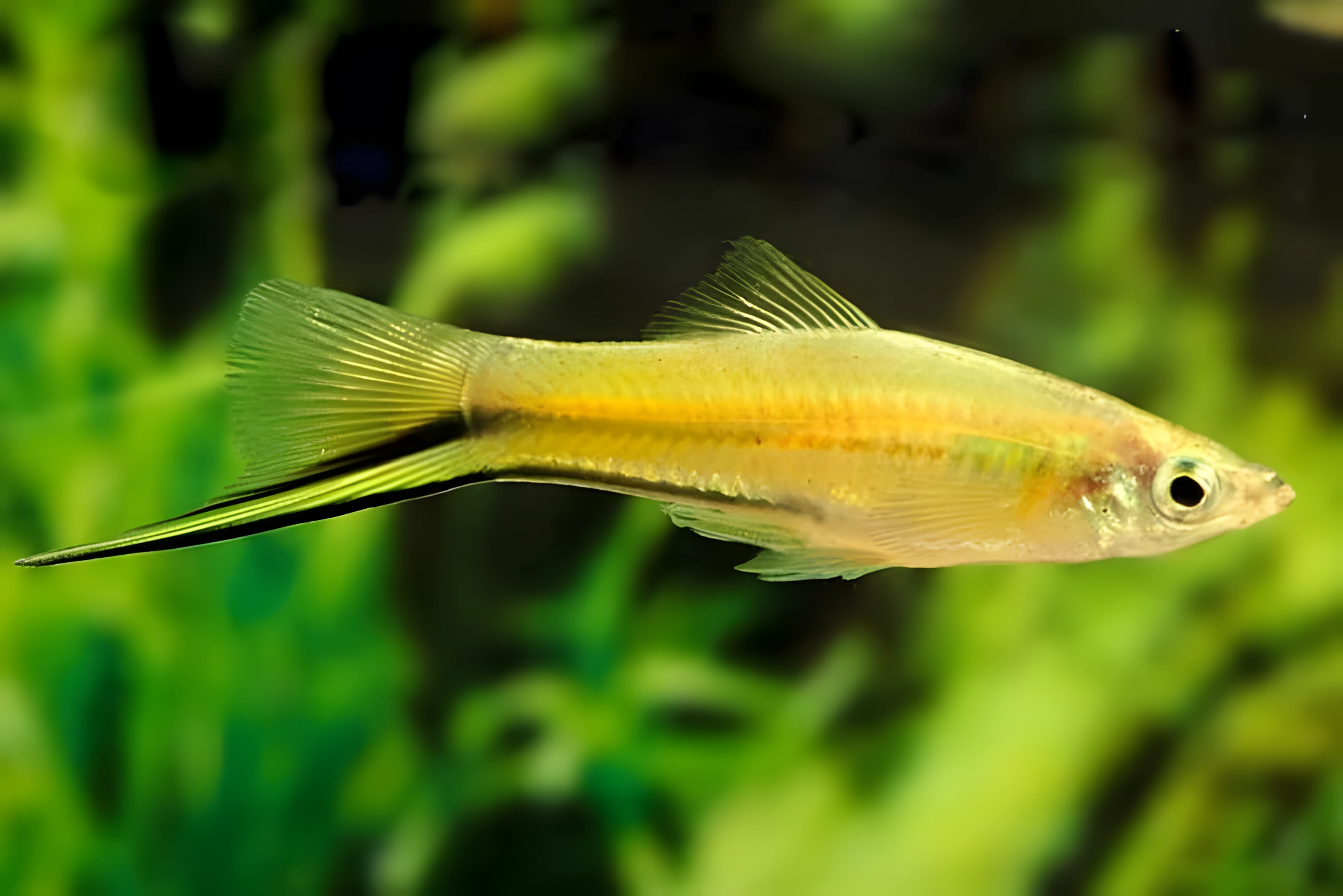
Xiphophorus signum, known as the Golden Swordtail, belongs to the family Poeciliidae. The Latin name "signum" translates as "sign" or "distinguishing feature," which accurately describes the characteristic black mark located on the lower base of the tail in females. In males, this mark merges with the black border framing the "sword." This mark serves as a reliable identifier, allowing the Golden Swordtail to be distinguished from other species and ornamental forms with similar yellow body coloration.
- Required aquarium volume
- 100 L
- Size in aquarium
- 7 – 10 cm
- Temperature
- 24 – 28 °C
- Temperament
- Peaceful (regular)
Parameters
Water pHNeutral (7) – Slightly alkaline (8)
Water dHMedium hardness (10) – Very hard (20)
Water salinityno salt (freshwater)
Size in aquarium7 – 10 cm
Lifespan5 years
TemperamentPeaceful (regular)
Toward small fishnot a predator
Required aquarium volume100 L
Lightingweak (low)
Substrateany (no restrictions)
Water flowmoderate
FeedingAny (universal)
CareMixed (solitary / pair / group)
Description
The Golden Swordtail has an elongated body, characteristic of the genus Xiphophorus. Males reach a length of about 7.5 cm, not including the sword-like appendage on the tail, which adds another 3–4 cm. Females are larger and can grow up to 10 cm. A distinctive feature of the species is the black mark on the lower part of the caudal fin base. In males, this pattern often merges with the dark border running along the edge of the sword. The body coloration is predominantly yellow-golden.
Habitat
This species originates from Central America, where the fish inhabits small river systems such as the Cahabon and Pasion. These rivers flow mainly in the Guatemalan department of Alta Verapaz. Golden Swordtails prefer areas with strong currents, finding shelter and food among dense thickets of aquatic vegetation.
Behavior and Compatibility
Golden Swordtails usually coexist peacefully with other species. They are compatible with any aquarium inhabitants that do not pose a threat to them and can live in similar conditions. Within their own species, there are no conflicts between fish, except for rivalry between males. In small aquariums, their competition can become overly aggressive. The optimal solution is to keep one male surrounded by several females.
Care and Maintenance
For a group of 3–4 Golden Swordtails, an aquarium of at least 100 liters is optimal. It is important to provide a sufficient number of shelters, which is easily achieved by densely planting undemanding plants, including floating ones. Maintaining an internal current in the aquarium has a beneficial effect on the fish's tone. The Golden Swordtail needs warm, alkaline water with high hardness and is extremely sensitive to organic pollution. Therefore, it is critically important to keep the water clean, preventing the accumulation of uneaten food and excrement. Maintaining proper water quality is ensured by regular aquarium maintenance combined with an efficient filtration system. In terms of nutrition, the Golden Swordtail is an omnivorous species; most popular aquarium foods are suitable for it. It is recommended to feed the fish once or twice a day, giving an amount of food that will be eaten in approximately five minutes. Overfeeding is unacceptable, as swordtails are prone to constant food consumption, which can lead to obesity and health problems.
Diet
The species is omnivorous and readily accepts any quality foods in aquarium conditions: dry flakes, granules, as well as frozen or live foods such as Artemia, bloodworms, and tubifex. The fish are highly active eaters and prone to overeating. It is recommended to feed them 1–2 times a day in small portions that are eaten within a few minutes, to prevent obesity, which can lead to infertility.
Breeding and Reproduction
Golden Swordtails do not lay eggs; females give birth to fully formed fry that are immediately ready for independent life. This makes breeding this species surprisingly simple, accessible even to beginner aquarists. Under favorable conditions, fry will appear every 1–2 months. To protect offspring from predation by adult fish, it is advisable to transfer the fry to a separate tank.
Diseases
The species is sensitive to water quality and the accumulation of organic compounds, which can provoke bacterial infections and general deterioration. Regular water changes and effective filtration are the main methods of prevention. If the keeping parameters are not met, the fish are susceptible to stress, reduced immunity, and parasite infestations. It is important to maintain stable hardness and alkaline water reaction, avoiding sharp fluctuations in conditions.
How to choose
When choosing individuals, attention should be paid to their activity and the cleanliness of their skin. Healthy fish should be active, with tightly pressed fins and no white film or sores on the body. Avoid purchasing fish that appear sluggish, stay at the surface, or show signs of emaciation. It is advisable to acquire a group of individuals, observing a proportion where there are several females per male, to minimize intraspecific aggression.
Frequently asked questions
The essentials: size, tank volume, water parameters and care
How big does Golden Swordtail get?
An adult reaches 7–10 cm in length. Plan the tank around the maximum size: the fish quickly outgrows a cramped setup.
What size aquarium does Golden Swordtail need?
The minimum recommended volume is 100 L. A smaller tank speeds up nitrate build-up and raises stress levels.
What water parameters does Golden Swordtail need?
Temperature 24–28 °C, pH 7–8, hardness 10–20 dGH. Stability matters more than exact values: sudden swings are harder on the fish than a small deviation from the ideal.
How long does Golden Swordtail live?
Around 5 years when kept properly. Lifespan depends directly on tank volume, water quality and a varied diet.
Is Golden Swordtail aggressive?
Temperament: peaceful (regular). Keep this in mind when choosing tank mates.
How many Golden Swordtail should be kept together?
Recommended setup: mixed (solitary / pair / group). Ignoring this is a common cause of stress and disease.
What does Golden Swordtail eat?
Diet type: any (universal). Feed small portions that are finished within a couple of minutes — overfeeding does more harm than underfeeding.
What is the scientific name of Golden Swordtail?
The scientific name of the species is Xiphophorus signum, family Poeciliidae. It also appears in the literature as: Xiphophorus helleri.