Temperature18 – 24 °C
CyprinidsConservation status: Least concern LC
Other scientific names: Barilius rerio, Brachydanio frankei, Brachydanio rerio, Cyprinus chapalio, Cyprinus rerio, Danio frankei
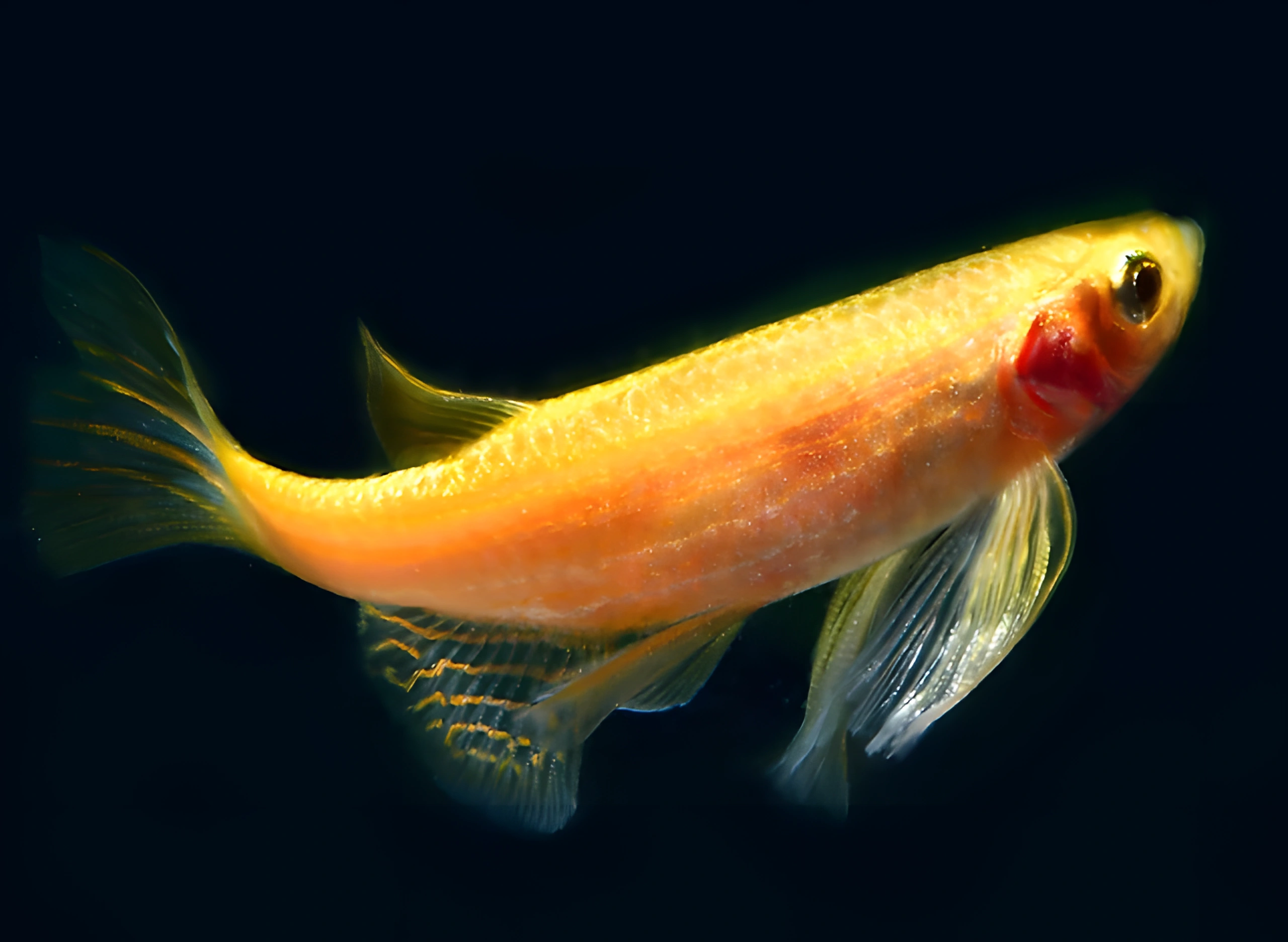
A representative of the Cyprinidae family, known as the Gold Danio, bearing the scientific name Danio rerio, is similar in appearance and behavior to its brethren, with the exception of one important feature – its golden coloration with white stripes. This form is a result of artificial selection and does not occur in natural conditions. Nevertheless, the fish is distinguished by significant hardiness, which makes it an excellent choice for beginner aquarists.
- Required aquarium volume
- 40 L
- Size in aquarium
- 4 – 6 cm
- Temperature
- 18 – 24 °C
- Temperament
- Peaceful, active/mobile
Parameters
Water pHSlightly acidic (6) – Slightly alkaline (8)
Water dHSoft (5) – Very hard (19)
Water salinityno salt (freshwater)
Size in aquarium4 – 6 cm
Lifespan4 years
TemperamentPeaceful, active/mobile
Toward small fishnot a predator
Required aquarium volume40 L
Lightingdimmed
Substraterocky (rock formations, boulders, etc.)
Water flowmoderate
FeedingFloating (any)
CareSchooling (usually from 5–6 individuals and more)
Description
The fish's body is slender and slightly flattened laterally. A typical feature of many cyprinids is the presence of barbels at the ends of each lip. Certain selective forms are distinguished by elongated fins. While Danio rerio has dark blue stripes, the Gold Danio has a golden body with white stripes that extend from head to tail.
Habitat
The Gold Danio, absent in the wild, is actively bred in specialized nurseries for the aquarium industry by altering the coloration of the common Danio rerio.
Behavior and Compatibility
This peaceful and gregarious fish thrives in a group of equally active and small inhabitants. Slower-moving tankmates may experience discomfort due to the constant activity of the Danios. The exception is bottom-dwelling species, which will not be disturbed by their presence in the lower water layers. It is recommended to keep a school of at least 5 individuals; if there are fewer, the fish often become less active, and their coloration fades.
Care and Maintenance
This fish is undemanding regarding keeping conditions; it is sufficient to follow a few simple rules: ensure water cleanliness (a monthly partial water change of a quarter of the volume is recommended), create space for swimming in the upper layers, and maintain a gentle current, which is easily achieved even with low-power filters. A heater is generally not needed, as the fish feels quite comfortable at room temperatures of 18°C and above. The aquarium must be covered with a lid, as Danios can jump out of the water during active play. Lighting should be subdued.
Diet
The fish's diet is quite broad: it readily consumes both live foods (such as bloodworms, tubifex) and frozen or dry foods. It is important that the food remains on the water's surface, so flakes, pellets, and tablets that sink quickly are not recommended. Food remnants that settle to the bottom will remain uneaten unless there are other bottom-feeding inhabitants in the aquarium, such as shrimp or catfish.
Breeding and Reproduction
Golden Danios, like other members of their genus, are relatively easy to breed in an aquarium. Before spawning, these fish form a pair, and at this stage, they should be moved to a separate tank. First, the female, who is larger and has a rounder abdomen, is introduced, and then, a day later, the male is added. For this separate tank, a minimum volume of 20 liters is required. It is advisable to cover the bottom with large stones or glass marbles about 1 cm in diameter. A few potted plants will help decorate the environment. In terms of equipment, an air pump or a simple air-lift filter will suffice, as a regular filter poses a risk to the fry. Once the pair is in the new tank, adding a couple of glasses of cold water will simulate the rainy season, stimulating spawning. The female releases her eggs directly into the water, after which the male fertilizes them. The eggs, as they sink, roll into the gaps between the stones or marbles, which effectively protects them from being eaten by the parents. After spawning is complete, the pair should be returned to the main aquarium. Fry can be expected within 7 days.
Diseases
Golden Danio, despite its artificial origin, retains the hardiness of the classic Zebra Danio, so under optimal conditions, diseases are extremely rare. However, if conditions deteriorate, the external integuments of the body are primarily affected by various fungal and bacterial infections. A detailed description of symptoms and treatment methods can be found in the section "Diseases of Aquarium Fish."
How to choose
When choosing Golden Danios in a store, it's important to assess the overall activity of the school: healthy fish should be active and constantly moving throughout the water column. Avoid individuals with damaged fins, film on the body, ulcers, or an unnaturally swollen abdomen. Pay attention to their behavior: sluggish fish that stay at the bottom or at the surface alone are often a sign of illness or stress. It is recommended to purchase a group of 5–6 individuals at once, as solitary keeping negatively affects their health and coloration.
Frequently asked questions
The essentials: size, tank volume, water parameters and care
How big does Gold Danio get?
An adult reaches 4–6 cm in length. Plan the tank around the maximum size: the fish quickly outgrows a cramped setup.
What size aquarium does Gold Danio need?
The minimum recommended volume is 40 L. A smaller tank speeds up nitrate build-up and raises stress levels.
What water parameters does Gold Danio need?
Temperature 18–24 °C, pH 6–8, hardness 5–19 dGH. Stability matters more than exact values: sudden swings are harder on the fish than a small deviation from the ideal.
How long does Gold Danio live?
Around 4 years when kept properly. Lifespan depends directly on tank volume, water quality and a varied diet.
Is Gold Danio aggressive?
Temperament: peaceful, active/mobile. Keep this in mind when choosing tank mates.
How many Gold Danio should be kept together?
Recommended setup: schooling (usually from 5–6 individuals and more). Ignoring this is a common cause of stress and disease.
What does Gold Danio eat?
Diet type: floating (any). Feed small portions that are finished within a couple of minutes — overfeeding does more harm than underfeeding.
What is the scientific name of Gold Danio?
The scientific name of the species is Danio rerio, family Cyprinids (Cyprinidae). It also appears in the literature as: Barilius rerio, Brachydanio frankei, Brachydanio rerio.