Temperature21 – 27 °C
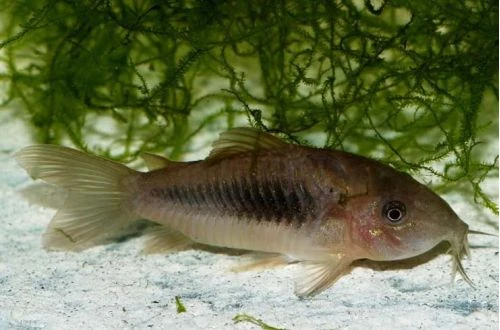
Other scientific names: Callichthys aeneus, Corydoras aeheus, Corydoras aenaeus, Corydoras macrosteus, Corydoras microps, Corydoras schultzei
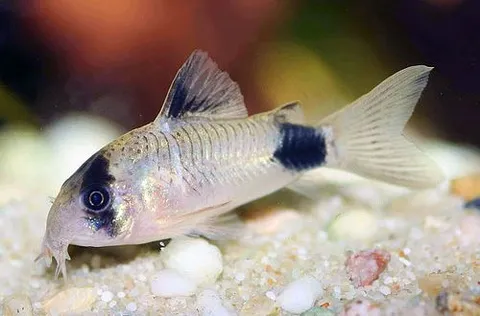
The Bronze Corydoras, also known by its scientific name Corydoras aeneus, is a member of the armored catfish family (Callichthyidae). This species is among the most popular and readily available aquarium fish. Its modest coloration is more than compensated by its peaceful nature and undemanding care; the catfish demonstrates excellent adaptation to various water parameters.
The catfish has a high and short body, protected by an armor of bony plates arranged in two rows. Adult females are usually significantly larger and wider than males, which becomes especially noticeable during spawning. The coloration is predominantly uniform, with golden or bronze hues; other similar color variations are also common, including albino catfish.
The natural habitat of the Bronze Corydoras covers most of the river systems of the South American continent. Thanks to many years of captive breeding practice worldwide, it is virtually impossible to find wild-caught specimens for sale.
This is a peaceful and calm species, recommended for keeping in groups of at least 4 individuals. Bronze Corydoras coexist perfectly with other non-aggressive fish species.
A community tank with a soft substrate made of coarse sand is suitable for keeping these catfish; fine gravel can also be used. There are no strict requirements for the rest of the decor, but the presence of shelters in the form of driftwood and dense plant thickets will be welcomed. Water parameters are not critical as long as they remain within an acceptable range. The necessary minimum equipment includes a filter, heater, aerator, and lighting system; additional devices are installed as needed, based on the needs of other aquarium inhabitants. Weekly maintenance involves cleaning the substrate of organic waste (e.g., uneaten food particles, excrement) and performing a 15–20% water change. In sparsely populated aquariums or with a high-performance filtration system, the intervals between water changes can be extended.
Any type of food — dry, live, or frozen — will be suitable. The key requirement is that the food must be sinking, as the Bronze Corydoras prefers to feed at the bottom and does not rise to the surface for food. An optimal diet is formed by a combination of several types of food. It is recommended to feed the fish 2–3 times a day with an amount that will be eaten within 5 minutes. It is important to regularly remove all food remnants from the aquarium.
The onset of imminent spawning can be determined by a significantly enlarged female's abdomen. From the moment this sign is observed, it is recommended to change up to 50% of the water volume daily, gradually lowering the temperature by 2–3 degrees below normal. Be sure to increase aeration by adding additional diffusers. These measures should continue until the female lays her eggs, usually attaching them to glass or dense plant leaves. The eggs should be carefully transferred to a separate container, for example, a simple glass jar filled with water from the main aquarium. Fry appear after 3–4 days; initially, they feed on the remnants of the yolk sac, and then they are ready to accept micro-food (such as Artemia nauplii or infusoria).
This species is highly resilient and undemanding. Cases of disease are extremely rare and occur only when kept in a neglected, dirty aquarium or as a result of contact with already sick fish. Under favorable conditions, health problems are usually absent.
When selecting individuals, attention should be paid to the activity of the fish and the cleanliness of their skin. Healthy corydoras should show interest in foraging, actively move along the bottom, and have no visible damage, ulcers, white film, or signs of fin rot on their bodies. It is important to check the condition of their barbels: they should be intact, without signs of erosion or shortening, which often indicates poor keeping conditions in the store. Avoid purchasing fish that appear emaciated, have sunken bellies, or exhibit apathetic behavior, constantly hovering in the water column or near the surface. It is recommended to acquire individuals from the same batch, as corydoras are schooling fish that feel most comfortable in a group of their own kind. Be cautious of specimens with unnaturally bright coloration, as some individuals in trade may have been artificially colored through injections.
The essentials: size, tank volume, water parameters and care
An adult reaches 7 cm in length. Plan the tank around the maximum size: the fish quickly outgrows a cramped setup.
The recommended volume is 70 L. A smaller tank speeds up nitrate build-up and raises stress levels.
Temperature 21–27 °C, pH 6–8, hardness 5–18 dGH. Stability matters more than exact values: sudden swings are harder on the fish than a small deviation from the ideal.
Around 10 years when kept properly. Lifespan depends directly on tank volume, water quality and a varied diet.
Temperament: peaceful (regular). Keep this in mind when choosing tank mates.
Recommended setup: small group (5–6 individuals). Ignoring this is a common cause of stress and disease.
Diet type: sinking (any). Feed small portions that are finished within a couple of minutes — overfeeding does more harm than underfeeding.
The scientific name of the species is Corydoras aeneus, family Armored Catfish (Callichthyidae). It also appears in the literature as: Callichthys aeneus, Corydoras aeheus, Corydoras aenaeus.
Matched by family, categories and overlapping keeping conditions
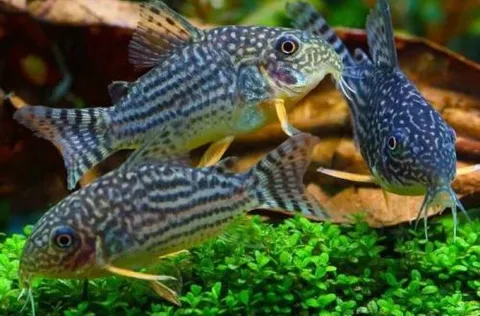
Corydoras sterbai
Sterba's Corydoras, scientifically known as Corydoras sterbai, belongs to the family Callichthyidae, also called Armored or Callichthid Catfish. This fish originates from South America, specifically found in the Guaporé…
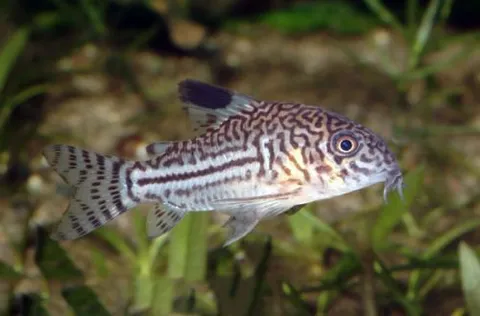
Corydoras trilineatus
Corydoras trilineatus, known as the leopard or three-stripe corydoras catfish, belongs to the family Callichthyidae. The habitat of this species covers the Amazon River basin, extending through Colombia, Peru, and…
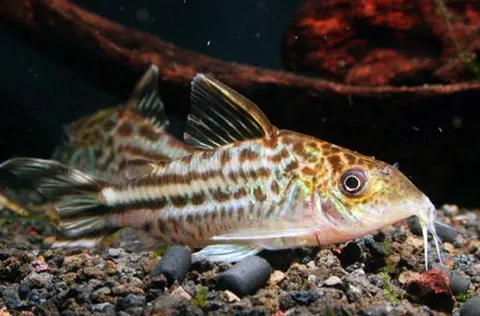
Corydoras robineae
The Flagtail Corydoras, also known as Robin's Corydoras (scientific name Corydoras robineae), belongs to the family Callichthyidae. These fish originate from the vast waters of the Rio Negro — a huge left tributary of…
Corydoras panda
The Panda Corydoras, widely known as the Panda Catfish or Panda Cory (scientific name Corydoras panda), belongs to the family Callichthyidae. These fish originate from the upper Amazon River basin, where the foothills…