Temperature24 – 28 °C
Natural range
- Guyana area
- Suriname area
- French Guiana area
- Amazon Basin
CharacinsConservation status: Least concern LC
Other scientific names: Hemigrammus armstrongi
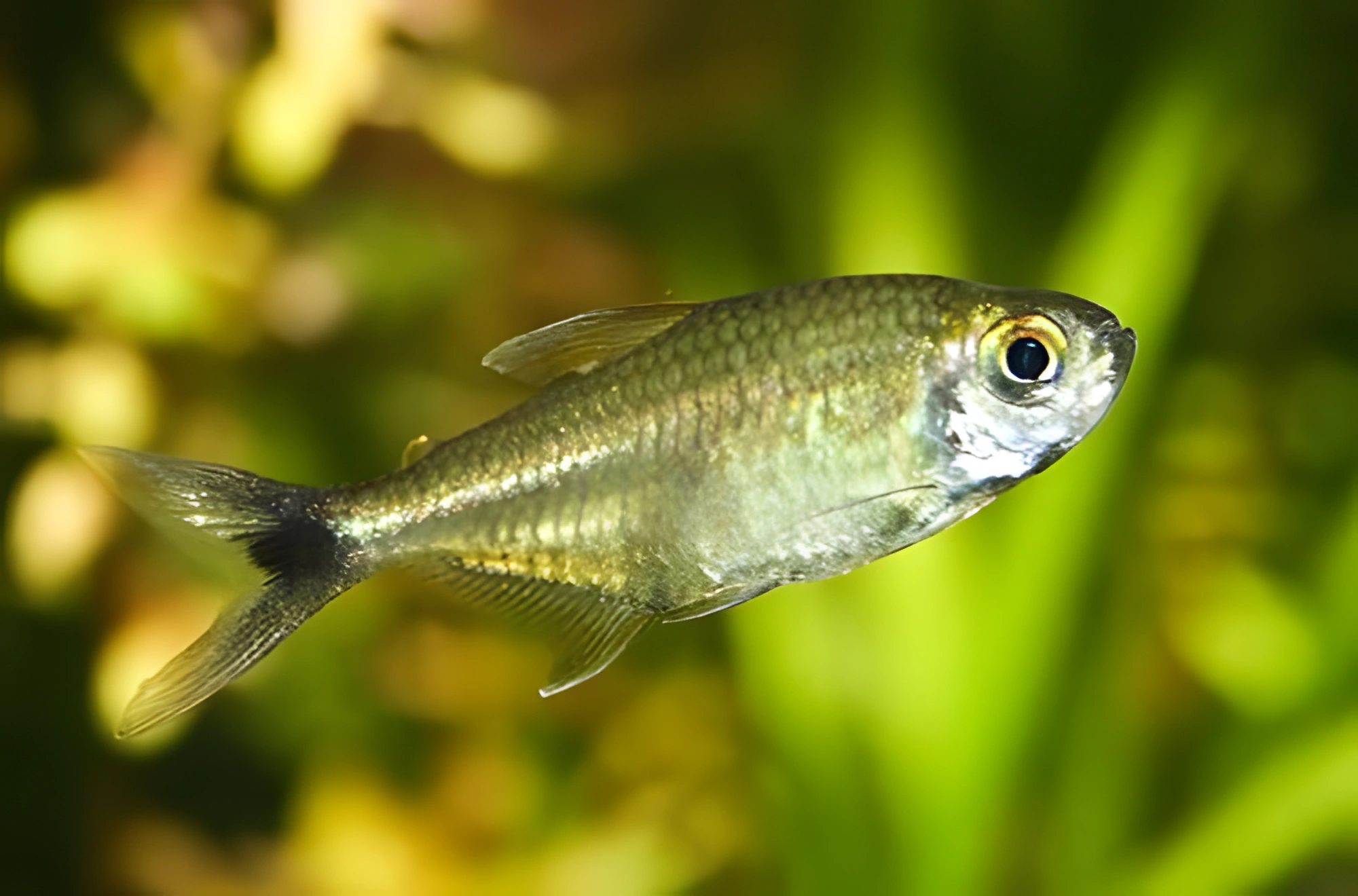
The Golden Tetra, scientifically known as Hemigrammus rodwayi, belongs to the Characidae family. This fish gets its name from its bright golden scales. In reality, this "gilded" effect is due to the presence of guanine—a special substance found in the skin of Tetras, which also serves as protection against parasites.
- Required aquarium volume
- 60 L
- Size in aquarium
- 4 – 5.3 cm
- Temperature
- 24 – 28 °C
- Temperament
- Peaceful (regular)
Parameters
Water pHSlightly acidic (6) – Neutral (7.5)
Water dHVery soft (1) – Hard (12)
Water salinityno salt (freshwater)
Size in aquarium4 – 5.3 cm
Lifespan5 years
TemperamentPeaceful (regular)
Toward small fishnot a predator
Required aquarium volume60 L
Lightingnight lighting
Substrateany (no restrictions)
Water flowmoderate
FeedingAny (universal)
CareSchooling (usually from 5–6 individuals and more)
Description
This miniature species reaches a length of no more than 4 cm in the aquarium. Its main feature is the unique golden hue of its scales, created by special substances on its body that protect against external parasites. A dark spot can be seen at the base of the tail. The dorsal and anal fins are also golden, with white tips and thin red rays running along the fin. The fish's coloration directly depends on its origin: wild-caught specimens retain their golden color, while those bred in captivity usually acquire a silvery hue. In European and Russian pet stores, silvery Tetras are most commonly found, having already lost their natural golden coloration.
Females of this species are larger, while males are usually brighter and more colorful; they also have white anal fins.
Habitat
The natural habitat of the Golden Tetra spans South America, including Guyana, Suriname, French Guiana, and the Amazon basin. These fish prefer to live in river floodplains and coastal areas where fresh water mixes with saltwater. Although Golden Tetras are successfully bred in captivity, it has been observed that aquarium-raised specimens lose their golden coloration for reasons not yet fully understood.
Behavior and Compatibility
Keeping Golden Tetras requires forming a school of at least 5–6 individuals. This is a peaceful and friendly species, but quite timid; they can be disturbed by loud noises or active movement outside the aquarium. When choosing tank mates, it is best to opt for small, peaceful fish; they get along perfectly with other Tetras.
Care and Maintenance
The only difficulty in keeping these fish is maintaining specific water parameters: it must be soft and slightly acidic. Otherwise, this species is quite undemanding. Properly selected equipment will significantly simplify care; a minimal set should include a heater, an aerator, a low-power lighting system, and a filter with an element that acidifies the water. To create conditions close to natural, pre-soaked dry leaves can be placed on the bottom of the aquarium; they will give the water a light brown tint. These leaves should be replaced every two weeks, which can be combined with routine aquarium cleaning. Floating plants are good for decoration, as they further dim the light. The substrate can consist of river sand, and various shelters such as driftwood and grottoes can be placed on the bottom.
Diet
Being omnivorous fish, they readily accept a variety of foods: dry commercial mixtures, as well as live or frozen foods of appropriate size. It is recommended to feed them three times a day, offering portions that will be completely eaten within 3–4 minutes to avoid overfeeding.
Breeding and Reproduction
Golden Tetras do not exhibit parental instinct and are capable of eating their offspring, so a separate tank is required for breeding and raising fry. A 30–40 L tank with soft, slightly acidic water and a temperature of 24–28°C is suitable for this purpose. Essential equipment includes a heater and an air-driven filter. Lighting should be subdued, with ambient room light being sufficient. For spawning tank decoration, two elements are important: a sandy substrate and dense thickets of fine-leaved plants. Including meaty foods in their daily diet stimulates spawning. As soon as the female's abdomen becomes noticeably rounded, she and the male should be moved to the spawning tank. The eggs attach to plant leaves and are fertilized. After spawning, the parents must be immediately returned to the main aquarium. Fry hatch in approximately one day and begin free-swimming on day 3–4. They should be fed micro-foods and Artemia.
Diseases
Golden Tetras are predisposed to fungal infections causing "Cotton Wool Disease"; wild-caught fish are particularly susceptible. If water quality deteriorates or no longer meets the necessary conditions, there is a high probability of disease outbreaks. More detailed information on symptoms and treatment methods can be found in the "Aquarium Fish Diseases" section.
How to choose
When purchasing, choose active individuals that stay in a school. Avoid fish with damaged fins, body film, or signs of emaciation. A healthy Golden Tetra should have clear coloration and a pronounced black spot at the base of the tail; paleness or the disappearance of this spot often indicates stress or poor health. Note that most specimens for sale have a silvery, rather than golden, coloration due to the absence of specific parasites in aquarium conditions that cause the gilding of the scales.
Frequently asked questions
The essentials: size, tank volume, water parameters and care
How big does Golden Tetra get?
An adult reaches 4–5.3 cm in length. Plan the tank around the maximum size: the fish quickly outgrows a cramped setup.
What size aquarium does Golden Tetra need?
The minimum recommended volume is 60 L. A smaller tank speeds up nitrate build-up and raises stress levels.
What water parameters does Golden Tetra need?
Temperature 24–28 °C, pH 6–7.5, hardness 1–12 dGH. Stability matters more than exact values: sudden swings are harder on the fish than a small deviation from the ideal.
How long does Golden Tetra live?
Around 5 years when kept properly. Lifespan depends directly on tank volume, water quality and a varied diet.
Is Golden Tetra aggressive?
Temperament: peaceful (regular). Keep this in mind when choosing tank mates.
How many Golden Tetra should be kept together?
Recommended setup: schooling (usually from 5–6 individuals and more). Ignoring this is a common cause of stress and disease.
What does Golden Tetra eat?
Diet type: any (universal). Feed small portions that are finished within a couple of minutes — overfeeding does more harm than underfeeding.
What is the scientific name of Golden Tetra?
The scientific name of the species is Hemigrammus rodwayi, family Characidae. It also appears in the literature as: Hemigrammus armstrongi.