Temperature21 – 26 °C
Natural range
- Southern United States
- Central America area
- Colombia area
- Venezuela area
LivebearersConservation status: Least concern LC
Other scientific names: Gambusia modesta, Gambusia plumbea, Lembesseia parvianalis, Mollienesia altissima, Mollienesia macrura, Mollienesia pallida
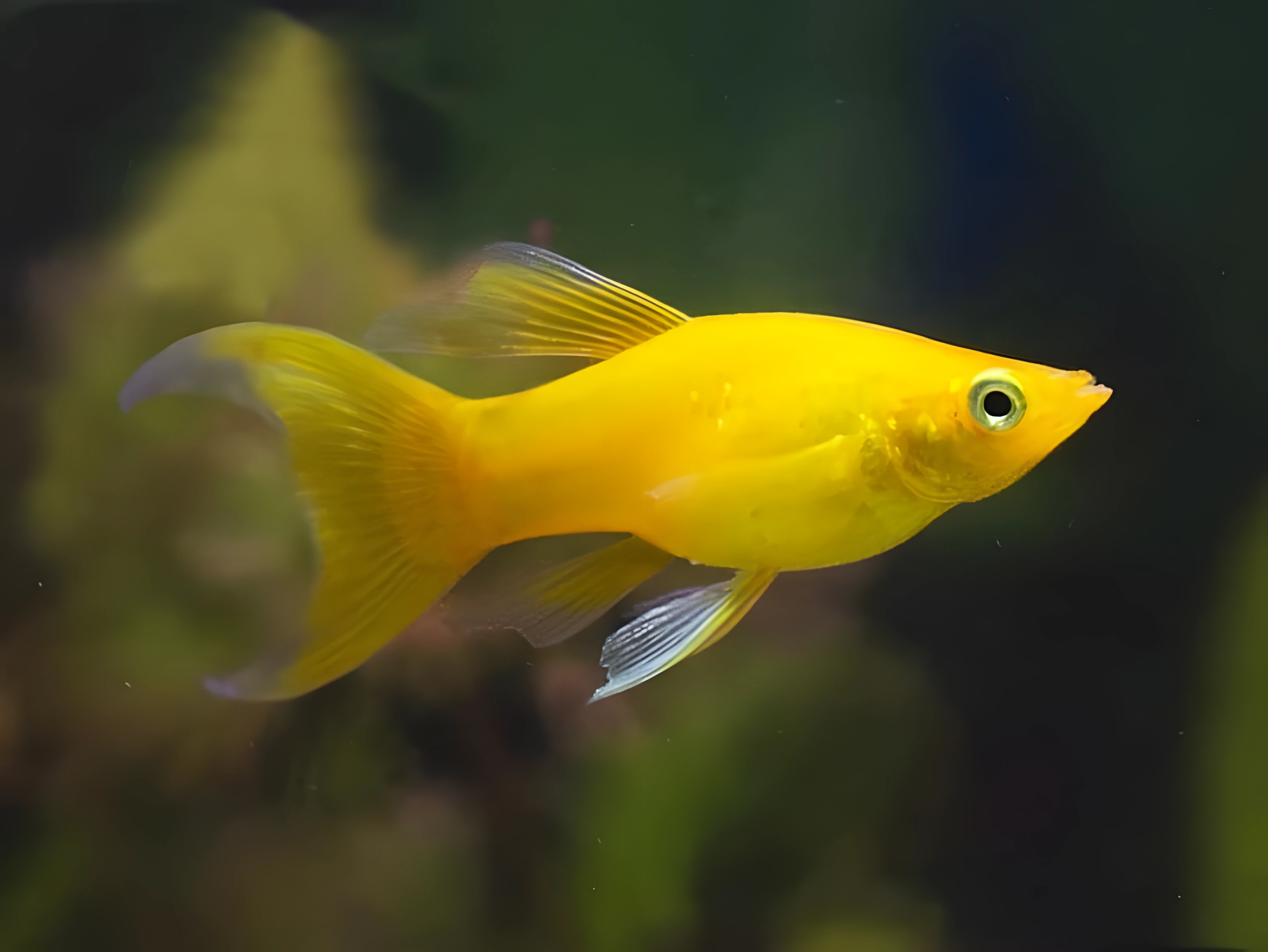
Many aquarium enthusiasts know this fish by its trade English name Molly Gold, or as the Gold Molly. In CIS countries, it is often also called Yellow Molly. It is important to note that this variation is not found in the wild but is the result of artificial cross-breeding. It is based on popular species such as Poecilia velifera, Poecilia latipinna, Poecilia sphenops, as well as their hybrids, which were specifically bred to achieve their characteristic coloration.
- Required aquarium volume
- 150 L
- Size in aquarium
- 12 – 18 cm
- Temperature
- 21 – 26 °C
- Temperament
- Peaceful (regular)
Parameters
Water pHNeutral (7) – Slightly alkaline (8.5)
Water dHHard (15) – Very hard (30)
Water salinitymoderate (5–10 g/L)
Size in aquarium12 – 18 cm
Lifespan3 years
TemperamentPeaceful (regular)
Toward small fishnot a predator
Required aquarium volume150 L
Lightingany
Substrateany (no restrictions)
Water flowweak
FeedingMixed diet (meat + plant-based)
CareMixed (solitary / pair / group)
Description
The Gold Molly is a selective breeding form obtained by crossing various species of the genus Poecilia. The fish have a bright, solid yellow or golden body coloration; the presence of spots or specks of other colors is uncharacteristic of a pure line. The body and fin shape varies depending on the original species, including lyretail variations and individuals with enlarged dorsal fins. Sexual dimorphism is pronounced: males are more slender and have a specialized reproductive organ — the gonopodium, while females are larger and have a rounder abdomen.
Habitat
In nature, the original species, such as Poecilia sphenops, inhabit waters in Central and North America, from the southern United States to Colombia and Venezuela. They are found in fresh and brackish waters, often populating river estuaries and coastal areas. In natural conditions, the fish prefer areas with dense vegetation, which provides shelter, and stable water parameters, although they can adapt to various environmental conditions.
Behavior and Compatibility
These are peaceful and active fish. In small aquariums, it is recommended to form groups with a predominance of females so that males do not show excessive attention to them. They get along well with many other species of similar size. The only exception is large, aggressive predatory fish, with which cohabitation is highly undesirable.
Care and Maintenance
Keeping these fish is no different from caring for other molly varieties. For a group of 3–4 individuals, a spacious aquarium of 100–150 liters will be optimal. It is important to maintain the water temperature in the range of 23–28°C, ensure its cleanliness, and control hydrochemical parameters: pH 7–8 and GH 10–20. It is advisable to densely plant the aquarium with aquatic plants. These fish feel good in slightly brackish water, so such conditions are permissible if they also suit other aquarium inhabitants. The long-term well-being of mollies directly depends on several key factors: regular aquarium maintenance, including waste removal and water changes, a properly selected balanced diet, and the choice of compatible tank mates.
Diet
Food sources for mollies should be varied, as these fish are omnivorous. It is extremely important that their daily diet includes plant-based components. Special flake or granular foods, developed with the needs of mollies in mind and offered by many manufacturers, are the most convenient solution. It should be noted that delicate aquarium plants can be damaged by fish, so when decorating an aquarium, preference should be given to fast-growing and unpretentious species. Aqvium flake food for aquarium fish Check out our new product, which has become a bestseller on Ozon with a rating of 4.9. Flake food is suitable for most aquarium fish. The raw material is manufactured according to new European Union standards (EU 2018/848). Contains vitamins A, C, D3, E, and Omega 3-6 Buy on Ozon
Breeding and Reproduction
Given at least one sexually mature pair, the appearance of fry in the aquarium is usually only a matter of time. Fry are born fully formed and are immediately ready to eat. Adult fish do not exhibit parental care and are capable of eating their own offspring if given the opportunity.
Diseases
The species is sensitive to sudden fluctuations in temperature and water quality, which can lead to a decrease in immunity and the development of infections. A common problem is gas embolism, which occurs when using unaged tap water, as well as colds caused by hypothermia. For prevention, it is necessary to maintain a stable temperature, ensure high-quality filtration and aeration, and monitor substrate cleanliness and regular water changes.
How to choose
When choosing, attention should be paid to the activity of the fish: healthy individuals are mobile, have no visible damage, no plaque on their scales, or signs of emaciation. Specimens with clamped fins, uncharacteristic behavior (lethargy or fussiness), and signs of body deformation should be avoided. It is recommended to purchase fish from reputable places where stocking density and aquarium hygiene standards are observed.
Frequently asked questions
The essentials: size, tank volume, water parameters and care
How big does Gold Molly get?
An adult reaches 12–18 cm in length. Plan the tank around the maximum size: the fish quickly outgrows a cramped setup.
What size aquarium does Gold Molly need?
The minimum recommended volume is 150 L. A smaller tank speeds up nitrate build-up and raises stress levels.
What water parameters does Gold Molly need?
Temperature 21–26 °C, pH 7–8.5, hardness 15–30 dGH. Stability matters more than exact values: sudden swings are harder on the fish than a small deviation from the ideal.
How long does Gold Molly live?
Around 3 years when kept properly. Lifespan depends directly on tank volume, water quality and a varied diet.
Is Gold Molly aggressive?
Temperament: peaceful (regular). Keep this in mind when choosing tank mates.
How many Gold Molly should be kept together?
Recommended setup: mixed (solitary / pair / group). Ignoring this is a common cause of stress and disease.
What does Gold Molly eat?
Diet type: mixed diet (meat + plant-based). Feed small portions that are finished within a couple of minutes — overfeeding does more harm than underfeeding.
What is the scientific name of Gold Molly?
The scientific name of the species is Poecilia sphenops, family Poeciliidae. It also appears in the literature as: Gambusia modesta, Gambusia plumbea, Lembesseia parvianalis.