Temperature14 – 28 °C
Natural range
- Assam area
- Arunachal Pradesh area
Predators UnusualConservation status: Near threatened NT
The Rainbow Snakehead, scientifically known as Channa bleheri, is a member of the family Channidae, or Snakeheads. This fish originally hails from Asia. It is believed that its natural distribution is limited to the Brahmaputra River basin, within the Indian states of Assam and Arunachal Pradesh.
- Required aquarium volume
- 100 L
- Size in aquarium
- 14 – 17 cm
- Temperature
- 14 – 28 °C
- Temperament
- Aggressive / incompatible / unfriendly
Parameters
Water pHSlightly acidic (6) – Slightly alkaline (8)
Water dHVery soft (3) – Very hard (20)
Water salinityno salt (freshwater)
Size in aquarium14 – 17 cm
Lifespan10 years
TemperamentAggressive / incompatible / unfriendly
Toward small fishpredator
Required aquarium volume100 L
Lightingdimmed
Substrateany, but dark
Water flownone or stagnant (no flow)
FeedingMeat / protein (live, frozen, fresh)
CarePair (male/female)
Description
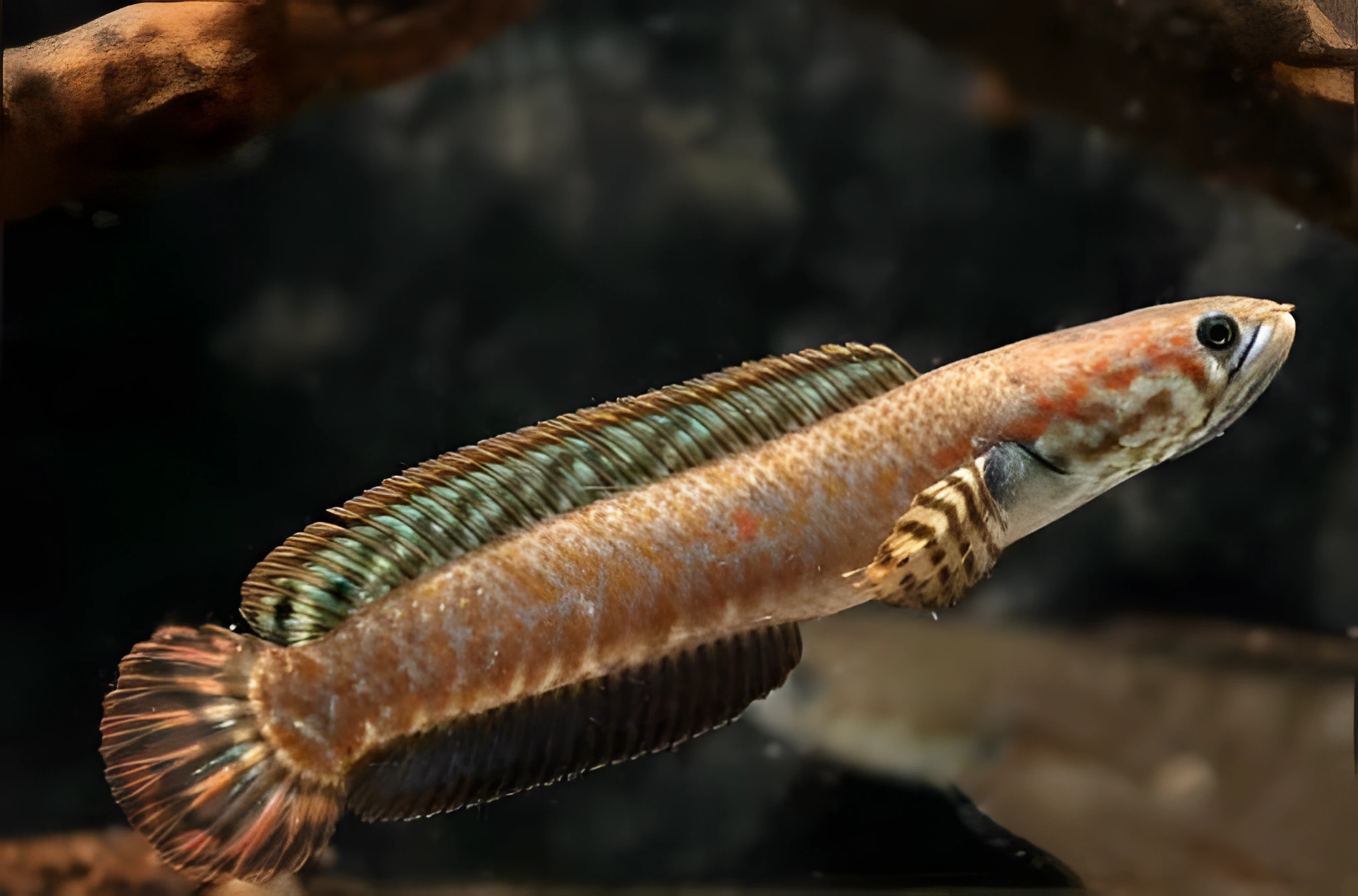
Adults of this species reach a length of 14 to 17 cm. Their body is elongated, typical for the genus, and somewhat resembles an eel; the head is large, with a wide mouth. When viewed from above, a morphological similarity to snakes can be observed. Wild populations exhibit variability in coloration. Among them are specimens where blue, reddish, or brown tones predominate. These colors can manifest as numerous speckles on a darker background, or appear as the main coloration with monochromatic speckles of another color. In the course of evolution, snakeheads have developed a unique accessory respiratory organ that allows them to absorb atmospheric air. This feature enables them to survive for long periods in waters with low oxygen content, and also to remain viable outside of an aquatic environment.
Habitat
The Rainbow Snakehead is endemic to the Brahmaputra River basin, inhabiting the Indian states of Assam and Arunachal Pradesh. In nature, it lives in forest streams, small rivers, as well as swampy areas and temporary bodies of water that fill during the monsoon season. The biotope is characterized by dense vegetation, snags, and fallen leaves, creating numerous hiding places. The fish is adapted to seasonal changes in conditions, including periods of lower temperatures and partial drying of water bodies, when individuals can survive unfavorable conditions in the mud.
Behavior and Compatibility
When young, Rainbow Snakeheads are known for their peaceful nature and can be kept in groups. However, with age, upon reaching sexual maturity, the fish begin to exhibit aggressive behavior towards their conspecifics. If a male and female pair forms, they generally get along well with each other. Due to their modest size, this species can be housed in the same aquarium with other peaceful fish, provided they are large enough to avoid the risk of becoming prey. It is recommended to choose inhabitants that stay in the water column or near the surface, and accordingly, avoid bottom-dwelling species such as catfish or loaches.
Care and Maintenance
For one or two fish, the optimal aquarium volume starts from 100 liters. The height of the tank is not critical, provided that the water column depth is at least 30 cm. The Rainbow Snakehead prefers subdued lighting, an aquarium with a layer of floating plants, and various hiding places at the bottom. Hiding places can be artificial decorations or natural elements, such as rock piles or driftwood. It is extremely important that the tank is tightly covered, as snakeheads are known for their tendency to leave the aquarium by crawling out. This species is undemanding and adapts well to various keeping conditions. The only aspect requiring attention is temperature fluctuations, which should mimic natural seasonal changes during winter and summer months. In the cold season, it is recommended to turn off the aquarium heater, allowing the water to reach room temperature, a comfortable value of which is around 20°C. In warm months, on the contrary, the water temperature should be maintained at the maximum permissible values — approximately 27–28°C. The snakehead is a predator. In its natural environment, it feeds on small fish, amphibians, insects, larvae, and any other prey it can swallow. In a home aquarium, their diet can consist of fresh pieces of fish, shrimp, mussels, earthworms, large bloodworms, and similar products. Dry foods, such as pellets or tablets, should be considered solely as a supplementary element of the diet, serving as a source of vitamins and minerals. For additional information, refer to sources such as Wikipedia and FishBase.
Diet
This predator feeds on small fish, amphibians, insects, and larvae in its natural habitat — essentially anything it can swallow. In aquarium conditions, the diet primarily consists of fresh pieces of fish meat, shrimp, mussels, as well as earthworms and large bloodworms. Dry foods, such as pellets and tablets, should be considered solely as a supplement to the main diet, providing the fish with necessary vitamins and minerals.
Breeding and Reproduction
Breeding occurs in the aquarium provided that seasonal temperature changes are simulated. The fish form monogamous pairs, and spawning is accompanied by a characteristic courtship dance near the water surface. The eggs are positively buoyant and are collected by the male into a dense cluster resembling a raft. Both parents actively guard the clutch and subsequent offspring. For successful rearing of fry, the presence of small live food in the aquarium is important, and the female may lay unfertilized "feeder" eggs to nourish the young.
Diseases
The species is sensitive to temperature regime disturbances, especially to being kept at consistently high temperatures, which provokes the development of severe bacterial infections. Symptoms include the appearance of white spots, ulcers on the body and head, and tissue destruction, often leading to death. Prevention involves ensuring a mandatory seasonal resting period with reduced temperature, maintaining high water quality, and excluding the use of live foods from questionable sources that may carry parasites.
How to choose
When purchasing, select active specimens with clean fins, no visible damage, ulcers, or white film on the body. It is important to assess the fish's plumpness, avoiding individuals with severely sunken bellies. It is recommended to observe their behavior in the store: healthy fish show curiosity and caution, not apathy. It should be noted that transportation is a stressful factor, so it is preferable to minimize the time spent in the bag and use containers with sufficient air volume, as snakeheads are obligate air-breathing fish.
Frequently asked questions
The essentials: size, tank volume, water parameters and care
How big does Rainbow Snakehead get?
An adult reaches 14–17 cm in length. Plan the tank around the maximum size: the fish quickly outgrows a cramped setup.
What size aquarium does Rainbow Snakehead need?
The minimum recommended volume is 100 L. A smaller tank speeds up nitrate build-up and raises stress levels.
What water parameters does Rainbow Snakehead need?
Temperature 14–28 °C, pH 6–8, hardness 3–20 dGH. Stability matters more than exact values: sudden swings are harder on the fish than a small deviation from the ideal.
How long does Rainbow Snakehead live?
Around 10 years when kept properly. Lifespan depends directly on tank volume, water quality and a varied diet.
Is Rainbow Snakehead aggressive?
Temperament: aggressive / incompatible / unfriendly. This is a predatory species — any fish small enough to fit in its mouth will eventually be eaten.
How many Rainbow Snakehead should be kept together?
Recommended setup: pair (male/female). Ignoring this is a common cause of stress and disease.
What does Rainbow Snakehead eat?
Diet type: meat / protein (live, frozen, fresh). Feed small portions that are finished within a couple of minutes — overfeeding does more harm than underfeeding.
What is the scientific name of Rainbow Snakehead?
The scientific name of the species is Channa bleheri, family Snakeheads (Channidae).