Temperature18 – 23 °C
Natural range
- Chin Hills area
- Rakhine State
Predators UnusualConservation status: Data deficient DD
Channa pulchra, officially known by its scientific name Channa pulchra, belongs to the snakehead family (Channidae). This species was first described as new in 2007 by researcher R. Britz. Since the early 2010s, it has gained popularity among aquarists.
- Required aquarium volume
- 250 L
- Size in aquarium
- 30 cm
- Temperature
- 18 – 23 °C
- Temperament
- Aggressive / incompatible / unfriendly
Parameters
Water pHSlightly acidic (6) – Slightly alkaline (8)
Water dHHard (12) – Very hard (20)
Water salinityno salt (freshwater)
Size in aquarium30 cm
Lifespan10 years
TemperamentAggressive / incompatible / unfriendly
Toward small fishpredator
Required aquarium volume250 L
Lightingdimmed
Substraterocky (rock formations, boulders, etc.)
Water flowmoderate
FeedingMeat / protein (live, frozen, fresh)
CarePair (male/female)
Description
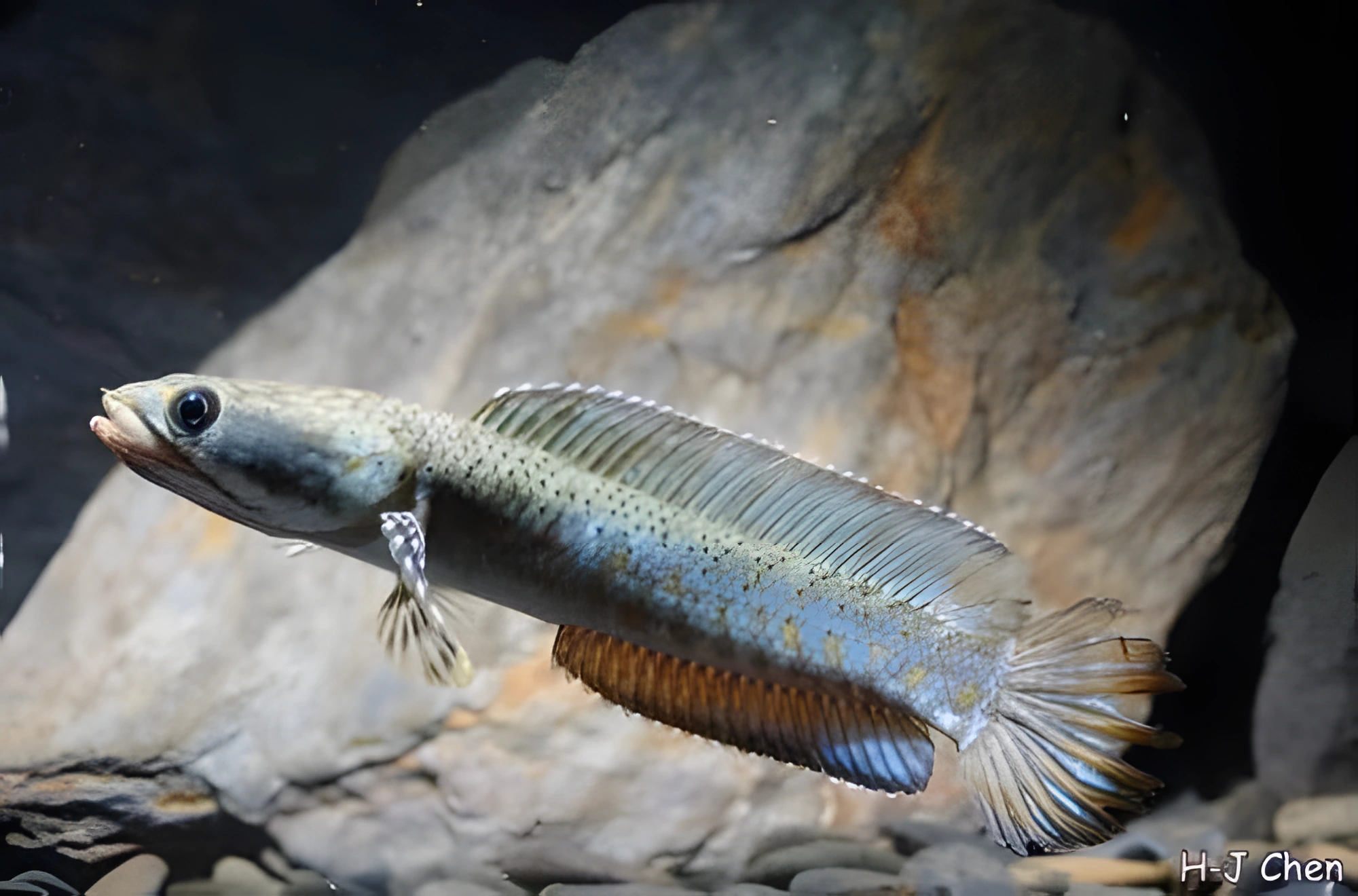
Adult specimens can reach up to 30 cm in length. This species of snakehead is characterized by its typical elongated body, large head, and well-developed fins. The two main fins—dorsal and anal—extend for approximately two-thirds of the body length. Notably, the second part of the Latin name, “pulchra” (pulcher), translates to “beautiful,” which accurately reflects the vibrant coloration of this fish. The main body color is gray, with juveniles displaying stunning turquoise hues on their sides and fins, complemented by an ornament of orange streaks and black spots. The pectoral fins deserve special attention, adorned with four semi-circular white stripes. As the fish age, the turquoise color on the body gradually fades, although it persists on the anal fin. The white stripes on the pectoral fins eventually acquire a yellowish tint.
Habitat
The natural habitat of this fish is in Southeast Asia. It inhabits the turbulent upper reaches of the Kyientali Chaung River, which originates in the Chin Hills and flows into the Indian Ocean in Rakhine State, Myanmar. These snakeheads prefer river sections with strong currents. The water temperature in their natural environment is relatively low for the tropics, rarely exceeding 23°C.
Behavior and Compatibility
This predatory species exhibits territorial behavior. It shows hostility towards conspecifics and will actively hunt any other fish small enough for Channa pulchra to easily swallow. Therefore, only large fish should be considered as tankmates. However, some experienced breeders, such as German expert Pascal Antler, successfully keep groups of 10 or more individuals in spacious tanks. In such conditions, with a large number of fish in a confined area, they cannot fully establish individual territories, which helps reduce the overall level of aggression. It is important to note that before reaching sexual maturity, while Channa pulchra are still small, individuals can comfortably coexist, and juveniles even form schools.
Care and Maintenance
The minimum aquarium volume for keeping a single fish should be at least 250 liters. The aquarium setup can mimic a mountain riverbed, using large stones, boulders, and driftwood. It is recommended to create a current using a separate pump or a powerful internal filter. Channa pulchra, like other members of the genus Channa, can jump out of the aquarium, so a secure lid or other protective barrier is essential. An air gap must be left between the water surface and the lid, as snakeheads breathe not only dissolved oxygen in the water but also atmospheric air. Optimal water parameters include pH values close to neutral, with medium to high general hardness (GH). As mentioned, the water temperature is quite low, so a heater is usually not required. Keeping these fish is relatively straightforward for experienced aquarists. Regular aquarium maintenance includes weekly partial water changes, removal of organic waste, and equipment prophylaxis. For the main diet in a home aquarium, fresh or frozen foods are suitable: pieces of fish, shrimp, mussels, as well as earthworms, large bloodworms, and other similar products. Sources: Wikipedia, FishBase, PracticalFishkeeping
Diet
The staple diet in a home aquarium should consist of fresh or frozen foods: this can include pieces of fish meat, shrimp, mussels, as well as earthworms, large bloodworms, and other similar foods.
Breeding and Reproduction
Channa pulchra is a cave-dwelling species that does not practice mouthbrooding. Spawning occurs in shelters, where the male transfers eggs collected from the water surface. Successful breeding requires a pair formed naturally from a group of young individuals, as forced pairing often leads to aggression and the death of one of the fish. During the spawning period, the male exhibits increased territoriality and guards the clutch. Fry require high-quality nutrition, starting with small live foods, and grow quickly provided water cleanliness is maintained.
Diseases
Channa pulchra possesses high natural resilience but is sensitive to water quality and husbandry conditions. Poor aquarium hygiene, overfeeding, and the accumulation of organic waste can provoke bacterial infections, fungal diseases, and cloudy eyes. Frequently observed skin and fin damage is usually a consequence of intraspecific aggression due to improper territory zoning. Prevention involves regular water changes, ensuring powerful filtration, and controlling the diet to avoid obesity and associated metabolic disorders.
How to choose
When purchasing, select active fish with clean fins and no visible wounds or ulcers on their bodies. It is important to ensure there are no signs of emaciation and to check the individual's reaction to feeding. Avoid individuals that appear apathetic, stay near the surface without apparent reason, or have cloudy eyes. Since the species is a territorial predator, it is recommended to acquire juveniles of similar size if group keeping is planned, but one should always be prepared to separate individuals if signs of incompatibility appear.
Frequently asked questions
The essentials: size, tank volume, water parameters and care
How big does Channa pulchra get?
An adult reaches 30 cm in length. Plan the tank around the maximum size: the fish quickly outgrows a cramped setup.
What size aquarium does Channa pulchra need?
The minimum recommended volume is 250 L. A smaller tank speeds up nitrate build-up and raises stress levels.
What water parameters does Channa pulchra need?
Temperature 18–23 °C, pH 6–8, hardness 12–20 dGH. Stability matters more than exact values: sudden swings are harder on the fish than a small deviation from the ideal.
How long does Channa pulchra live?
Around 10 years when kept properly. Lifespan depends directly on tank volume, water quality and a varied diet.
Is Channa pulchra aggressive?
Temperament: aggressive / incompatible / unfriendly. This is a predatory species — any fish small enough to fit in its mouth will eventually be eaten.
How many Channa pulchra should be kept together?
Recommended setup: pair (male/female). Ignoring this is a common cause of stress and disease.
What does Channa pulchra eat?
Diet type: meat / protein (live, frozen, fresh). Feed small portions that are finished within a couple of minutes — overfeeding does more harm than underfeeding.
What is the scientific name of Channa pulchra?
The scientific name of the species is Channa pulchra, family Snakeheads (Channidae).