Temperature20 – 28 °C
Natural range
- Mexico area
- Guatemala area
- Belize area
- Nicaragua area
LivebearersConservation status: Data deficient DD
Other scientific names: Platypoecilus aurata, Platypoecilus cyanellus, Platypoecilus maculatus, Platypoecilus nigra, Platypoecilus pulchra, Platypoecilus rubra
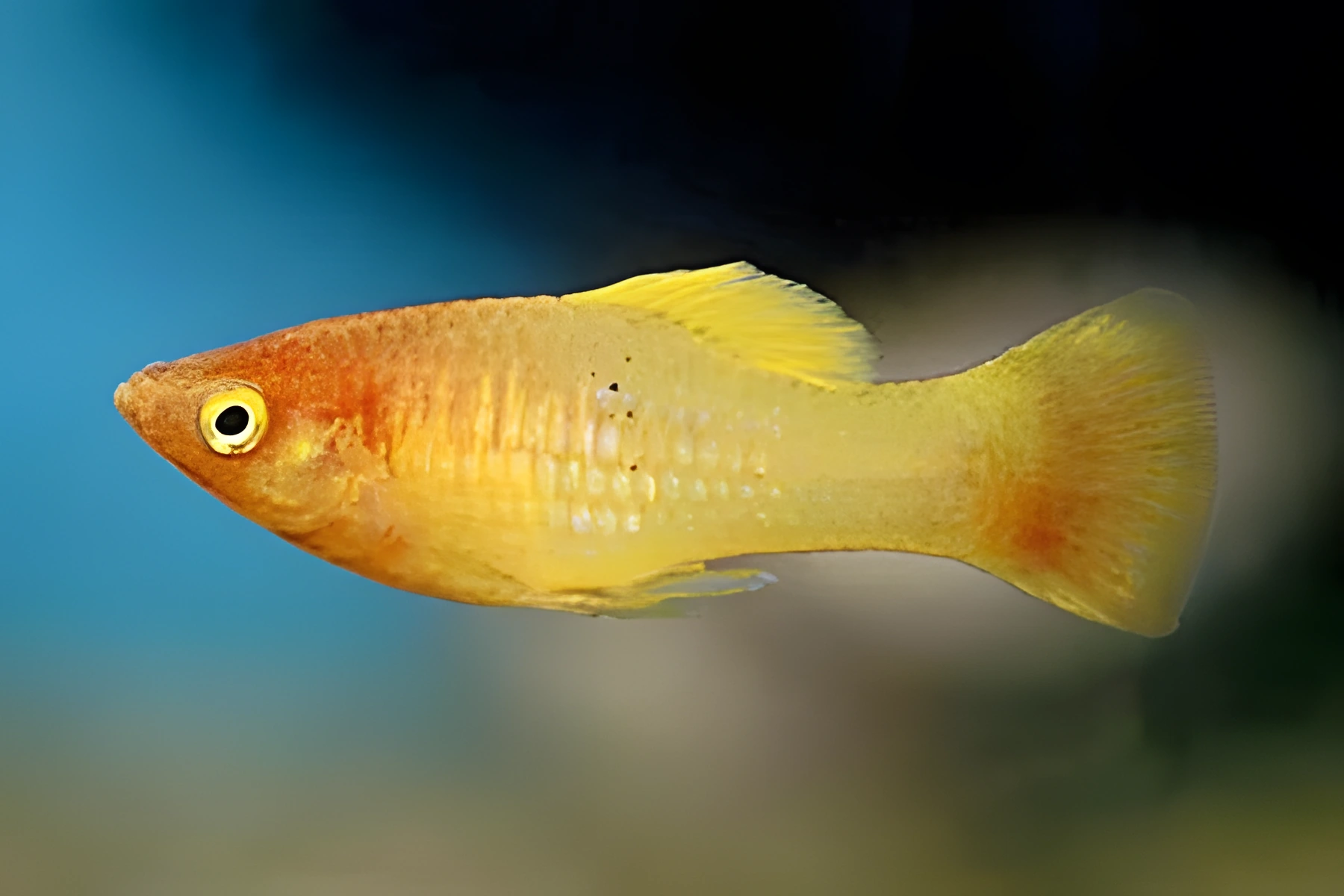
The Yellow, or Gold, Platy, known in the English-speaking trade as Yellow / Gold Platy, is the result of selective breeding and does not occur in nature. Its parent species is the common Platy (Xiphophorus maculatus). The main feature of this fish, as its name eloquently suggests, is its uniform yellow body coloration and all fins.
- Required aquarium volume
- 60 L
- Size in aquarium
- 5 – 7 cm
- Temperature
- 20 – 28 °C
- Temperament
- Peaceful (regular)
Parameters
Water pHNeutral (7) – Slightly alkaline (8.2)
Water dHMedium hardness (9) – Very hard (20)
Water salinityincreased (10–15 g/L)
Size in aquarium5 – 7 cm
Lifespan3 years
TemperamentPeaceful (regular)
Toward small fishnot a predator
Required aquarium volume60 L
Lightingweak (low)
Substrateany (no restrictions)
Water flowweak or moderate
FeedingAny (universal)
CareMixed (solitary / pair / group)
Description
The Yellow Platy is a selectively bred form of the species Xiphophorus maculatus. Its distinguishing feature is the uniform yellow coloration of its body and fins. The body is dense and stocky. Sexual dimorphism is clearly expressed: males reach 5 cm in length, are more slender, and possess a gonopodium — a modified anal fin used for fertilization. Females are larger, growing up to 7 cm, and have a more rounded abdomen.
Habitat
In the wild, the parent species inhabits river systems of Central America, including territories of Mexico, Guatemala, Belize, and Nicaragua. It lives in shallow waters in river backwaters, lakes, swamps, and flooded pastures. It prefers areas with slow currents and dense aquatic vegetation. Typical water parameters in nature vary, but generally, the fish adapt to a wide range of pH and hardness values.
Behavior and Compatibility
These are peaceful and active fish, suitable for a community tank. Intraspecific behavior among males may include competition for female attention, so it is recommended to keep a group with a predominance of females. They are well compatible with other calm species of comparable size, such as swordtails, guppies, or mollies. They are active throughout the daylight hours.
Care and Maintenance
Along with Guppies and Swordtails, the Yellow Platy stands out for its unpretentiousness and ease of care. For comfortable keeping of 3–4 individuals of this species, an aquarium of 60–70 liters will be sufficient. In the tank's design, it is advisable to provide shelters, which can be formed, for example, from dense thickets of plants. It is extremely important to ensure and maintain water purity, as well as its optimal temperature and medium to high general hardness (GH) values. These fish can stay in brackish water for quite a long time. Standard aquarium maintenance procedures include weekly partial water changes with fresh water, regular cleaning of decorative elements from plaque, and timely removal of organic residues such as food scraps and excrement.
Regarding nutrition, platies are omnivorous. They readily accept a variety of popular foods: these can be dry flakes, granules, as well as frozen or live artemia, bloodworms, daphnia, and mosquito larvae. To ensure a balanced diet, vegetable components should be added to the food.
We present Aqvium flake food for aquarium fish, which has already become a bestseller on Ozon with a high rating of 4.9. This food is perfectly suitable for most aquarium inhabitants. The raw materials for its production comply with new European standards (EU 2018/848). The product contains vitamins A, C, D3, E, and Omega 3-6.
Purchase on Ozon.
In terms of behavior and compatibility, it can be noted that male platies tend to compete among themselves for hierarchy and female attention. Based on this, in small aquariums, it is recommended to keep more females than males. Towards other species, the fish are peaceful and get along well with many popular freshwater species of similar size and temperament.
Breeding and reproduction of these fish are not difficult; they are highly prolific. Under favorable conditions, each female can produce up to 80 fry every 4–6 weeks. However, they lack parental care. Adult individuals may exhibit predatory instincts towards the young, so it is recommended to transfer the fry to a separate, specially prepared tank.
Diet
The species is omnivorous. In the aquarium, it accepts all types of food: dry flakes, granules, frozen or live artemia, bloodworms, daphnia. To ensure a balanced diet, it is recommended to include foods with vegetable additives in the menu. Feeding is done 1–2 times a day in portions that the fish consume within a few minutes.
Breeding and Reproduction
Breeding is not difficult, as the fish are livebearers. They reach sexual maturity by 3 months. The female's gestation lasts 4–6 weeks, after which she can give birth to up to 80 fry. There is no parental care, and adult individuals may eat the young, so it is recommended to use dense plant thickets for shelter or to move the female to a separate tank before birth.
Diseases
The fish are distinguished by their hardiness. When kept in favorable conditions, diseases are rare. The main risks are associated with violations of water parameters or overcrowding, which can lead to a decrease in immunity and the development of bacterial or parasitic infections. Prevention consists of regular water changes and maintaining substrate cleanliness.
How to choose
When choosing, attention should be paid to the fish's activity and appearance. Healthy individuals should swim actively, have clean fins without signs of damage, and smooth scales without plaque or sores. Fish with sunken bellies, lethargic behavior, or an unnatural body shape should be avoided, as this may indicate chronic diseases or emaciation.
Frequently asked questions
The essentials: size, tank volume, water parameters and care
How big does Yellow Platy get?
An adult reaches 5–7 cm in length. Plan the tank around the maximum size: the fish quickly outgrows a cramped setup.
What size aquarium does Yellow Platy need?
The minimum recommended volume is 60 L. A smaller tank speeds up nitrate build-up and raises stress levels.
What water parameters does Yellow Platy need?
Temperature 20–28 °C, pH 7–8.2, hardness 9–20 dGH. Stability matters more than exact values: sudden swings are harder on the fish than a small deviation from the ideal.
How long does Yellow Platy live?
Around 3 years when kept properly. Lifespan depends directly on tank volume, water quality and a varied diet.
Is Yellow Platy aggressive?
Temperament: peaceful (regular). Keep this in mind when choosing tank mates.
How many Yellow Platy should be kept together?
Recommended setup: mixed (solitary / pair / group). Ignoring this is a common cause of stress and disease.
What does Yellow Platy eat?
Diet type: any (universal). Feed small portions that are finished within a couple of minutes — overfeeding does more harm than underfeeding.
What is the scientific name of Yellow Platy?
The scientific name of the species is Xiphophorus maculatus, family Poeciliidae. It also appears in the literature as: Platypoecilus aurata, Platypoecilus cyanellus, Platypoecilus maculatus.