Temperature20 – 33 °C
Natural range
- Eastern Mexico area
- Mexico area
CichlidsConservation status: Least concern LC
Other scientific names: Cichlasoma carpinte, Cichlasoma carpintis, Cichlasoma laurae, Cichlasoma laure, Cichlosoma atromaculatum, Cichlosoma laurae
The Pearl Cichlid, scientifically known as Herichthys carpintis, is a member of the Cichlidae family. This vibrant fish possesses a rather expressive temperament. Keeping it is not particularly difficult, but selecting suitable tank mates becomes an important task.
- Required aquarium volume
- 200 L
- Size in aquarium
- 20 cm
- Temperature
- 20 – 33 °C
- Temperament
- Aggressive / incompatible / unfriendly
Parameters
Water pHSlightly acidic (6) – Neutral (7.5)
Water dHSoft (5) – Hard (14)
Water salinityno salt (freshwater)
Size in aquarium20 cm
Lifespan8 years
TemperamentAggressive / incompatible / unfriendly
Toward small fishnot a predator
Required aquarium volume200 L
Lightingany
Substratefine sand
Water flowweak or moderate
FeedingHigh protein (predominantly meat)
CarePair (male/female)
Description
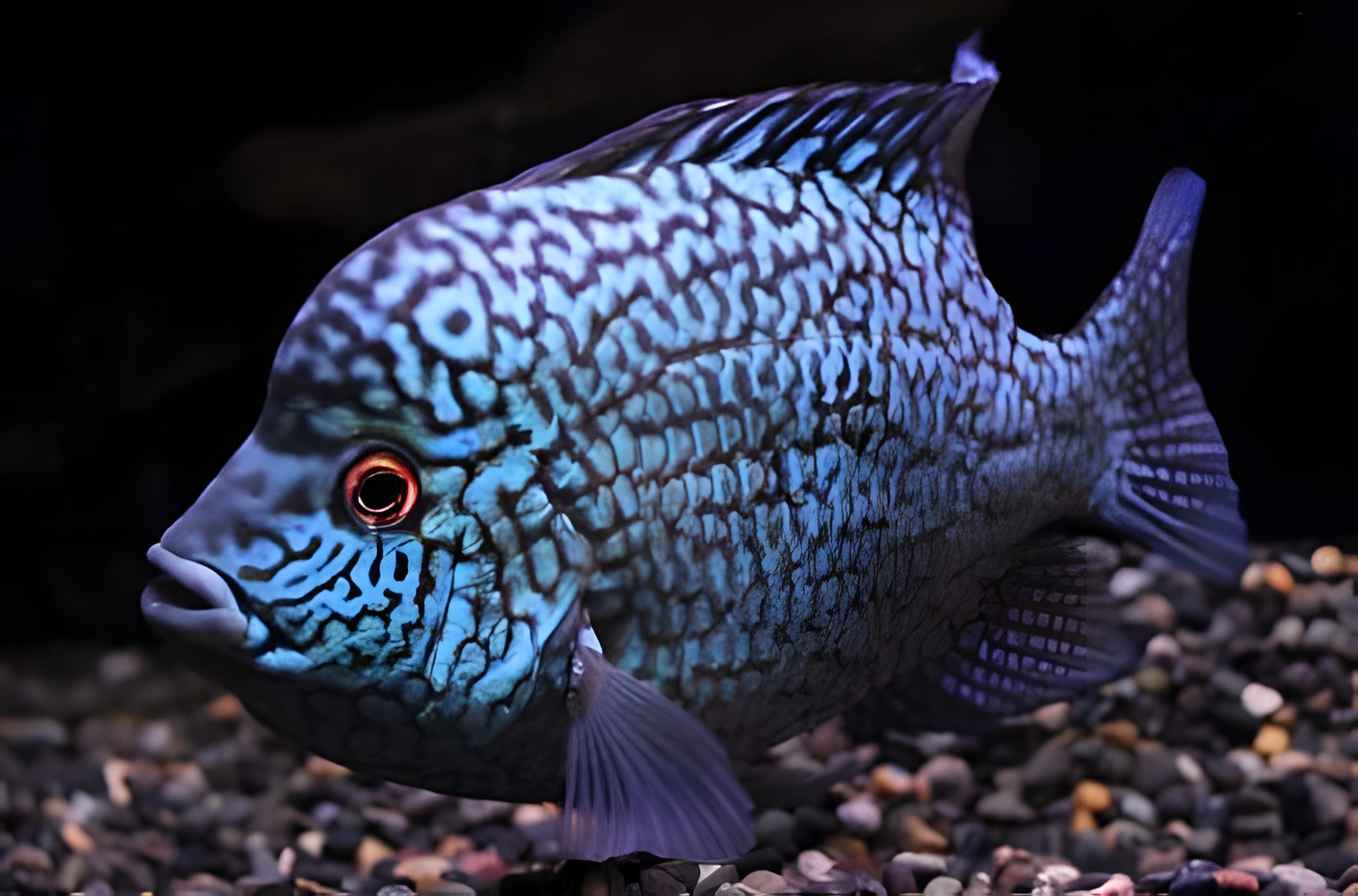
Adults typically grow to 17–20 cm in length. In exceptional cases, fish reaching 30 cm have been recorded, but this is extremely rare in a home aquarium. The body of the Pearl Cichlid is characterized by its height and large head. Males can usually be identified by their pointed dorsal and anal fins. The main coloration consists of a pattern of numerous large silver or turquoise spots. Black spots are noticeable along the lateral line, closer to the caudal part of the body. There are local varieties where greenish hues predominate. This species is sometimes confused with the closely related Texas Cichlid (Herichthys cyanoguttatus) due to similar coloration. However, the latter can be distinguished by smaller speckles and significantly larger size — for example, males can reach 30 cm.
Habitat
The historical homeland of this fish is the eastern regions of Mexico. Its natural habitat is considered to be the Pánuco River basin, which includes numerous lake systems located in the lower reaches.
Behavior and Compatibility
These fish have a complex character. Males show aggression when defending their territory, attacking both conspecifics and representatives of other species if they violate boundaries. Females are also not particularly friendly towards aquarium neighbors, which becomes especially noticeable during the breeding period when the pair guards their offspring. In small aquariums, it is advisable to keep only one established pair, and it is important that the male and female grow up together from a young age. If adult males and females, previously kept in different tanks, are introduced, there is a high probability of hostile behavior towards each other. They are only compatible with large species capable of defending themselves, such as plecos.
Care and Maintenance
For a single pair of fish, an aquarium of at least 200 liters is required. When decorating, it is important to provide various shelters, which can be snags, rock formations, and other natural or artificial decorative elements. It is not recommended to plant rooted aquatic plants, as they are highly likely to be uprooted and damaged. As an alternative, floating plants can be used. Given their feeding habits, the substrate should be soft: sand, fine gravel, or other similar fine-grained substrate. Water parameters should be maintained around a neutral pH level (7.0) and a general hardness within 8–14 dGH. It is extremely important to avoid the accumulation of organic matter, which can disrupt the nitrogen cycle. To do this, regular aquarium maintenance procedures and an effective filtration system are necessary.
Diet
These fish prefer to forage by exploring the bottom, sometimes digging through the substrate. Their daily diet should consist primarily of dry sinking foods, such as flakes or pellets, enriched with vegetable additives. Additionally, it is recommended to offer live or frozen foods, such as bloodworms or brine shrimp.
Breeding and Reproduction
The most crucial aspect of breeding is selecting a suitable pair. If the male and female show mutual affection and are kept in ideal conditions, spawning will not be long in coming. During the breeding period, the fish transform, their coloration becoming noticeably more intense. After a short but active courtship, the female lays several hundred eggs. A flat surface on the bottom, such as a flat stone, is usually chosen for spawning. The incubation period is 2–3 days. The hatched fry are unable to swim in the first days of life and remain in one place, feeding on the yolk sac reserves. During this time, the parents move the young to another prepared spot — a small pit on the bottom. From the moment the eggs are laid until several weeks after the fry appear, the adult fish fiercely protect their offspring.
Diseases
Cases of disease are rare and usually caused by external factors. If any symptoms or suspicions of illness appear, it is first necessary to check the water parameters and hydrochemical composition. If deviations from the norm are found, measures should be taken immediately to correct them. More detailed information on symptoms and treatment methods can be found in the “Aquarium Fish Diseases” section.
How to choose
When choosing specimens, attention should be paid to the activity of the fish and the cleanliness of their skin. Healthy individuals should show curiosity, have bright coloration without signs of damage, ulcers, white film, or frayed scales. It is important to assess their behavior in the aquarium: avoid purchasing fish that appear apathetic, constantly hide, or stay near the water surface, as this may indicate water quality problems in the store or the presence of diseases. It is recommended to acquire juveniles from the same group, as attempting to introduce adult individuals raised separately often leads to pronounced aggression. When purchasing a pair, clarify whether it formed naturally, as forced cohabitation of incompatible fish is dangerous for their health.
Frequently asked questions
The essentials: size, tank volume, water parameters and care
How big does Pearl Cichlid get?
An adult reaches 20 cm in length. Plan the tank around the maximum size: the fish quickly outgrows a cramped setup.
What size aquarium does Pearl Cichlid need?
The minimum recommended volume is 200 L. A smaller tank speeds up nitrate build-up and raises stress levels.
What water parameters does Pearl Cichlid need?
Temperature 20–33 °C, pH 6–7.5, hardness 5–14 dGH. Stability matters more than exact values: sudden swings are harder on the fish than a small deviation from the ideal.
How long does Pearl Cichlid live?
Around 8 years when kept properly. Lifespan depends directly on tank volume, water quality and a varied diet.
Is Pearl Cichlid aggressive?
Temperament: aggressive / incompatible / unfriendly. Keep this in mind when choosing tank mates.
How many Pearl Cichlid should be kept together?
Recommended setup: pair (male/female). Ignoring this is a common cause of stress and disease.
What does Pearl Cichlid eat?
Diet type: high protein (predominantly meat). Feed small portions that are finished within a couple of minutes — overfeeding does more harm than underfeeding.
What is the scientific name of Pearl Cichlid?
The scientific name of the species is Herichthys carpintis, family Cichlids (Cichlidae). It also appears in the literature as: Cichlasoma carpinte, Cichlasoma carpintis, Cichlasoma laurae.