Temperature20 – 28 °C
Natural range
- Southern India area
- Sri Lanka area
KillifishConservation status: Least concern LC
Other scientific names: Aplocheilus blochii, Haplocheilus pachax, Haplocheilus panchax, Haplochilus panchax, Panchax panchax
The scientific name Aplocheilus blockii includes this species, also known as Block's Aplocheilus or Green Panchax, in the family Aplocheilidae. This fish is easy to keep and undemanding, thrives in community tanks, and its breeding at home will not cause difficulties. The combination of these qualities makes it an excellent choice for beginner aquarists.
- Required aquarium volume
- 40 L
- Size in aquarium
- 3 – 6 cm
- Temperature
- 20 – 28 °C
- Temperament
- Semi-peaceful (including aggression during spawning / intraspecific conflicts)
Parameters
Water pHSlightly acidic (6) – Slightly alkaline (8.5)
Water dHSoft (5) – Very hard (20)
Water salinityvery low (up to ~3 g/L)
Size in aquarium3 – 6 cm
Lifespan4 years
TemperamentSemi-peaceful (including aggression during spawning / intraspecific conflicts)
Toward small fishnot a predator
Required aquarium volume40 L
Lightingmoderate (regular)
Substratesoft silted
Water flowmoderate or strong
FeedingMixed diet (meat + plant-based)
CareHarem (1 male and several females)
Description
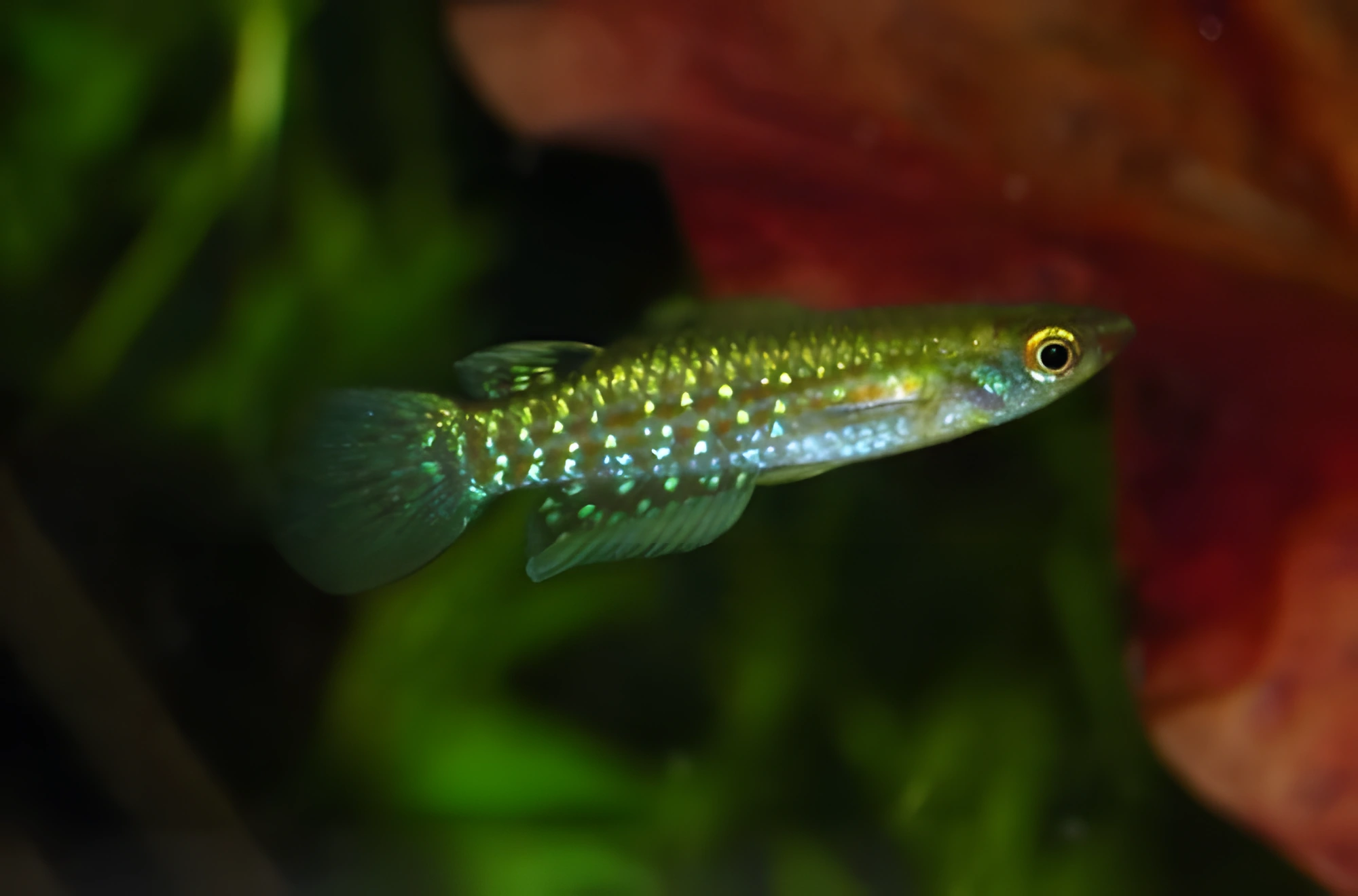
A miniature and beautiful fish with an elongated body resembling a European pike, for which it is sometimes called the "Asian pike." Its fins, located significantly closer to the tail, create the image of a swift little predator. The body color is gray, adorned with many bright greenish speckles.
Habitat
This species originates from southern India and the waters of Sri Lanka. There are also reports of its presence in Pakistan and some high-altitude regions of Hindustan, although this information may be inaccurate. The fish inhabit lowlands, often populating coastal areas with stagnant or slow-moving water, including brackish waters rich in floating vegetation, such as mangrove swamps and rice paddies.
Behavior and Compatibility
The Green Panchax is a predatory fish that primarily inhabits the upper layers of the water. The species exhibits intraspecific aggression, so it is recommended to keep individuals in pairs or groups with a predominance of females. In a community tank, these fish may be incompatible with very small and peaceful species, as they tend to eat fry and small invertebrates. When choosing tank mates, it is preferable to select larger and non-aggressive fish that can hold their own.
Care and Maintenance
For keeping a pair of fish in a freshwater community tank, a volume of 40 liters or more will be sufficient. For substrate, a soft material consisting of coarse sand or very fine gravel is recommended. It is important to have fine-leaved plants that form dense thickets, such as Java moss or Riccia. Floating plants are an essential element of the decor. Optimal water parameters include a wide range of hardness, with the hydrogen index remaining within neutral or slightly alkaline levels. More detailed information on dGH and pH values can be found in the "Hydrochemical composition of water" section. The addition of a small concentration of salt is permissible—approximately 2–3 level teaspoons per 10 liters—however, it should be noted that this may be harmful to other aquarium inhabitants. The minimum equipment set includes a filter, aerator, heater, and lighting system. When placing and setting up these devices, it is important to remember that the Green Panchax does not tolerate strong currents well and prefers still or slow-moving water.
Diet
As a carnivorous species, this fish preys on invertebrates, both aquatic and terrestrial, primarily from the surface. In a home aquarium, its diet can include small live or frozen foods, such as Artemia, Daphnia, or bloodworms, offered on a regular basis.
Breeding and Reproduction
Spawning can occur at any time; females lay their eggs in any available plant thickets. This is why it is important to provide dense plant cover in the aquarium. The incubation period lasts only 10–15 days. Initially, the fry should be fed infusoria, and as they grow, Artemia nauplii, microworms, and other small foods can be gradually introduced. It is recommended to transfer the fry to a separate tank with similar water conditions to prevent them from being eaten by larger inhabitants.
Diseases
The species has moderate sensitivity to keeping conditions and is susceptible to oodinium infection. It is important to note that the fish tolerate treatments with copper sulfate-containing medications poorly. Disease prevention involves maintaining stable water parameters, regular partial water changes, and providing a varied diet, which helps strengthen immunity and avoid stress that triggers the development of infections.
How to choose
When purchasing, choose active fish with clean fins and no visible damage or growths on their bodies. It is recommended to pay attention to the behavior of the individuals in the store: healthy fish should show interest in their surroundings and feeding. Avoid acquiring sluggish specimens that stay at the bottom or show signs of emaciation, as this may indicate hidden diseases or improper keeping conditions in the retail aquarium.
Frequently asked questions
The essentials: size, tank volume, water parameters and care
How big does Green Panchax get?
An adult reaches 3–6 cm in length. Plan the tank around the maximum size: the fish quickly outgrows a cramped setup.
What size aquarium does Green Panchax need?
The minimum recommended volume is 40 L. A smaller tank speeds up nitrate build-up and raises stress levels.
What water parameters does Green Panchax need?
Temperature 20–28 °C, pH 6–8.5, hardness 5–20 dGH. Stability matters more than exact values: sudden swings are harder on the fish than a small deviation from the ideal.
How long does Green Panchax live?
Around 4 years when kept properly. Lifespan depends directly on tank volume, water quality and a varied diet.
Is Green Panchax aggressive?
Temperament: semi-peaceful (including aggression during spawning / intraspecific conflicts). Keep this in mind when choosing tank mates.
How many Green Panchax should be kept together?
Recommended setup: harem (1 male and several females). Ignoring this is a common cause of stress and disease.
What does Green Panchax eat?
Diet type: mixed diet (meat + plant-based). Feed small portions that are finished within a couple of minutes — overfeeding does more harm than underfeeding.
What is the scientific name of Green Panchax?
The scientific name of the species is Aplocheilus blockii, family Aplocheilidae. It also appears in the literature as: Aplocheilus blochii, Haplocheilus pachax, Haplocheilus panchax.