Temperature20 – 28 °C
Natural range
- South America area
CharacinsConservation status: Least concern LC
Other scientific names: Iguanodectes tenuis, Iquanodectes spilurus, Piabuca spilurus
The Iguana Tetra, also known as the Green-Striped Tetra, and scientifically as Iguanodectes spilurus, is a member of the family Iguanodectidae. Its straightforward care does not require significant time or financial investment from the aquarist. Thanks to its good compatibility with most other fish species, this tetra will easily find a place in almost any freshwater aquarium of sufficient volume.
- Required aquarium volume
- 250 L
- Size in aquarium
- 10 cm
- Temperature
- 20 – 28 °C
- Temperament
- Peaceful (regular)
Parameters
Water pHSlightly acidic (5) – Neutral (7.5)
Water dHSoft (5) – Hard (12)
Water salinityno salt (freshwater)
Size in aquarium10 cm
Lifespan5 years
TemperamentPeaceful (regular)
Toward small fishnot a predator
Required aquarium volume250 L
Lightingdimmed or moderate
Substrateany (no restrictions)
Water flowmoderate
FeedingAny (universal)
CareGroup (8–10 individuals)
Description
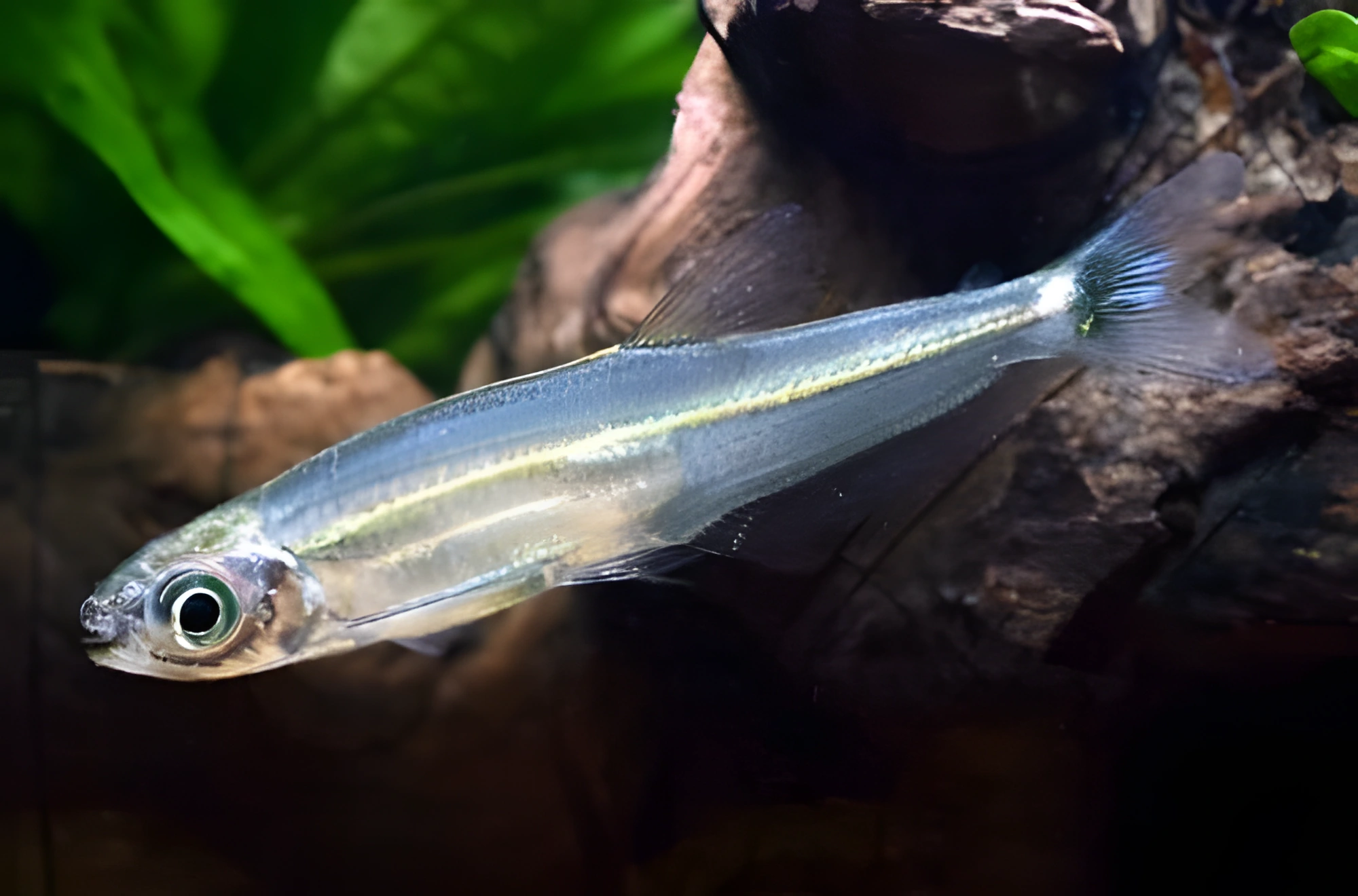
Adults of this fish can reach about 10 cm in length. Distinguishing males from females externally is quite difficult, as sexual dimorphism is weakly expressed. Their body is slender and elongated, with a silvery coloration, and a green stripe runs along the lateral line. This species is a representative of the small genus Iguanodectidae, which includes no more than 10 described species. A distinctive feature of fish in this genus is the structure of the mouth with a protruding jaw. Thanks to this anatomical feature, they are able to scrape algae from both rocks and driftwood. This trait is reflected in the species name: the prefix “Iguana” emphasizes the analogy with iguana reptiles, which feed on marine plants growing on rocks.
Habitat
The natural habitats of this fish are in South America, covering almost the entire vast Amazon River basin and its numerous tributaries. It prefers small streams, channels, and floodplain lakes located under the dense shade of the tropical forest.
Behavior and Compatibility
This peaceful, active fish coexists well with other non-aggressive and non-predatory species of comparable size. It is preferable to keep it in a school of 8–10 individuals; if the number of fish is smaller, it may become overly timid.
Care and Maintenance
For comfortable keeping of a school of 8–10 Green-Striped Tetras, an aquarium of at least 250 liters will be required. The decor can be anything. The fish does not have strict requirements for decoration and can even live in a semi-empty tank, as is often seen in pet stores. Its wide habitat range has led to its ability to adapt to a fairly wide range of keeping conditions compared to other tetras. It prefers water with slight acidity and low to medium hardness. Nevertheless, it is not recommended to introduce it into a biologically unstable aquarium. It is extremely important to maintain a constantly stable aquatic environment and avoid the accumulation of organic waste.
Diet
As an omnivorous species, the Green-Striped Tetra readily accepts most common aquarium fish foods in a home aquarium. Its daily diet can include live, frozen, and dry foods. It is recommended to include foods rich in plant components in its diet.
Breeding and Reproduction
Breeding in captivity is not well studied. It is known that sexually mature males acquire brighter coloration and develop small hooks on the rays of the anal fin during the spawning period. Successful reproduction requires creating conditions that mimic natural ones, including soft, slightly acidic water and the presence of fine-leaved plants among which the fish can lay their eggs. It is recommended to keep a group of individuals with a predominance of females to reduce aggression between males.
Diseases
Specific diseases that manifest exclusively in this fish species have not been recorded. When proper keeping conditions are maintained — stable water quality, balanced nutrition, absence of conflicting tank mates — health problems usually do not arise. The main cause of diseases is the deterioration of conditions, which leads to a weakening of immunity, making the fish vulnerable to ubiquitous infections. If signs of illness such as lethargy, emaciation, refusal to eat, or clamped fins are observed, the basic water parameters should be checked immediately. Often, normalizing living conditions contributes to self-recovery. However, if the fish is severely weakened or has obvious injuries, medication may be required. More detailed information on symptoms and treatment methods can be found in the “Aquarium Fish Diseases” section.
How to choose
When selecting individuals, attention should be paid to the overall activity of the fish and the cleanliness of their skin. Healthy specimens should have clear eyes, tightly clamped fins without signs of damage or film, and exhibit typical schooling behavior for the species. Avoid fish with signs of emaciation, sunken bellies, or swimming abnormalities. Since the species is sensitive to water quality, it is recommended to assess the condition of the aquarium in the store: clean water and the absence of dead fish in neighboring tanks are important indicators of the well-being of the batch.
Frequently asked questions
The essentials: size, tank volume, water parameters and care
How big does Green-Striped Tetra get?
An adult reaches 10 cm in length. Plan the tank around the maximum size: the fish quickly outgrows a cramped setup.
What size aquarium does Green-Striped Tetra need?
The minimum recommended volume is 250 L. A smaller tank speeds up nitrate build-up and raises stress levels.
What water parameters does Green-Striped Tetra need?
Temperature 20–28 °C, pH 5–7.5, hardness 5–12 dGH. Stability matters more than exact values: sudden swings are harder on the fish than a small deviation from the ideal.
How long does Green-Striped Tetra live?
Around 5 years when kept properly. Lifespan depends directly on tank volume, water quality and a varied diet.
Is Green-Striped Tetra aggressive?
Temperament: peaceful (regular). Keep this in mind when choosing tank mates.
How many Green-Striped Tetra should be kept together?
Recommended setup: group (8–10 individuals). Ignoring this is a common cause of stress and disease.
What does Green-Striped Tetra eat?
Diet type: any (universal). Feed small portions that are finished within a couple of minutes — overfeeding does more harm than underfeeding.
What is the scientific name of Green-Striped Tetra?
The scientific name of the species is Iguanodectes spilurus, family Iguanodectidae. It also appears in the literature as: Iguanodectes tenuis, Iquanodectes spilurus, Piabuca spilurus.