Temperature26 – 30 °C
Natural range
- Pará area
- Brazil area
CatfishConservation status: Critically endangered CR
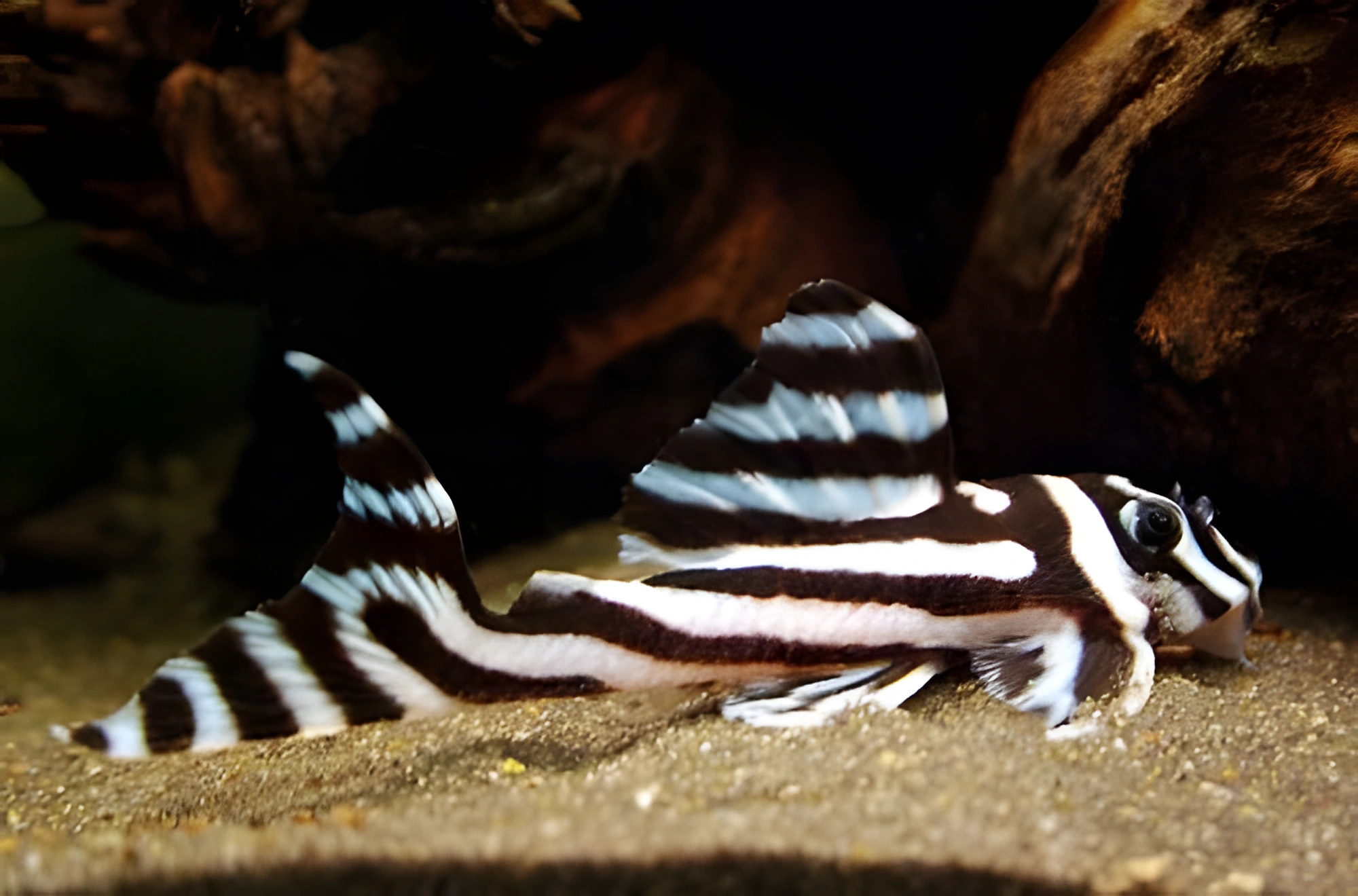
The Zebra Hypancistrus, scientifically known as Hypancistrus zebra or simply Zebra Pleco, belongs to the Loricariidae family. This species appeared in the aquarium hobby relatively recently. From the 1990s, there was an active supply of these fish from Brazil. However, in 2004, the Brazilian government imposed a ban on their export from the country, based on ecological considerations. Fortunately, by that time, the catfish were already successfully bred in artificial conditions, which allowed them to remain available to aquarists, and the ban did not have a significant impact. Today, the Zebra Hypancistrus is considered one of the most attractive aquarium fish among catfishes and is very popular.
- Required aquarium volume
- 60 L
- Size in aquarium
- 8 cm
- Temperature
- 26 – 30 °C
- Temperament
- Peaceful (regular)
Parameters
Water pHSlightly acidic (6) – Neutral (7.5)
Water dHVery soft (2) – Hard (15)
Water salinityno salt (freshwater)
Size in aquarium8 cm
Lifespan12 years
TemperamentPeaceful (regular)
Toward small fishnot a predator
Required aquarium volume60 L
Lightingdimmed or moderate
Substratesoft peat-based
Water flowweak or moderate
FeedingSinking (any)
CareBoth solitary and in group (flexible)
Description
Adults of this species reach approximately 8 cm in length. Their bodies are adorned with a contrasting pattern of black and white stripes, resembling a zebra, which is the basis for their name. This same pattern extends to their fins and tail. Sexual dimorphism is quite subtle. However, upon closer inspection, some catfish may show small serrations on the first rays of their pectoral fins — this is a characteristic sign of males, while females lack such marks.
Habitat
The natural habitat of these fish is the Xingu River basin, a right tributary of the Amazon, located closer to its delta. It flows predominantly through Brazilian territory. The Zebra Pleco prefers moderate currents, inhabiting areas where accumulations of rock formations are scattered over sandy substrate.
Behavior and Compatibility
In terms of temperament, this species is suitable for cohabitation with many aquarium fish. However, due to their need for high temperatures, the range of potential tank mates is significantly narrowed. In addition, the Zebra Pleco is quite shy and can experience stress in the presence of overly active fish. Ideally, they are kept in aquariums that mimic their biotopes. Coexistence is permissible with species such as Discus, Rummy-nose Tetra, Phantom Tetra, and others capable of adapting to water temperatures around 29–30°C. These are territorial fish, so the catfish will compete for bottom shelters both with each other and with other catfishes. It is important to provide a sufficient number of hiding places.
Care and Maintenance
For a single fish, the optimal aquarium volume starts from 50 liters. When setting up the tank, it is important to try to recreate their natural habitat as much as possible. This involves using a sandy substrate with smooth stones and boulders of various sizes scattered across it. A cave-like shelter should be constructed from rock fragments, where the catfish can spend time. A large piece of driftwood can also be used as a decorative element. The presence of live plants is not mandatory. The Zebra Pleco prefers quite high temperatures, from 26 to 30°C, while needing a high content of dissolved oxygen. It is known that oxygen dissolves less well in warm water, so additional air diffusers must be installed to prevent hypoxia. Aquarium care is standard: in addition to maintaining recommended water parameters (temperature, pH, and dGH), regular cleaning of the substrate from organic waste is required, as well as weekly water changes of 15–20% of the volume with fresh water.
Diet
The diet of the Zebra Hypancistrus is primarily protein-based. This can include live or frozen foods such as bloodworms, as well as finely chopped pieces of mussels and shrimp. Vegetable supplements can also occasionally be included in their diet; for example, a small piece of cucumber can be offered for variety.
Breeding and Reproduction
Zebra Hypancistrus often spawn in home aquariums, so with suitable conditions, the appearance of fry is only a matter of time. To control the onset of the breeding period and ensure the safety of the offspring, a breeding tank can be used. This is usually a small tank with a volume of 30 liters or more. In its setup, shelters are crucial, which can be formed from small ceramic pots laid on their side, sections of PVC pipes, or special decorative elements imitating underwater grottoes and caves. The entrance hole should be only slightly wider than the fish. The shelter is placed near air diffusers to ensure a high level of oxygen and water circulation. Plants and substrate are not required in the breeding tank. Water parameters such as pH, dGH, and temperature should match the main aquarium. A stimulus for spawning is a water change (50–70% of the volume) with fresh water that is 2–4°C cooler, which mimics the rainy season in the wild. This procedure is repeated every 2–3 days. After some time, the catfish will enter the breeding period. Males, having chosen a suitable shelter, will begin to invite females there. Once the pair unites, they seclude themselves for several days. Then the female swims away, and the male remains to protect and care for the clutch. Usually, 7 to 15 eggs are laid. The fry hatch after a week, and after another 2–3 days, they emerge from the shelter and begin to swim freely. After this point, the male can be returned to the main aquarium. The fry should be fed specialized fry food for aquarium fish, as well as Artemia nauplii, microworms, and similar products. Fry are very voracious, so access to food should be constant.
Diseases
The main cause of most diseases in Leaf Fish is unsuitable keeping conditions and poor-quality nutrition. If initial symptoms are observed, it is first necessary to check water parameters and the concentration of dangerous substances such as ammonia, nitrites, and nitrates. If the indicators deviate from the norm, they should be brought back into order, and only then should treatment begin. More detailed information on symptoms and treatment methods can be found in the "Aquarium Fish Diseases" section.
How to choose
When choosing a Zebra Hypancistrus, preference should be given to individuals with active behavior, although they often hide in the store. Inspect the fish for intact fins, absence of white spots, ulcers, or film on the body, which may indicate bacterial or fungal infections. Avoid specimens with sunken bellies, which may indicate emaciation or internal parasites. Given the high cost and status of the species, it is recommended to buy fish only from reputable breeders, as wild-caught specimens are currently rarely available for sale due to the fishing ban.
Frequently asked questions
The essentials: size, tank volume, water parameters and care
How big does Zebra Pleco get?
An adult reaches 8 cm in length. Plan the tank around the maximum size: the fish quickly outgrows a cramped setup.
What size aquarium does Zebra Pleco need?
The minimum recommended volume is 60 L. A smaller tank speeds up nitrate build-up and raises stress levels.
What water parameters does Zebra Pleco need?
Temperature 26–30 °C, pH 6–7.5, hardness 2–15 dGH. Stability matters more than exact values: sudden swings are harder on the fish than a small deviation from the ideal.
How long does Zebra Pleco live?
Around 12 years when kept properly. Lifespan depends directly on tank volume, water quality and a varied diet.
Is Zebra Pleco aggressive?
Temperament: peaceful (regular). Keep this in mind when choosing tank mates.
How many Zebra Pleco should be kept together?
Recommended setup: both solitary and in group (flexible). Ignoring this is a common cause of stress and disease.
What does Zebra Pleco eat?
Diet type: sinking (any). Feed small portions that are finished within a couple of minutes — overfeeding does more harm than underfeeding.
What is the scientific name of Zebra Pleco?
The scientific name of the species is Hypancistrus zebra, family Loricariidae.