Temperature20 – 28 °C
Natural range
- Kalimantan area
- Borneo area
CyprinidsConservation status: Near threatened NT
Other scientific names: Barbus foerschi, Puntius foerschi, Systomus foerschi
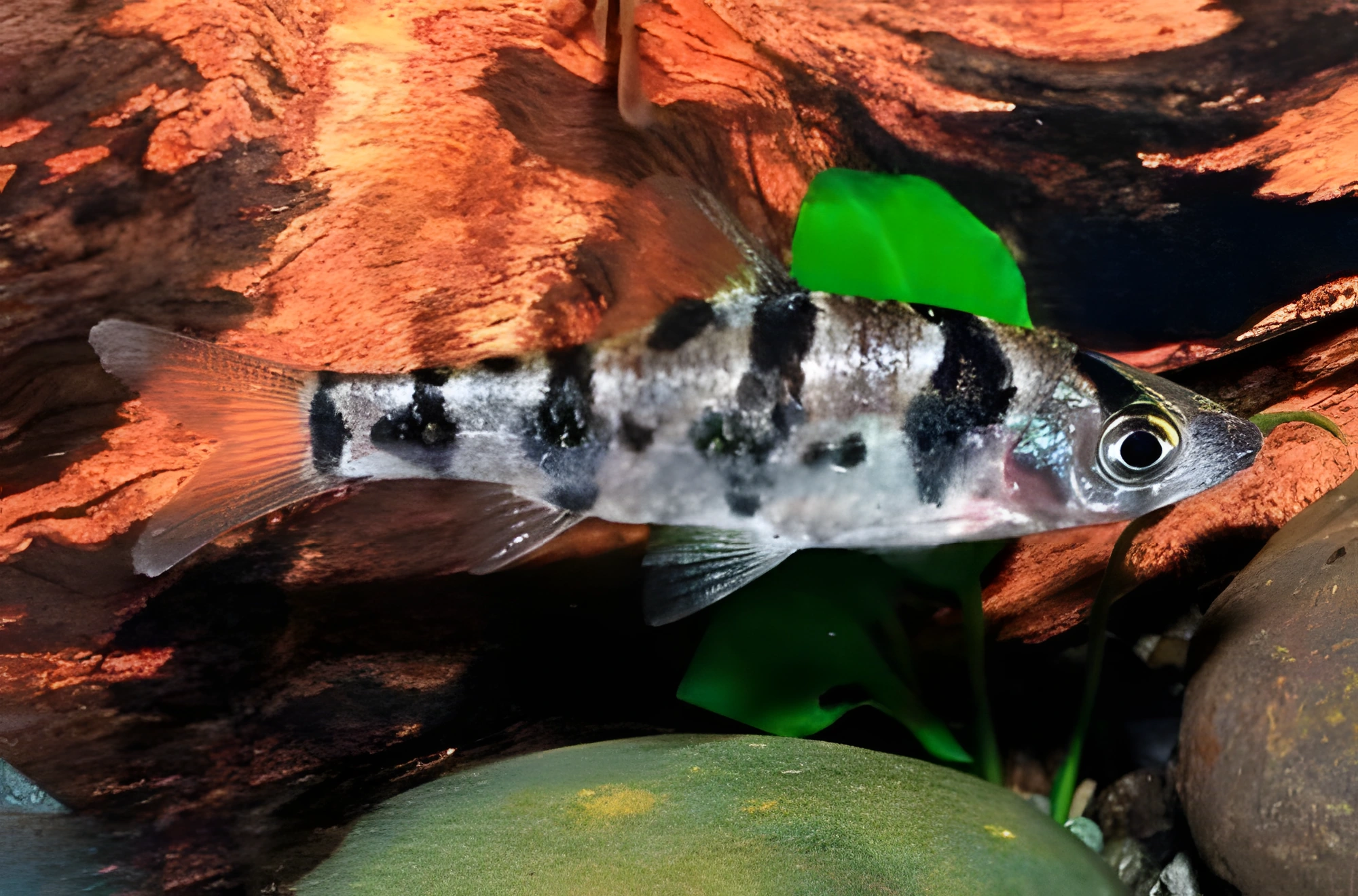
Desmopuntius foerschi, known as the Reticulated Barb, is a member of the Cyprinidae family. This active and peaceful fish will be an excellent addition to a mixed community of freshwater inhabitants. Its ease of care and unpretentiousness make it suitable even for beginner aquarists.
- Required aquarium volume
- 80 L
- Size in aquarium
- 5 – 5.3 cm
- Temperature
- 20 – 28 °C
- Temperament
- Peaceful (regular)
Parameters
Water pHSlightly acidic (5) – Neutral (7)
Water dHVery soft (1) – Medium hardness (10)
Water salinityno salt (freshwater)
Size in aquarium5 – 5.3 cm
Lifespan6 years
TemperamentPeaceful (regular)
Toward small fishnot a predator
Required aquarium volume80 L
Lightingdimmed or moderate
Substrateany, but dark
Water flowweak
FeedingSmall / appropriate size / pieces
CareLarge group (10+ individuals)
Description
Adults reach a length of up to 5 cm. Their coloration is silvery, with characteristic rows of uneven vertical stripes alternating with speckles. The fins and tail remain translucent. Sexual dimorphism is weakly expressed; males and females are almost identical in appearance. However, during the spawning period, females typically become slightly larger.
Habitat
The natural habitats of this species are found on the island of Kalimantan, one of the largest in Southeast Asia. Here, the Reticulated Barb inhabits swamps, as well as associated rivers and streams that flow in the shade of tropical forests. The water in these bodies of water is typically stagnant, enriched with tannins released from decaying plant organic matter, which gives it a characteristic brown tint. The bottom substrate can vary depending on the specific location, most often consisting of peat, sand, or mud.
Behavior and Compatibility
As peaceful schooling fish, they coexist wonderfully with many other species of similar size. However, it is advisable to avoid keeping them with overly active or, especially, aggressive tankmates. It is recommended to form a group of at least 8–10 individuals, ensuring a mixed-sex school.
Care and Maintenance
For comfortable keeping of a small school of these fish, an aquarium of at least 80 liters is recommended. The decor should preferably include driftwood, dark substrate, and abundant vegetation, including shade-loving species and floating plants. Lighting should be subdued. Adding dried leaves will not only give the aquarium a more natural look but also enrich the water with tannins, creating conditions similar to the Reticulated Barb's natural habitat. Additional information can be found in the article "Which tree leaves can be used in an aquarium." Maintaining stable water parameters and suitable hydrochemical indicators is one of the key factors for successful keeping. Regular aquarium maintenance includes standard procedures: weekly water changes of approximately 20% of the volume with fresh water, removal of organic debris (such as uneaten food and excrement), prophylactic inspection of equipment, and constant monitoring of pH, dGH, and oxidizability values. Since Reticulated Barbs inhabit bodies of water with weak currents, when choosing a filtration system, preference should be given to models that do not create a strong circulation flow.
Diet
These fish are omnivorous and undemanding eaters, readily consuming most common foods. The quality and composition of the diet directly affect the vibrancy of their coloration and the overall health of the individuals, so choosing products from reputable manufacturers is preferable.
Breeding and Reproduction
Reliable information about successful breeding of this species in aquarium conditions is absent. In literature and specialized sources, information on the spawning behavior, stimulation, and rearing of fry of this species has not been recorded.
Diseases
In a balanced aquarium ecosystem, closely matching the requirements of this species, diseases are extremely rare. Illnesses often arise due to deteriorating habitat quality, contact with already sick fish, or physical injuries. If these factors could not be avoided, the “Aquarium Fish Diseases” section will provide detailed information on symptoms and treatment methods.
How to choose
When purchasing, choose active individuals with clean fins and no visible damage to their scales. It is important to assess the overall condition of the fish in the aquarium: healthy specimens should show interest in food and not exhibit signs of emaciation or unnatural behavior. Due to the rarity of the species, wild-caught individuals are often found for sale, so it is recommended to clarify with the seller the fish's adaptation period to aquarium conditions and the composition of the proposed diet. Avoid purchasing fish that appear sluggish, hide in corners, or show signs of infectious diseases, as this species is sensitive to abrupt changes in water parameters.
Frequently asked questions
The essentials: size, tank volume, water parameters and care
How big does Reticulated Barb get?
An adult reaches 5–5.3 cm in length. Plan the tank around the maximum size: the fish quickly outgrows a cramped setup.
What size aquarium does Reticulated Barb need?
The minimum recommended volume is 80 L. A smaller tank speeds up nitrate build-up and raises stress levels.
What water parameters does Reticulated Barb need?
Temperature 20–28 °C, pH 5–7, hardness 1–10 dGH. Stability matters more than exact values: sudden swings are harder on the fish than a small deviation from the ideal.
How long does Reticulated Barb live?
Around 6 years when kept properly. Lifespan depends directly on tank volume, water quality and a varied diet.
Is Reticulated Barb aggressive?
Temperament: peaceful (regular). Keep this in mind when choosing tank mates.
How many Reticulated Barb should be kept together?
Recommended setup: large group (10+ individuals). Ignoring this is a common cause of stress and disease.
What does Reticulated Barb eat?
Diet type: small / appropriate size / pieces. Feed small portions that are finished within a couple of minutes — overfeeding does more harm than underfeeding.
What is the scientific name of Reticulated Barb?
The scientific name of the species is Desmopuntius foerschi, family Cyprinids (Cyprinidae). It also appears in the literature as: Barbus foerschi, Puntius foerschi, Systomus foerschi.