Temperature18 – 22 °C
Natural range
- China area
- Korea area
- Japan area
- Taiwan area
CyprinidsConservation status: Least concern LC
Other scientific names: Leuciscus macropus, Leuciscus minor, Leuciscus platypus
The scientific name Zacco platypus refers to the Common Zacco, a member of the family Cyprinidae, well-known as the carps. The habitat of this fish extends across East Asia, found in river systems from the northern regions of China to the northern provinces of Vietnam. It prefers biotopes with active currents, such as mountain rivers and streams, as well as lakes, but is less commonly found in stagnant swamps.
- Required aquarium volume
- 200 L
- Size in aquarium
- 13 cm
- Temperature
- 18 – 22 °C
- Temperament
- Peaceful (regular)
Parameters
Water pHNeutral (6.5) – Neutral (7.5)
Water dHSoft (5) – Hard (15)
Water salinityno salt (freshwater)
Size in aquarium13 cm
Lifespan5 years
TemperamentPeaceful (regular)
Toward small fishnot a predator
Required aquarium volume200 L
Lightingmoderate (regular)
Substrateany (no restrictions)
Water flowmoderate or strong
FeedingAny (universal)
CareMixed (solitary / pair / group)
Description
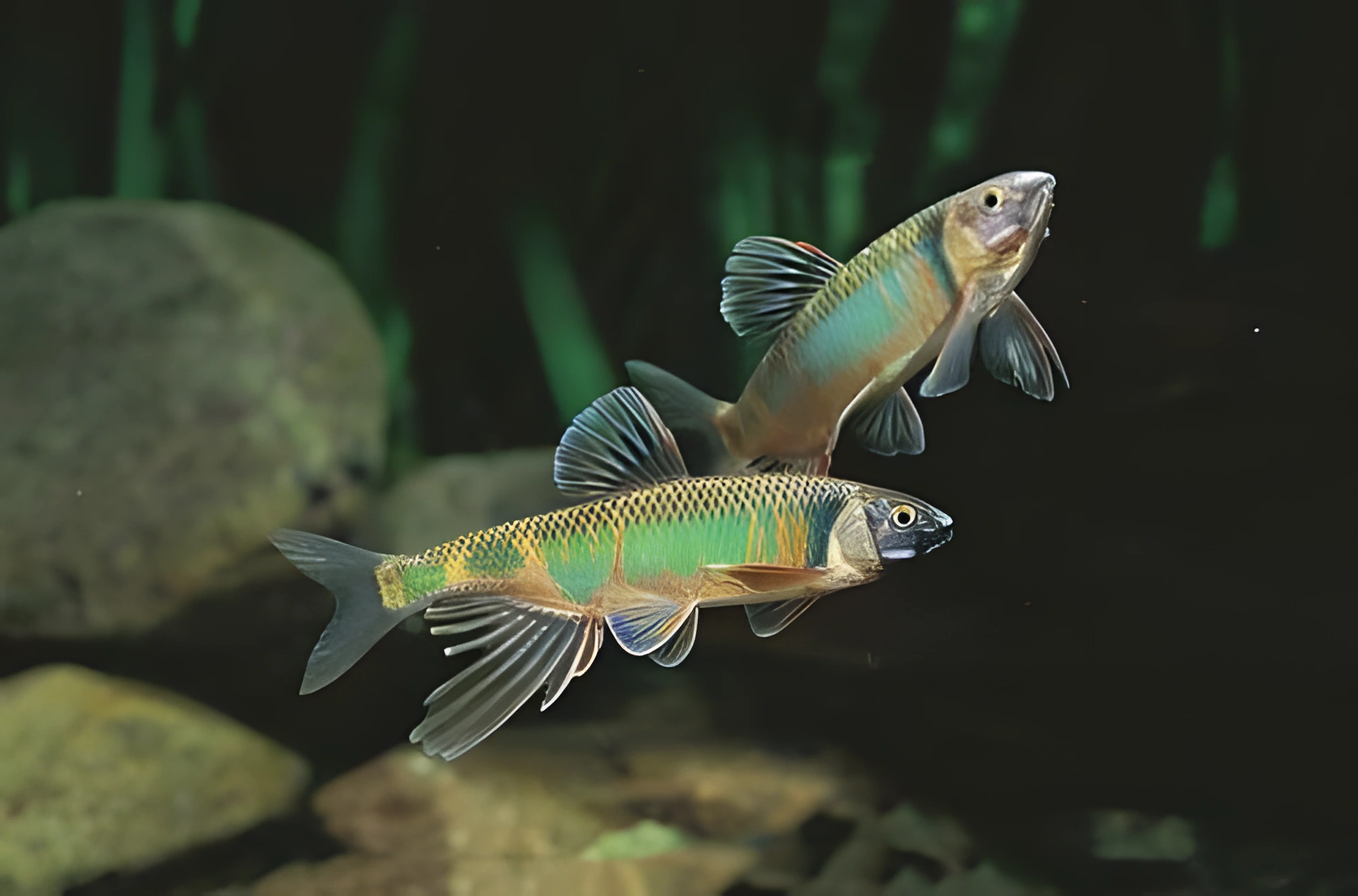
Although adult individuals of this species can grow up to 20 cm in length, their size most often does not exceed 13 cm. It is noted that males are larger and have more intense coloration compared to females. During the breeding season, their coloration becomes particularly striking: bright orange stripes appear on a gray-blue background. These same warm hues are characteristic of the belly, anal, pelvic, and pectoral fins, which acquire a rich blue color. The anal fin in both sexes is noticeably elongated.
Habitat
Common Zacco is widely distributed in East Asia, including territories of China, Korea, Japan, Taiwan, and northern Vietnam [animalia.bio]. In nature, it primarily inhabits flowing bodies of water, such as rivers and mountain streams with clear, oxygen-rich water [aquaportail.com]. Adult individuals prefer shallow waters with fast currents, where they stay near the bottom, often hiding among rocks [animalia.bio].
Behavior and Compatibility
This fish is characterized by its activity and peaceful temperament. When young, they prefer to live in schools, which serves as protection. However, as they mature, the need for constant company of their conspecifics disappears. They get along well with other non-aggressive species of comparable size due to their peaceful nature. It is important to remember that their excessive activity can cause discomfort to slower tank mates.
Care and Maintenance
For a group consisting of 4–5 individuals, the optimal aquarium volume will be no less than 200 L. Common Zacco feels most comfortable in conditions of moderate current, so the presence of an efficient filter will be very useful. A powerful filtration system, coupled with regular aquarium cleaning and partial water changes, helps maintain a low level of pollution. Since the fish originates from subtropical regions, it requires relatively cool water; prolonged exposure to temperatures above 22–23°C is unacceptable. The aquarium decor can be arbitrary, the main thing is to provide enough free space for active swimming.
Diet
In their natural habitat, Zacco feed on zooplankton, various algae, fry of other fish, and detritus. In aquarium conditions, they are easily accustomed to alternative foods, including popular dry products such as flakes or pellets.
Breeding and Reproduction
In the natural environment, reproduction occurs in two stages: spring (February–April) and summer (June–August) [animalia.bio]. The fish are egg-layers, do not care for their offspring, and often bury their eggs in the substrate by fanning with their tails [animalia.bio]. Successful breeding in aquarium conditions is difficult due to specific spawning requirements, including imitation of seasonal temperature changes and the presence of strong currents [aquariumdatabase.nl, aquainfo.nl].
Diseases
No specific diseases exclusively characteristic of this species have been identified. Like other members of the carp family, this species is sensitive to water quality and oxygen levels. If keeping conditions are violated, especially with poor filtration or overpopulation, the fish are susceptible to bacterial infections, fungal skin lesions, and fin rot.
Disease prevention is based on maintaining water cleanliness, ensuring a strong current, and regular partial water changes. Due to their high activity and tendency to jump, fish can sustain mechanical injuries, so a tight-fitting lid is a mandatory safety requirement. If signs of stress or damage appear, it is necessary to check water parameters and exclude the presence of aggressive tank mates.
How to choose
When purchasing, select active, mobile individuals with clean fins and no visible skin damage [aquariumdatabase.nl]. It is important to consider that young fish may be peaceful, but as they mature, they exhibit pronounced territoriality and predatory tendencies, so they should not be kept with small species [aquainfo.nl]. Fish are prone to jumping, so a secure aquarium cover must be provided during transport and subsequent keeping [aquainfo.nl].
Frequently asked questions
The essentials: size, tank volume, water parameters and care
How big does Common Zacco get?
An adult reaches 13 cm in length. Plan the tank around the maximum size: the fish quickly outgrows a cramped setup.
What size aquarium does Common Zacco need?
The minimum recommended volume is 200 L. A smaller tank speeds up nitrate build-up and raises stress levels.
What water parameters does Common Zacco need?
Temperature 18–22 °C, pH 6.5–7.5, hardness 5–15 dGH. Stability matters more than exact values: sudden swings are harder on the fish than a small deviation from the ideal.
How long does Common Zacco live?
Around 5 years when kept properly. Lifespan depends directly on tank volume, water quality and a varied diet.
Is Common Zacco aggressive?
Temperament: peaceful (regular). Keep this in mind when choosing tank mates.
How many Common Zacco should be kept together?
Recommended setup: mixed (solitary / pair / group). Ignoring this is a common cause of stress and disease.
What does Common Zacco eat?
Diet type: any (universal). Feed small portions that are finished within a couple of minutes — overfeeding does more harm than underfeeding.
What is the scientific name of Common Zacco?
The scientific name of the species is Zacco platypus, family Cyprinids (Cyprinidae). It also appears in the literature as: Leuciscus macropus, Leuciscus minor, Leuciscus platypus.