Temperature23 – 27 °C
Natural range
- Lake Tanganyika area
- Democratic Republic of the Congo area
- Tanzania area
- Northwestern Lake Tanganyika area
CichlidsConservation status: Critically endangered CR
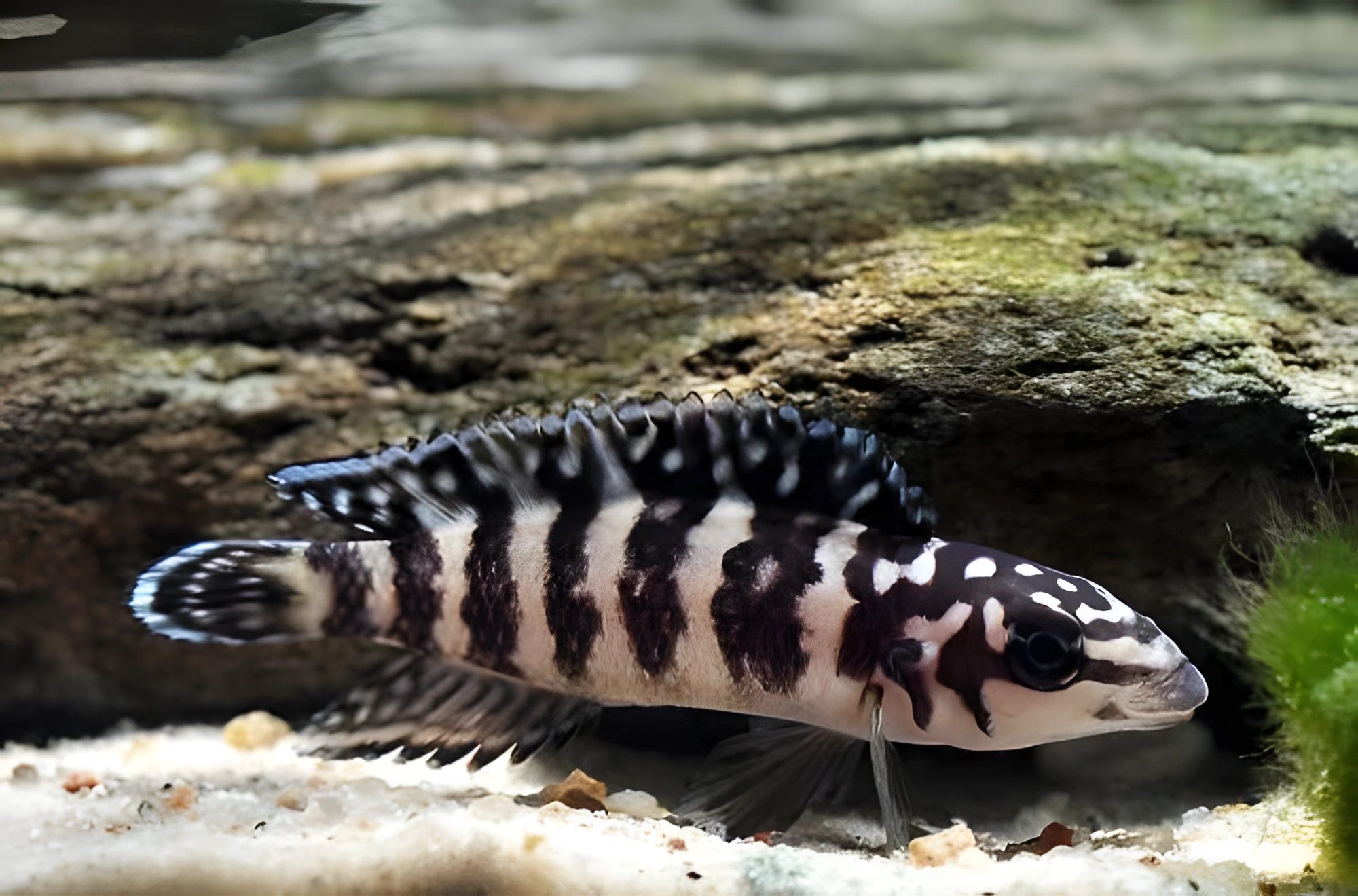
The Masked Julie, also known by its scientific name Julidochromis transcriptus, belongs to the Cichlidae family. These agile fish always attract attention with their activity. They are not difficult to keep and breed, provided suitable conditions are created for them. They can be confidently recommended even to beginner aquarists.
- Required aquarium volume
- 100 L
- Size in aquarium
- 7 cm
- Temperature
- 23 – 27 °C
- Temperament
- Semi-peaceful (aggression when space is limited)
Parameters
Water pHNeutral (7.5) – Alkaline (9.5)
Water dHMedium hardness (10) – Very hard (25)
Water salinityno salt (freshwater)
Size in aquarium7 cm
Lifespan8 years
TemperamentSemi-peaceful (aggression when space is limited)
Toward small fishnot a predator
Required aquarium volume100 L
Lightingmoderate (regular)
Substratesandy (regular, light)
Water flowweak or moderate
FeedingSinking (any)
CarePair (male/female)
Description
Adults typically reach about 7 cm in length. Sexual dimorphism in this species is quite weak, making males and females practically indistinguishable to the untrained eye. The fish has a torpedo-shaped body and a long dorsal fin that extends from the head almost to the caudal peduncle. The coloration is dominated by black and white tones, forming a characteristic pattern of vertical stripes. A thin bluish edge is often visible along the fin margins and caudal part.
Habitat
This species is endemic to Lake Tanganyika, located in Africa. Considered one of the largest freshwater bodies on Earth, the lake serves as a natural aquatic border for four countries, with the longest sections falling within the Democratic Republic of Congo and Tanzania. The fish prefer the northwestern coast, where they are found at depths of 5 to 24 meters. Their habitat is characterized by a rocky shoreline interspersed with sandy bottom areas.
Behavior and Compatibility
Julidochromis species coexist well with other non-aggressive species of similar size if they originate from the same biotope. Intraspecific relationships are characterized by stronger individuals tending to dominate, so a sufficiently spacious aquarium will be required to maintain a group of fish. In limited water volumes, it is better to keep them individually or in pairs.
Care and Maintenance
For a small group of Masked Julies, the optimal aquarium volume starts from 100 liters. The decor can be quite simple: it is sufficient to use a sand substrate and form shelters from piles of stones and rocks, creating caves and crevices. Any hollow objects of suitable size that are safe for aquarium use, including ceramic pots or PVC pipe sections, can serve as alternative shelters. A key aspect of care is ensuring stable water parameters, such as pH and dGH, which should correspond to Lake Tanganyika conditions. It is also exceptionally important to install an efficient filtration system and regularly clean the aquarium, performing weekly water changes of 10–15% of the volume with fresh water.
Diet
In their natural habitat, the diet of these fish consists of zooplankton and various benthic invertebrates. In aquarium conditions, they readily adapt to dry sinking foods, such as flakes or pellets. To enrich their diet, it is recommended to include frozen or live foods, for example, bloodworms and brine shrimp.
Breeding and Reproduction
Breeding this species in a home aquarium is quite feasible. During the breeding period, the fish form a monogamous pair. Notably, such pairs usually form only between males and females that have grown up together. For spawning, the female chooses a hidden cave at the bottom of the aquarium, where she alternately lays several batches of eggs. Thus, fry of different ages may be present in a single brood. Throughout the incubation period, the fish vigilantly guard the clutch, and parental care continues even after the young hatch. However, despite their protection, the survival rate of the fry is often suboptimal. They frequently fall victim to other aquarium inhabitants, and as they grow, even to their own parents. Therefore, for maximum breeding effectiveness, it is recommended to use a separate species-specific aquarium.
Diseases
Inappropriate keeping conditions and poor-quality food are the main causes of most diseases in Lake Tanganyika cichlids, often leading to ailments such as African bloat. Upon detecting the first symptoms, it is extremely important to check water parameters and ensure the absence of high concentrations of ammonia, nitrites, nitrates, and other dangerous substances. If necessary, all parameters should be normalized, and only then should treatment begin. More detailed information on symptoms and treatment methods is presented in the section “Diseases of Aquarium Fish.”
How to choose
When purchasing, choose active fish that show interest in their surroundings and do not constantly hide in corners. Pay attention to the integrity of the fins and the absence of visible damage, spots, or film on the scales. A healthy specimen should have clear eyes and a firm, proportionate body without signs of emaciation or bloating. Avoid individuals that appear lethargic, breathe heavily, or exhibit atypical behavior, such as constant swaying in place. In the store, the fish should be kept in conditions close to the Lake Tanganyika biotope, with shelters available, as a prolonged lack of hiding places causes them severe stress. It is recommended to acquire individuals from the same group, as established pairs are more stable and adapt more easily to a new aquarium.
Frequently asked questions
The essentials: size, tank volume, water parameters and care
How big does Masked Julie get?
An adult reaches 7 cm in length. Plan the tank around the maximum size: the fish quickly outgrows a cramped setup.
What size aquarium does Masked Julie need?
The minimum recommended volume is 100 L. A smaller tank speeds up nitrate build-up and raises stress levels.
What water parameters does Masked Julie need?
Temperature 23–27 °C, pH 7.5–9.5, hardness 10–25 dGH. Stability matters more than exact values: sudden swings are harder on the fish than a small deviation from the ideal.
How long does Masked Julie live?
Around 8 years when kept properly. Lifespan depends directly on tank volume, water quality and a varied diet.
Is Masked Julie aggressive?
Temperament: semi-peaceful (aggression when space is limited). Keep this in mind when choosing tank mates.
How many Masked Julie should be kept together?
Recommended setup: pair (male/female). Ignoring this is a common cause of stress and disease.
What does Masked Julie eat?
Diet type: sinking (any). Feed small portions that are finished within a couple of minutes — overfeeding does more harm than underfeeding.
What is the scientific name of Masked Julie?
The scientific name of the species is Julidochromis transcriptus, family Cichlidae.