Temperature18 – 26 °C
Natural range
- Myanmar to Malaysia area
CyprinidsConservation status: Data deficient DD
Other scientific names: Barbodes rubripinnis, Barbus caudimarginatus, Barbus rubripinnis, Barbus sarana, Barbus sarananella, Barbus saranella
The Java Barb, scientifically known as Systomus rubripinnis, is a member of the Cyprinidae family. This rather large fish exhibits remarkable hardiness and relatively low maintenance requirements. It is rarely encountered in aquariums, primarily outside of Southeast Asia.
- Required aquarium volume
- 500 L
- Size in aquarium
- 20 – 25 cm
- Temperature
- 18 – 26 °C
- Temperament
- Semi-peaceful (including aggression during spawning / intraspecific conflicts)
Parameters
Water pHSlightly acidic (6) – Slightly alkaline (8)
Water dHVery soft (2) – Very hard (21)
Water salinityno salt (freshwater)
Size in aquarium20 – 25 cm
Lifespan8 years
TemperamentSemi-peaceful (including aggression during spawning / intraspecific conflicts)
Toward small fishnot a predator
Required aquarium volume500 L
Lightingdimmed
Substrateany (no restrictions)
Water flowmoderate or strong
FeedingAny (universal)
CareGroup (8–10 individuals)
Description
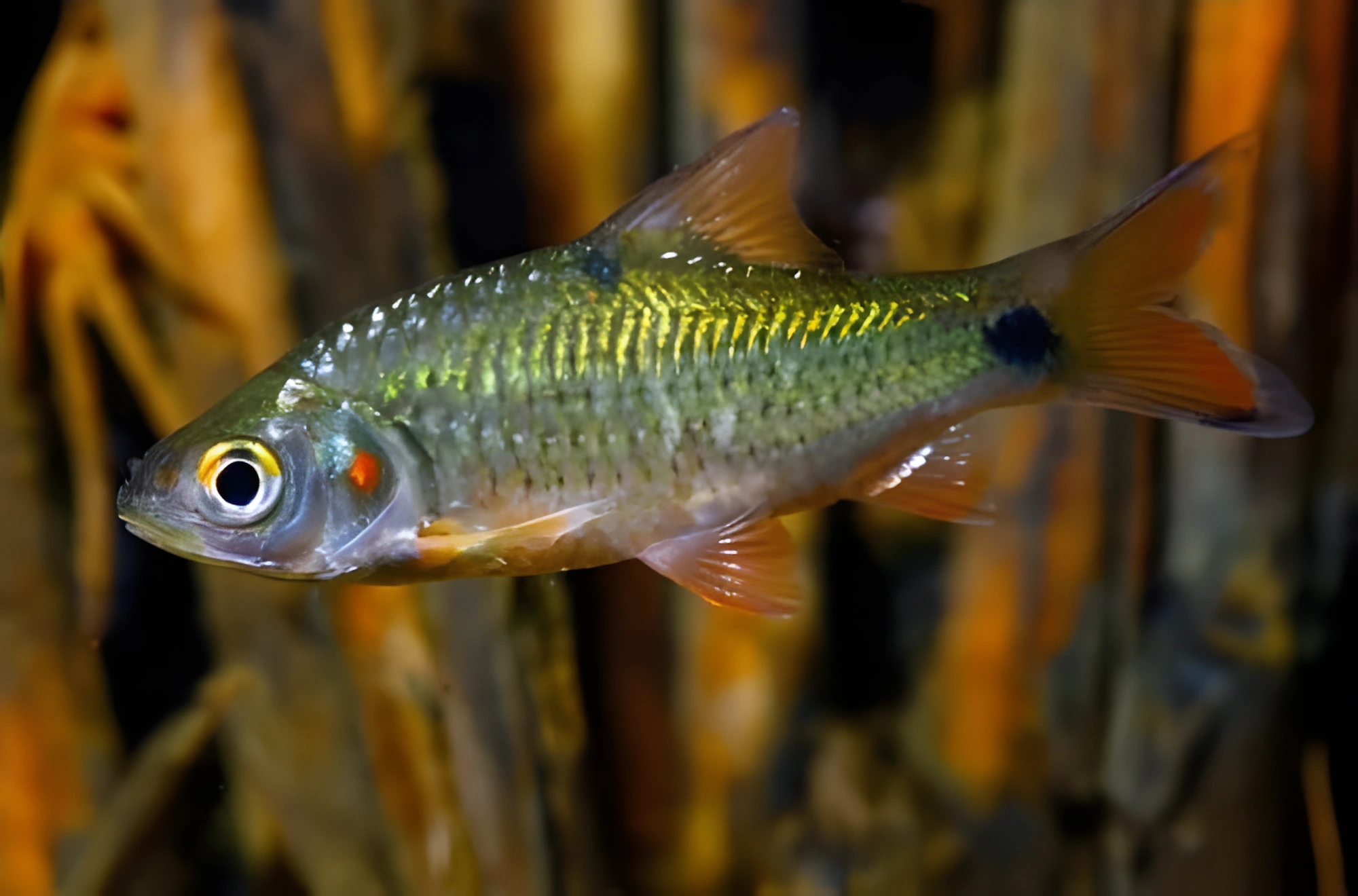
Adults of this fish can reach a length of up to 25 cm. They are characterized by a silvery coloration with a slight greenish tint. The fins, as well as the tail, have a reddish hue, with noticeable black edges on the tail. A distinctive feature is also the red markings on the gill covers. Sexual dimorphism in the species is not pronounced. Males are usually somewhat smaller than females and have brighter coloration; during spawning, small tubercles appear on their heads, which are barely noticeable at other times. Interestingly, specimens from different regions, such as Thailand and Vietnam, may show minor external differences.
Habitat
Its origin is rooted in Southeast Asia. Contrary to its name, the habitat of Systomus rubripinnis extends beyond the island of Java in Indonesia, covering vast territories from Myanmar to Malaysia. It inhabits the basins of significant rivers such as the Mae Klong, Chao Phraya, and Mekong, preferring the main channels. During the rainy season, when water levels rise, these fish migrate to flooded areas of tropical forests for reproduction.
Behavior and Compatibility
This is an active schooling fish that does not get along well with smaller species. The latter may accidentally become victims or experience constant stress. It is recommended to choose fish of similar size as tank mates, especially those that inhabit the bottom layer, such as catfish or loaches.
Care and Maintenance
A small school of these fish will require an aquarium of at least 500–600 liters. The decor can be arbitrary, but it is desirable to recreate a semblance of a riverbed: use a rocky substrate with boulders and several large snags. Dim lighting is preferred. The presence of an internal current in the aquarium will be beneficial. Among the aquatic plants that can take root, hardy mosses, ferns, and Anubias, which can attach to various surfaces, can be highlighted; other plants are likely to grow poorly and may be eaten. Successful keeping of Java Barbs is only possible with very clean and well-oxygenated water. Maintaining such conditions requires a powerful filtration system, as well as regular maintenance, including weekly partial water changes and removal of organic waste, such as excrement and food residues.
Diet
This omnivorous species will readily accept most common aquarium foods. To maintain full growth and development, it is important to include vegetable supplements in their diet; otherwise, there is a high probability that they will damage decorative aquatic plants.
Breeding and Reproduction
At the time of preparation of this material, there is no reliable information on the breeding of this species in home aquariums. However, such a lack of information may be due to the low prevalence of the Java Barb in aquaristics. In its natural habitats, it is often bred as a food fish.
Diseases
In a balanced aquarium ecosystem, closely matching the requirements of this species, diseases are extremely rare. Illnesses often arise due to deteriorating habitat quality, contact with already sick fish, or physical injuries. If these factors could not be avoided, the “Aquarium Fish Diseases” section will provide detailed information on symptoms and treatment methods.
How to choose
When purchasing a Java Barb, select active individuals without visible damage to scales and fins. It is important to consider that this is a large and active species, so in the store, the fish should exhibit pronounced schooling behavior and show interest in food. Avoid purchasing sluggish fish, individuals with signs of emaciation, or unnaturally bloated bellies.
- Inspect the condition of the fins for the absence of torn edges or film
- Ensure there are no white spots or ulcers on the body, characteristic of parasitic diseases
- Ask the seller about the keeping conditions and diet, as adaptation to new foods for large barbs may take time
Frequently asked questions
The essentials: size, tank volume, water parameters and care
How big does Java Barb get?
An adult reaches 20–25 cm in length. Plan the tank around the maximum size: the fish quickly outgrows a cramped setup.
What size aquarium does Java Barb need?
The minimum recommended volume is 500 L. A smaller tank speeds up nitrate build-up and raises stress levels.
What water parameters does Java Barb need?
Temperature 18–26 °C, pH 6–8, hardness 2–21 dGH. Stability matters more than exact values: sudden swings are harder on the fish than a small deviation from the ideal.
How long does Java Barb live?
Around 8 years when kept properly. Lifespan depends directly on tank volume, water quality and a varied diet.
Is Java Barb aggressive?
Temperament: semi-peaceful (including aggression during spawning / intraspecific conflicts). Keep this in mind when choosing tank mates.
How many Java Barb should be kept together?
Recommended setup: group (8–10 individuals). Ignoring this is a common cause of stress and disease.
What does Java Barb eat?
Diet type: any (universal). Feed small portions that are finished within a couple of minutes — overfeeding does more harm than underfeeding.
What is the scientific name of Java Barb?
The scientific name of the species is Systomus rubripinnis, family Cyprinids (Cyprinidae). It also appears in the literature as: Barbodes rubripinnis, Barbus caudimarginatus, Barbus rubripinnis.