Temperature20 – 24 °C
Natural range
- Honshu area
- Japan area
LoachesConservation status: Least concern LC
Other scientific names: Cobitis delicata
The Japanese Loach, scientifically known as Niwaella delicata, belongs to the family Cobitidae (Loaches). This fish is valued not only by aquarists but also as a commercial catch. It is most commonly found in Japan, while it is rarely seen in Europe. Due to its specific herbivorous diet and particular keeping requirements, this species is not suitable for beginner aquarists.
- Required aquarium volume
- 80 L
- Size in aquarium
- 9 – 11 cm
- Temperature
- 20 – 24 °C
- Temperament
- Peaceful (regular)
Parameters
Water pHNeutral (6.5) – Neutral (7.5)
Water dHVery soft (1) – Medium hardness (8)
Water salinityno salt (freshwater)
Size in aquarium9 – 11 cm
Lifespan10 years
TemperamentPeaceful (regular)
Toward small fishnot a predator
Required aquarium volume80 L
Lightingbright
Substraterocky (rock formations, boulders, etc.)
Water flowmoderate or strong
FeedingPlant-based (algae, vegetables)
CareSmall group (3–4 individuals)
Description
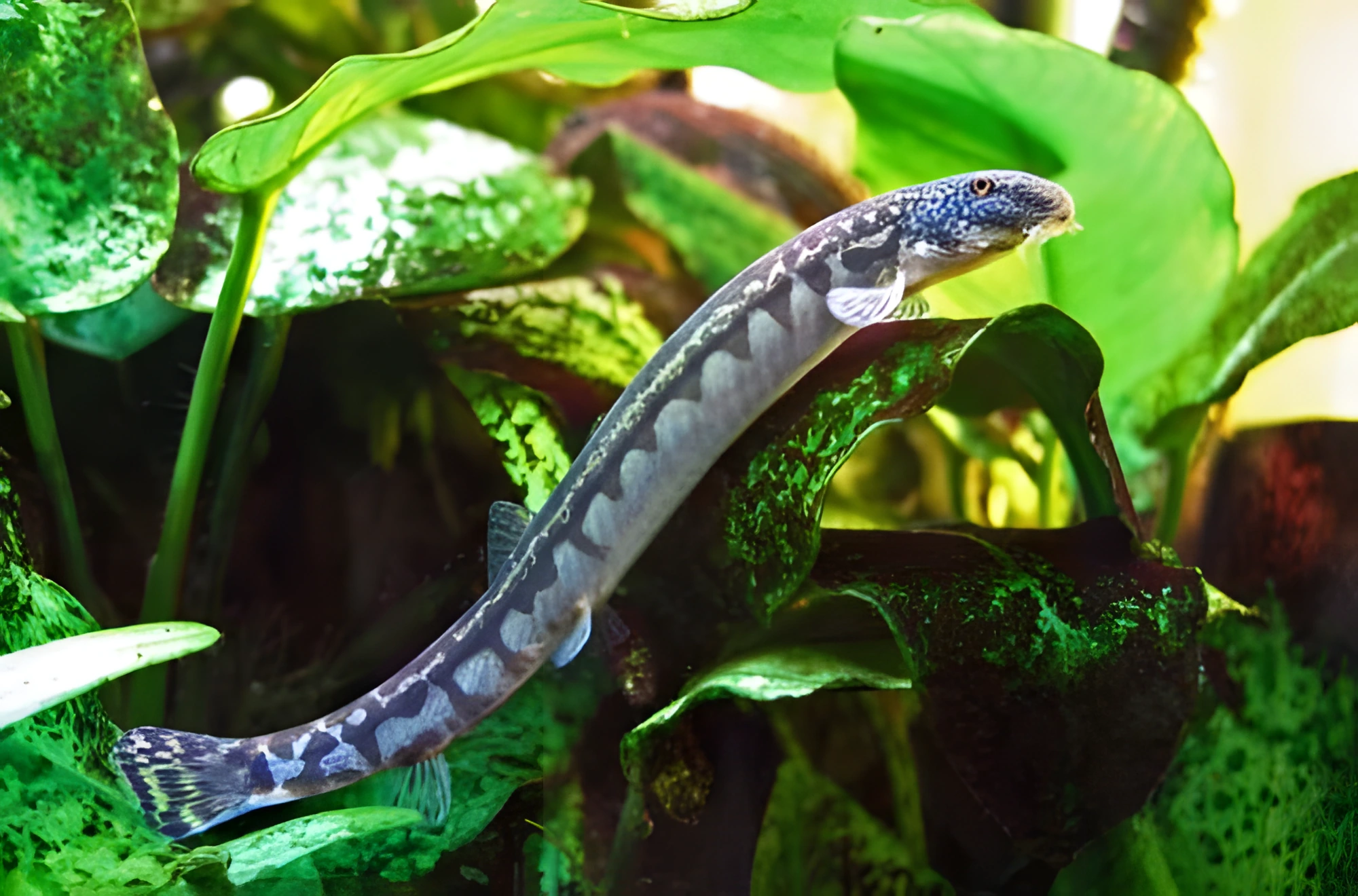
Adults of this species can reach 9–11 cm in length. Physically, these fish resemble eels due to their elongated, snake-like body shape. Sexual dimorphism is weakly expressed; males and females are almost impossible to distinguish. Their coloration is predominantly gray, with a uniformly light silvery belly. The back and sides are adorned with an intricate brownish pattern, the shade of which can change depending on the lighting.
Habitat
This species is endemic to Honshu, the largest Japanese island, where it inhabits mountain streams and rivers. Its natural habitat is characterized by fast, sometimes turbulent, oxygen-rich water currents. River substrates are predominantly stony, and riverbeds abound with cascades. Aquatic vegetation is almost absent, with only a few plants visible along the banks. Shallow areas, well-lit by the sun, promote the formation of a biofilm on rocks, consisting of algae and microscopic organisms. This biofilm serves as the primary food source for the Japanese Loach.
Behavior and Compatibility
Despite the peaceful and compatible nature of this species, its specific keeping conditions limit the choice of possible tank mates. Intraspecific relationships are based on a hierarchy of strong and weak individuals; no conflicts are observed among conspecifics. It is recommended to acquire a group of 3–4 fish.
Care and Maintenance
For a group of four fish, the optimal aquarium volume starts from 80 liters. An important condition for successful keeping is maintaining a moderate current and a high level of dissolved oxygen. This is achieved by installing a powerful filtration system capable of providing the necessary water movement. It is also possible to create an artificial current using special devices. Additional aeration will not be superfluous. High lighting levels are preferred. In aquarium design, it is recommended to use a pebble substrate, large boulders, and snags. Snags will serve as a base for algal growth, which will become an additional food source. It is important to thoroughly prepare snags before use to prevent the leaching of substances, particularly tannins, which can cause cloudiness or brown discoloration of the water. Otherwise, this will inhibit algal growth. Live plants are not an obligatory element, but if desired, several hardy species resistant to strong currents can be chosen. It is recommended to plant them in pots secured to the bottom. Aquarium maintenance is typical: 30–40% of the water volume is replaced weekly with fresh water, and glass is regularly cleaned of plaque and the substrate of organic deposits.
Diet
As mentioned earlier, in their natural habitat, the primary food of the Japanese Loach is algae and microorganisms. In a home aquarium, their diet should also be plant-based. The ideal solution is to have a sufficient amount of algae growing on decor elements, supplemented with dry foods (flakes, granules) to ensure a balanced diet. Alternatively, specialized gel foods for herbivorous fish, made from gelatin with added pieces of plants, vegetables, and fruits, can be used, or such food can be prepared independently.
Breeding and Reproduction
In the wild, spawning for the Japanese Loach begins in late spring, usually in May, in response to rising temperatures and increased food availability. To date, successful cases of breeding this species in a home aquarium have not been recorded.
Diseases
Non-ornamental fish species, close to their wild relatives, are inherently quite hardy, possess strong immunity, and high resistance to various diseases. Health problems most often arise due to unsuitable keeping conditions. Therefore, before proceeding with treatment, it is necessary to check the water quality and parameters. Normalize all indicators and only then proceed with treatment, if it is still required. More detailed information on diseases, their symptoms, and treatment methods can be found in the "Aquarium Fish Diseases" section.
How to choose
When selecting individuals, caution should be exercised, as this species often goes on sale in an emaciated state, which complicates subsequent adaptation. Healthy fish should be active, have no visible damage, sunken bellies, or signs of fungal lesions on the body. Avoid purchasing specimens that appear apathetic or lie motionless on the bottom in the store. Since the species is extremely demanding regarding water quality and the availability of a natural food base, it is recommended to ensure that the fish have already started accepting offered food in aquarium conditions.
Frequently asked questions
The essentials: size, tank volume, water parameters and care
How big does Japanese Loach get?
An adult reaches 9–11 cm in length. Plan the tank around the maximum size: the fish quickly outgrows a cramped setup.
What size aquarium does Japanese Loach need?
The minimum recommended volume is 80 L. A smaller tank speeds up nitrate build-up and raises stress levels.
What water parameters does Japanese Loach need?
Temperature 20–24 °C, pH 6.5–7.5, hardness 1–8 dGH. Stability matters more than exact values: sudden swings are harder on the fish than a small deviation from the ideal.
How long does Japanese Loach live?
Around 10 years when kept properly. Lifespan depends directly on tank volume, water quality and a varied diet.
Is Japanese Loach aggressive?
Temperament: peaceful (regular). Keep this in mind when choosing tank mates.
How many Japanese Loach should be kept together?
Recommended setup: small group (3–4 individuals). Ignoring this is a common cause of stress and disease.
What does Japanese Loach eat?
Diet type: plant-based (algae, vegetables). Feed small portions that are finished within a couple of minutes — overfeeding does more harm than underfeeding.
What is the scientific name of Japanese Loach?
The scientific name of the species is Niwaella delicata, family Loaches (Cobitidae). It also appears in the literature as: Cobitis delicata.