Temperature18 – 24 °C
Natural range
- Japan area
- Korea area
- China area
- Vietnam area
KillifishConservation status: Least concern LC
Other scientific names: Aplocheilus latipes, Poecilia latipes
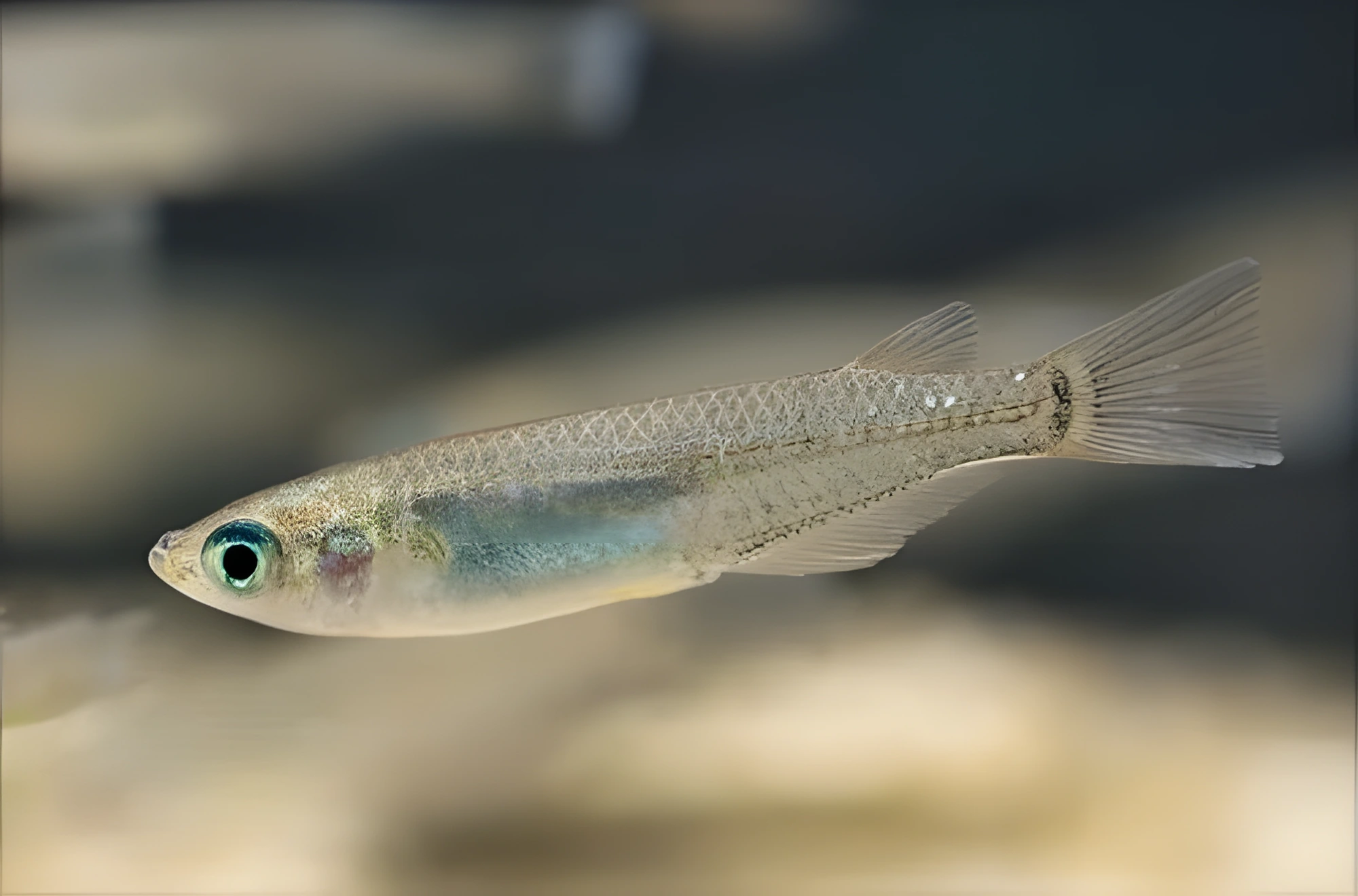
The Japanese Ricefish, scientifically known as Oryzias latipes, is a species belonging to the family Adrianichthyidae. This small and graceful fish has enjoyed consistent popularity in Southeast Asia for many centuries, especially in Japan, where its keeping in artificial ponds dates back to the 17th century. A notable feature is its amphidromous nature, meaning it can spend various stages of its life cycle in both freshwater and brackish water environments.
- Required aquarium volume
- 40 L
- Size in aquarium
- 4 cm
- Temperature
- 18 – 24 °C
- Temperament
- Peaceful, active/mobile
Parameters
Water pHNeutral (7) – Slightly alkaline (8)
Water dHMedium hardness (9) – Very hard (19)
Water salinityvery low (up to ~3 g/L)
Size in aquarium4 cm
Lifespan4 years
TemperamentPeaceful, active/mobile
Toward small fishnot a predator
Required aquarium volume40 L
Lightingmoderate (regular)
Substratesandy (regular, light)
Water flownone or stagnant (no flow)
FeedingAny (universal)
CareSchooling (usually from 5–6 individuals and more)
Description
This miniature, slender fish, reaching only 4 cm in length, has an elongated body and a slightly arched back. Natural forms typically have modest coloration, predominantly a soft cream hue with blue-green iridescent shimmer. They are rarely found in the aquarium trade; more often, selective breeding variations are offered, among which the Golden Ricefish stands out. There are also genetically modified fluorescent ornamental fish capable of emitting light. Their uniqueness is due to the incorporation of a fluorescent protein, obtained from jellyfish, into their genome.
Determining the sex of these fish is not always easy. Males usually appear more slender, and their dorsal and anal fins are larger than those of females.
Habitat
These fish are widely found in slow-moving waters across modern-day Japan, Korea, China, and Vietnam. Additionally, they have been successfully introduced to Central Asia, particularly Iran and Turkmenistan. Their preferred habitats include marshy areas and flooded rice paddies. They can also be observed in marine waters when moving between islands in search of new living spaces.
Behavior and Compatibility
This peaceful schooling fish, although capable of living in pairs, is an excellent choice for a community tank with other small and peaceful species. It is not recommended to house them with large fish that might perceive Ricefish as prey, even if these predators are vegetarians; it is better to avoid such provocations.
Care and Maintenance
Caring for these fish is not particularly difficult and is comparable to keeping undemanding species like Goldfish or Guppies. Since they prefer cool water, a heater in the aquarium is often unnecessary. A small group of fish can be provided with comfortable conditions even without filtration and aeration, if the aquarium has an abundance of live plants and partial water changes of up to 30% are performed regularly, approximately once a week. It is crucial to provide the aquarium with a lid to prevent accidental jumping, and to install an adequate lighting system. Japanese Ricefish adapt well to both fresh and brackish water; in the latter case, it is recommended to add marine salt at a rate of 2 level teaspoons per 10 liters. In aquarium decoration, it is desirable to actively use floating and rooted aquatic plants. For substrate, dark fine gravel or sand is preferred, and the placement of driftwood, grottoes, and other elements that create hiding places is also welcome.
Diet
Being omnivores, these fish readily accept a variety of dry foods, freeze-dried products, and finely chopped meaty components. Feeding Japanese Ricefish generally presents no difficulties.
Breeding and Reproduction
Since the fish are not prone to eating their offspring, breeding is quite possible in a community tank, provided there are no other species present for whom the fry might become easy prey. Spawning can occur at any time. The eggs remain attached to the female's belly for some time, allowing the male to fertilize them. The female then begins to move among dense, fine-leaved plants, attaching the eggs to their leaves. Fry emerge after 10–12 days and require feeding with infusoria or specialized micro-food.
Diseases
They show good resistance to most common diseases. Outbreaks of illness are most often associated with poor water quality, substandard food, or contact with infected individuals. More detailed information on symptoms and treatment methods can be found in the section “Diseases of Aquarium Fish.”
How to choose
When choosing Japanese Ricefish at a store, pay attention to the overall activity of the school: healthy fish should swim evenly in the upper layers of the water, show curiosity, and react actively to movement near the glass. Avoid individuals with visible fin damage, body film, spots, or an unnaturally swollen abdomen. It is important to assess the cleanliness of the water in the display tank: a large number of deceased individuals or cloudy water are serious signs of distress. Since Ricefish are schooling fish, it is recommended to purchase a group of 6 or more individuals at once to reduce stress during relocation and adaptation. Before purchasing, inquire about the keeping conditions at the store, as an abrupt change in water parameters can negatively affect their well-being.
Frequently asked questions
The essentials: size, tank volume, water parameters and care
How big does Japanese Ricefish get?
An adult reaches 4 cm in length. Plan the tank around the maximum size: the fish quickly outgrows a cramped setup.
What size aquarium does Japanese Ricefish need?
The minimum recommended volume is 40 L. A smaller tank speeds up nitrate build-up and raises stress levels.
What water parameters does Japanese Ricefish need?
Temperature 18–24 °C, pH 7–8, hardness 9–19 dGH. Stability matters more than exact values: sudden swings are harder on the fish than a small deviation from the ideal.
How long does Japanese Ricefish live?
Around 4 years when kept properly. Lifespan depends directly on tank volume, water quality and a varied diet.
Is Japanese Ricefish aggressive?
Temperament: peaceful, active/mobile. Keep this in mind when choosing tank mates.
How many Japanese Ricefish should be kept together?
Recommended setup: schooling (usually from 5–6 individuals and more). Ignoring this is a common cause of stress and disease.
What does Japanese Ricefish eat?
Diet type: any (universal). Feed small portions that are finished within a couple of minutes — overfeeding does more harm than underfeeding.
What is the scientific name of Japanese Ricefish?
The scientific name of the species is Oryzias latipes, family Adrianichthyidae. It also appears in the literature as: Aplocheilus latipes, Poecilia latipes.