Temperature20 – 24 °C
Natural range
- Rio Negro area
- Rio Branco area
CatfishConservation status: Least concern LC
Other scientific names: Arius oncinus, Liosomadoras orcinus, Lisomadoras oncinus
Liosomadoras oncinus is the scientific name for the Jaguar Catfish, a member of the Auchenipteridae family, or Wood Catfishes. These fish originate from South America, inhabiting the Branco River basin, which is a tributary of the Amazon and flows mainly through the Brazilian state of Roraima. They can be found everywhere: in large river channels, small streams, quiet backwaters, oxbow lakes, and flooded areas of the tropical forest during the rainy season.
- Required aquarium volume
- 250 L
- Size in aquarium
- 17 cm
- Temperature
- 20 – 24 °C
- Temperament
- Semi-peaceful (including aggression during spawning / intraspecific conflicts)
Parameters
Water pHAcidic (4.8) – Neutral (6.8)
Water dHVery soft (2) – Hard (12)
Water salinityno salt (freshwater)
Size in aquarium17 cm
Lifespan12 years
TemperamentSemi-peaceful (including aggression during spawning / intraspecific conflicts)
Toward small fishnot a predator
Required aquarium volume250 L
Lightingdimmed
Substrateany (no restrictions)
Water flowweak or moderate
FeedingSinking (any)
CareBoth solitary and in group (flexible)
Description
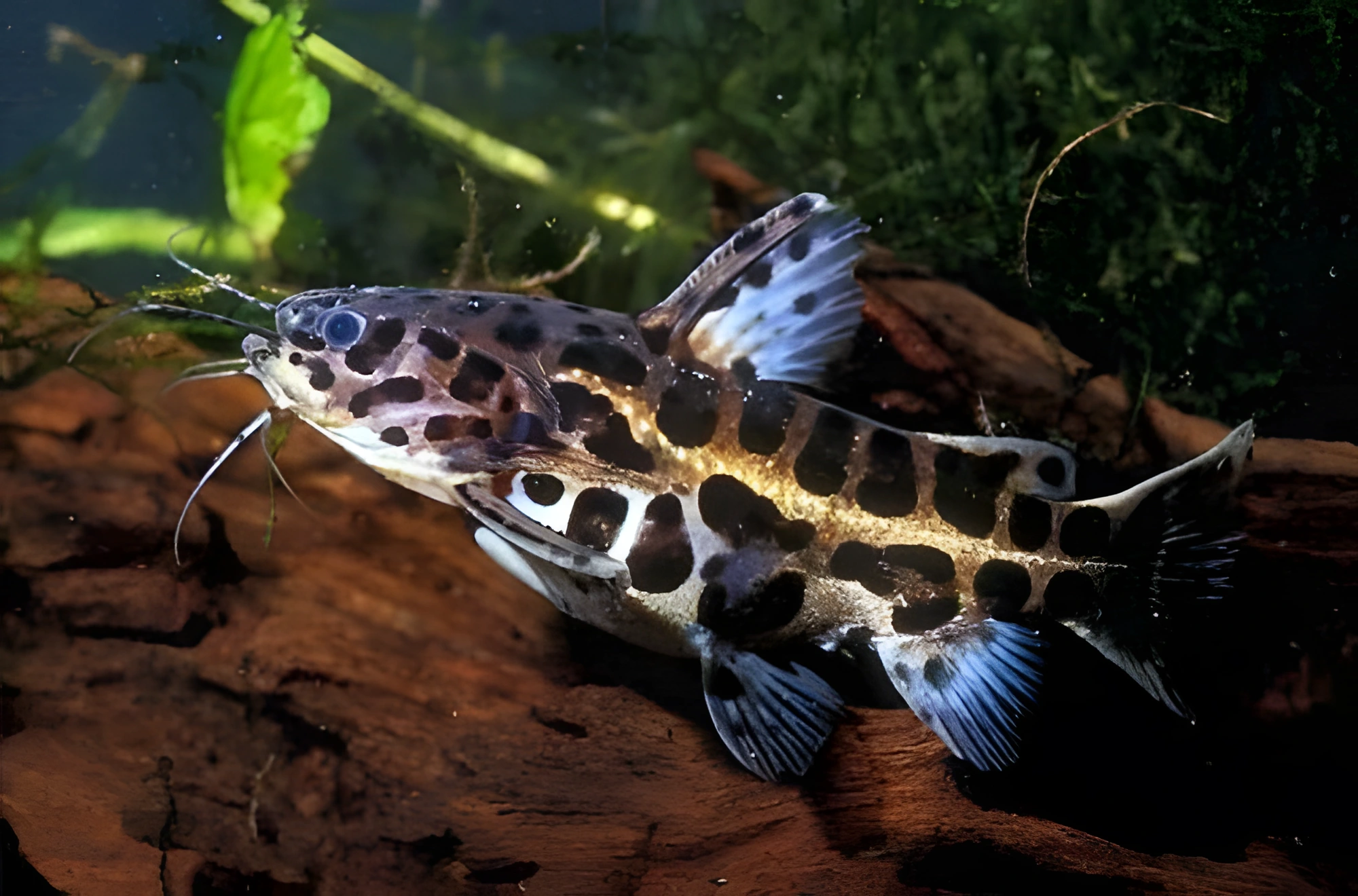
Adults of this catfish can reach a length of about 17 cm. It is easily recognizable by its characteristic spotted pattern on its body, resembling a jaguar's coat, which gave it its name. Sharp spines, which are modified first rays of the fins, protect this fish from predators. Sensitive whiskers located near the mouth help it navigate in space. Since the catfish is nocturnal, these whiskers are much more important to it than sight.
Habitat
The Jaguar Catfish is endemic to South America. In nature, the species inhabits the Amazon, Rio Negro, Branco, and Trombetas river basins, and is also found in the Orinoco River basin. The fish inhabit both the main channels of large rivers and small tributaries, oxbow lakes, and flooded areas of the tropical forest during the rainy season. They prefer areas with an abundance of snags and submerged wood, where they hide during the day. The water in their habitats is characterized as soft and slightly acidic.
Behavior and Compatibility
The Jaguar Catfish is distinguished by its peaceful disposition and coexists well with other non-aggressive fish of comparable size. However, it is important to remember that it is quite possessive of its shelter. Therefore, when choosing bottom-dwelling tank mates, caution should be exercised, and species that establish their territories on the bottom should be avoided. Furthermore, small fish should not be introduced into the aquarium, as there is a high probability that they will become food for the catfish. It prefers a nocturnal lifestyle, usually hiding in shelters during the day.
Care and Maintenance
For keeping one or two catfish, the optimal aquarium volume starts from 250 liters. The decor must include shelters, which can be both natural (e.g., snags) and artificial decorative elements. Dim lighting is recommended. In this regard, when choosing live plants, preference should be given to shade-loving species such as Anubias, various aquatic ferns, and mosses. The Jaguar Catfish is considered a hardy and easy-to-keep species, capable of adapting to various conditions. Nevertheless, for maximum comfort, it needs soft, slightly acidic water with a relatively low temperature (not exceeding 24°C). Aquarium maintenance is standard: weekly partial water changes, removal of organic waste, and equipment prophylaxis.
Diet
Choosing a diet for this catfish is not difficult. It readily accepts most common sinking dry foods, as well as various live, fresh, or frozen products. These may include earthworms, large bloodworms, and shrimp or mussel meat.
Breeding and Reproduction
Reliable information on the successful breeding of this species in aquarium conditions is practically nonexistent. There are only isolated mentions of possible spawning, noting that sexually mature individuals exhibit sexual dimorphism: males have a modified anal fin that functions as a copulatory organ, as well as more powerful spines on their pectoral and dorsal fins. Due to the species practicing internal fertilization, the formation of a stable pair is a necessary condition, but reliable protocols for stimulating spawning and raising fry have not been developed.
Diseases
Based on available sources, a separate block cannot be compiled: the data is insufficient or contradictory. The entry can be updated later when verified information becomes available.
How to choose
When purchasing, pay attention to the fish's activity in the evening, as this is a nocturnal species. A healthy individual should have a clear, contrasting spotted pattern, clean fins without signs of erosion or plaque, and no visible body damage. It should be noted that the Jaguar Catfish has sharp spines on its fins, so when transporting, thick bags should be used to avoid damaging them. Avoid acquiring fish with sunken bellies or signs of emaciation, which may indicate problems with adapting to food in the store environment.
Frequently asked questions
The essentials: size, tank volume, water parameters and care
How big does Jaguar Catfish get?
An adult reaches 17 cm in length. Plan the tank around the maximum size: the fish quickly outgrows a cramped setup.
What size aquarium does Jaguar Catfish need?
The minimum recommended volume is 250 L. A smaller tank speeds up nitrate build-up and raises stress levels.
What water parameters does Jaguar Catfish need?
Temperature 20–24 °C, pH 4.8–6.8, hardness 2–12 dGH. Stability matters more than exact values: sudden swings are harder on the fish than a small deviation from the ideal.
How long does Jaguar Catfish live?
Around 12 years when kept properly. Lifespan depends directly on tank volume, water quality and a varied diet.
Is Jaguar Catfish aggressive?
Temperament: semi-peaceful (including aggression during spawning / intraspecific conflicts). Keep this in mind when choosing tank mates.
How many Jaguar Catfish should be kept together?
Recommended setup: both solitary and in group (flexible). Ignoring this is a common cause of stress and disease.
What does Jaguar Catfish eat?
Diet type: sinking (any). Feed small portions that are finished within a couple of minutes — overfeeding does more harm than underfeeding.
What is the scientific name of Jaguar Catfish?
The scientific name of the species is Liosomadoras oncinus, family Driftwood Catfishes (Auchenipteridae). It also appears in the literature as: Arius oncinus, Liosomadoras orcinus, Lisomadoras oncinus.