Temperature22 – 28 °C
Natural range
Predators CharacinsConservation status: Least concern LC
Other scientific names: Mylesinus macropterus, Serrasalmus mento
The Wimple Piranha, known scientifically as Catoprion mento, is classified in the family Serrasalmidae, or Piranhas. It is interesting to note that, despite its name, this species is not part of the group of classic predatory piranhas, but remains a close relative. Part of the Latin name "mento" refers to "chin," which is clearly associated with the unusual structure of this fish's mouth.
- Required aquarium volume
- 150 L
- Size in aquarium
- 15 cm
- Temperature
- 22 – 28 °C
- Temperament
- Aggressive / incompatible / unfriendly
Parameters
Water pHSlightly acidic (5.8) – Neutral (6.5)
Water dHVery soft (1) – Medium hardness (8)
Water salinityno salt (freshwater)
Size in aquarium15 cm
Lifespan10 years
TemperamentAggressive / incompatible / unfriendly
Toward small fishpredator
Required aquarium volume150 L
Lightingdimmed
Substrateany (no restrictions)
Water flowweak or moderate
FeedingMeat / protein (live, frozen, fresh)
CareSolitary
Description
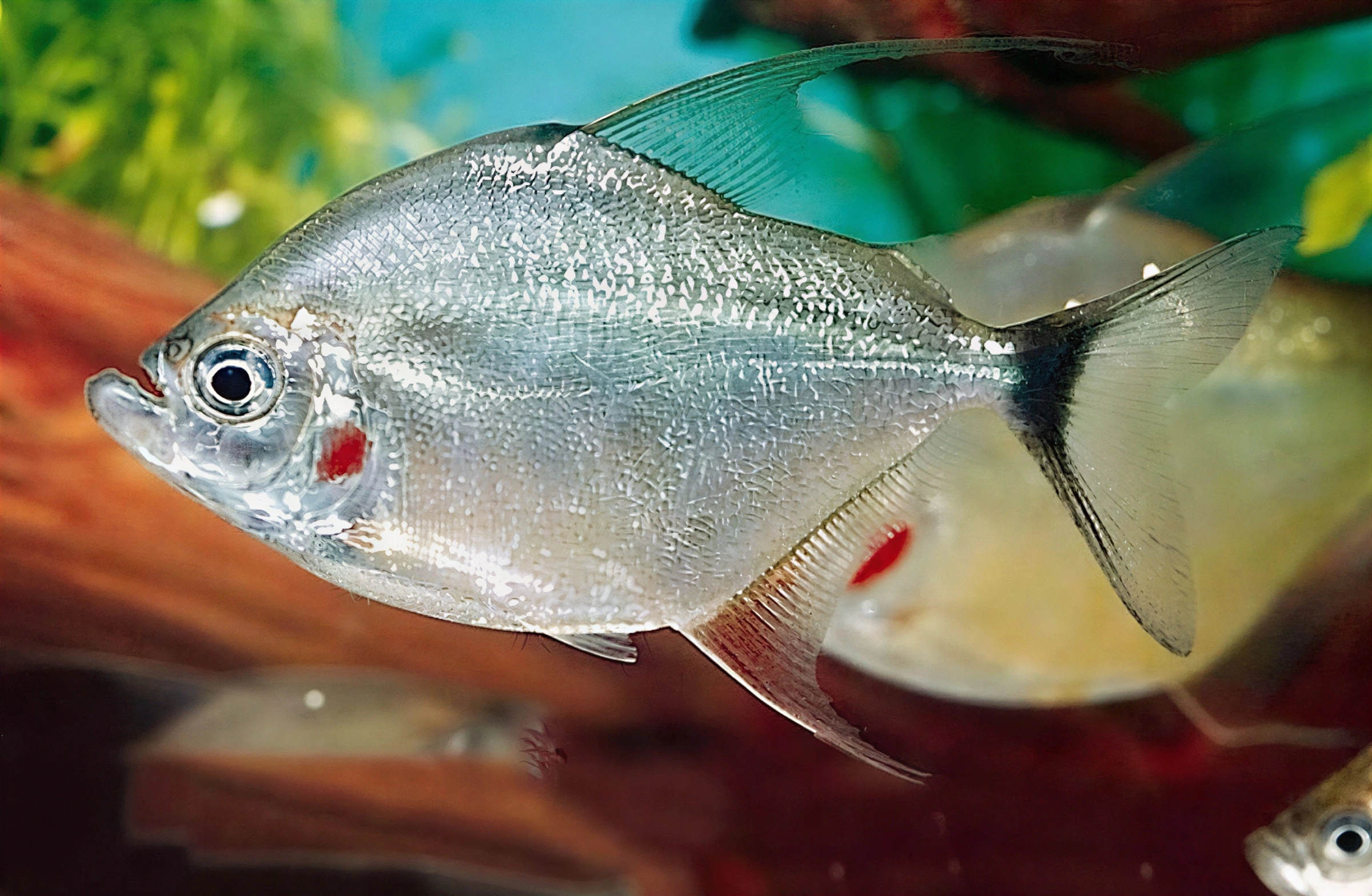
Adults of this species reach about 15 cm in length and are characterized by a high, disc-shaped body. One of the most striking features of the Wimple Piranha is its noticeably protruding lower jaw. Unlike some relatives, males and females of this species have clear distinctions: males are distinguished by a significantly elongated first ray of the anal fin, which gave them the nickname "wimple." Young fish are predominantly silvery, but as they mature, their coloration darkens, acquiring gray tones, and delicate reddish hues appear on their belly. An important detail of their coloration is a bright red spot located behind the gill cover.
Habitat
This fish, native to South America, is found in almost all major river systems of the continent's tropical belt. It can be found in the basins of rivers such as the Amazon, Orinoco, Essequibo, and in the upper reaches of the Paraguay River. It prefers to live in areas with abundant aquatic vegetation, only occasionally appearing in open areas, where it can become prey for larger predators due to the lack of natural shelters.
Behavior and Compatibility
Young individuals tend to stay in schools, but as they age, they become solitary. Adult fish are not recommended to be kept in groups. Among females, the greatest aggression towards conspecifics is observed. Any small fish that happens to be nearby will either be eaten or severely injured. Only large representatives of catfish, such as Flathead Catfish and Armored Catfish, can be considered as tank mates.
Care and Maintenance
The Wimple Piranha is a territorial species and exhibits high swimming activity, which requires a spacious aquarium. For a single individual, an aquarium with a length of at least 100 cm and a volume of 150 liters or more is necessary. Inside the aquarium, sufficient hiding places should be created using natural elements such as stones, snags, and dense plant thickets. Optimal conditions for its keeping include soft, slightly acidic water. Given the fish's predatory lifestyle and specific diet, the filtration system must be quite powerful; an external filter is recommended. Regular waste removal, including food remnants and excrement, plays a key role in maintaining water purity. In their natural environment, these fish feed on other fish, amphibians, and various invertebrates—virtually anything they can catch. Interestingly, they also consume the scales of other fish, which is facilitated by the structure of their mouth with its protruding lower jaw. In a home aquarium, it is important to feed the Wimple Piranha food that it is accustomed to from breeders. This is usually not live fish, but pieces of shrimp, mussels, or fish fillet. Poultry or animal meat, such as bacon or beef, is undesirable. Although piranhas may eat it, it is not a primary food in their natural diet and is digested significantly worse compared to, for example, shrimp.
Diet
In their natural environment, these fish feed on other fish, amphibians, and various invertebrates—virtually anything they can catch. It has been observed that they also feed on the scales of other fish, using their unique mouth structure with a protruding lower jaw for this purpose. In a home aquarium, the Wimple Piranha should be fed the food it has been accustomed to by breeders. As a rule, this is not live fish, but chopped pieces of shrimp, mussels, or fish fillet. Poultry and animal meat, such as bacon or beef, are not recommended. Although piranhas are capable of consuming such food, it is not a primary food in their natural diet, and therefore it is assimilated much less efficiently than, for example, shrimp. Young individuals usually stay in schools, but as they mature, they become solitary. Adult fish should not be kept in groups, as females show the greatest aggression towards conspecifics. Any small fish that happens to be nearby will either be eaten or severely injured. As tank mates, only large representatives of catfish, such as Flathead Catfish and Armored Catfish, should be considered.
Breeding and Reproduction
Based on available sources, a separate block cannot be compiled: the data is insufficient or contradictory. The entry can be updated later when verified information becomes available.
Diseases
The species is sensitive to sudden changes in water hydrochemical parameters. In poor environmental conditions and stress caused by overcrowding or improper keeping, fish become susceptible to diseases typical for characins, including ichthyophthiriasis. Prevention involves maintaining stable conditions, regular filtration and water changes, and minimizing stress factors.
How to choose
When purchasing, choose individuals with intact fins and scales, as any injuries sustained during transport or as a result of aggression can lead to secondary infections. It is important to note that the elongated filamentous fin rays, characteristic of this species, do not regenerate if damaged. It is recommended to acquire only active fish that show interest in food, and to avoid individuals that appear emaciated or show signs of sluggish behavior.
Frequently asked questions
The essentials: size, tank volume, water parameters and care
How big does Wimple Piranha get?
An adult reaches 15 cm in length. Plan the tank around the maximum size: the fish quickly outgrows a cramped setup.
What size aquarium does Wimple Piranha need?
The minimum recommended volume is 150 L. A smaller tank speeds up nitrate build-up and raises stress levels.
What water parameters does Wimple Piranha need?
Temperature 22–28 °C, pH 5.8–6.5, hardness 1–8 dGH. Stability matters more than exact values: sudden swings are harder on the fish than a small deviation from the ideal.
How long does Wimple Piranha live?
Around 10 years when kept properly. Lifespan depends directly on tank volume, water quality and a varied diet.
Is Wimple Piranha aggressive?
Temperament: aggressive / incompatible / unfriendly. This is a predatory species — any fish small enough to fit in its mouth will eventually be eaten.
How many Wimple Piranha should be kept together?
Recommended setup: solitary. Ignoring this is a common cause of stress and disease.
What does Wimple Piranha eat?
Diet type: meat / protein (live, frozen, fresh). Feed small portions that are finished within a couple of minutes — overfeeding does more harm than underfeeding.
What is the scientific name of Wimple Piranha?
The scientific name of the species is Catoprion mento, family Piranhas (Serrasalmidae). It also appears in the literature as: Mylesinus macropterus, Serrasalmus mento.