Temperature18 – 22 °C
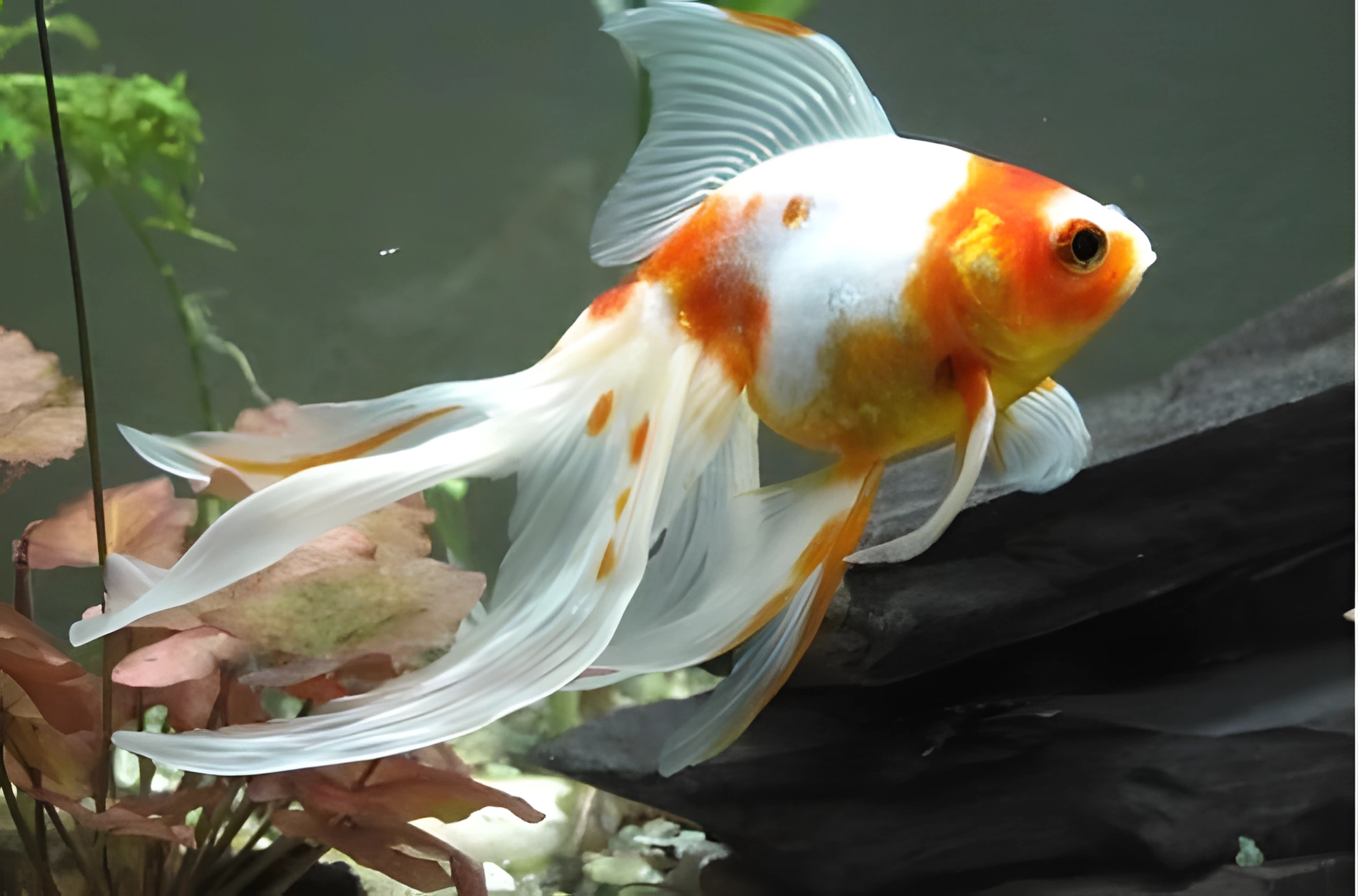
GoldfishConservation status: Least concern LC
Other scientific names: Carasius auratus, Carassius buergeri, Carassius burgeri, Carassius carassius, Carassius chinensis, Carassius coeruleus
Among the numerous varieties of aquarium fish, the Veiltail Goldfish stands out for its exceptional beauty. However, it should be noted that this species is considered one of the most demanding in terms of keeping and breeding conditions. It is quite difficult to find them in ordinary home aquariums; more often, Veiltails adorn the collections of enthusiastic professionals. The main distinguishing feature of this fish is its incredibly long and elegant fins, resembling a flowing veil, which can reach very impressive sizes.
- Required aquarium volume
- 75 L
- Size in aquarium
- 18 cm
- Temperature
- 18 – 22 °C
- Temperament
- Peaceful (regular)
Parameters
Water pHSlightly acidic (6) – Slightly alkaline (8)
Water dHSoft (5) – Very hard (19)
Water salinityno salt (freshwater)
Size in aquarium18 cm
Lifespan15 years
TemperamentPeaceful (regular)
Toward small fishnot a predator
Required aquarium volume75 L
Lightingmoderate (regular)
Substrateany (no restrictions)
Water flowweak
FeedingMixed diet (meat + plant-based)
CareMixed (solitary / pair / group)
Description
The Veiltail Goldfish is a selective breeding form of goldfish with a shortened, egg-shaped, or spherical body. A distinctive feature is its very long, thin, and practically transparent fins, especially the caudal fin, which can be several times longer than the body. The anal fin is bifurcated. Coloration varies from bright red and golden to white, black, or calico. Sexual dimorphism is weakly expressed during normal times; during the spawning period, males develop small, light tubercles on their gill covers and serrations on their pectoral fins.
Habitat
The Veiltail Goldfish is an artificially bred selective form of goldfish, so this species is not found in the wild. Its progenitor is considered to be the Prussian carp. In aquarium conditions, these fish are adapted to a wide range of water parameters, but for their well-being, a clean, well-aerated environment is required.
Behavior and Compatibility
These are peaceful and slow-moving fish that do not show aggression towards their own kind or other species. Due to their slowness and luxurious fins, it is not recommended to keep them with active or aggressive fish that might nip their tails. Veiltails prefer the company of their own kind or other short-bodied goldfish. They may accidentally swallow very small tank mates.
Care and Maintenance
For keeping, a spacious aquarium is required, preferably 50–80 liters per individual, with powerful filtration and aeration due to the large amount of organic waste. Coarse, smooth gravel should be used as substrate so that the fish cannot swallow it. Decorations should not have sharp edges that could damage the fins. Recommended water parameters: temperature 18–22°C (up to 25°C is acceptable), hardness 5–19 dGH, pH 6.0–8.0.
Diet
Veiltails are omnivorous and prone to overeating. Their diet should include both animal and plant components. It is recommended to use specialized dry foods for goldfish that do not disintegrate quickly in water. Feeding should be done 2–3 times a day in small portions that the fish can consume in a couple of minutes. It is beneficial to periodically offer blanched vegetable supplements.
Breeding and Reproduction
Spawning is paired or in groups, possible in an aquarium of 40–50 liters with a mesh at the bottom to protect the eggs. A stimulus is an increase in water temperature by several degrees and frequent water changes. After spawning, the parent fish are removed. Fry hatch after a few days and begin to swim after 3–5 days. Initial food is infusoria, rotifers, Artemia nauplii, or specialized fry foods.
Diseases
The fish are sensitive to water quality; the accumulation of ammonia and nitrites quickly leads to a decrease in immunity and diseases. They often suffer from fin infections, fungal lesions, and swim bladder problems due to their specific body structure. Prevention involves regular water changes, maintaining substrate cleanliness, and preventing overfeeding.
How to choose
When purchasing, choose active individuals with clean, undamaged fins and scales without plaque, ulcers, or bruises. It is important to pay attention to the absence of signs of inflammation or unnatural abdominal distension. Avoid fish that appear sluggish, constantly lie on the bottom, or have 'frayed' fin edges, as this may be a sign of bacterial infection or poor keeping conditions.
Frequently asked questions
The essentials: size, tank volume, water parameters and care
How big does Veiltail Goldfish get?
An adult reaches 18 cm in length. Plan the tank around the maximum size: the fish quickly outgrows a cramped setup.
What size aquarium does Veiltail Goldfish need?
The minimum recommended volume is 75 L. A smaller tank speeds up nitrate build-up and raises stress levels.
What water parameters does Veiltail Goldfish need?
Temperature 18–22 °C, pH 6–8, hardness 5–19 dGH. Stability matters more than exact values: sudden swings are harder on the fish than a small deviation from the ideal.
How long does Veiltail Goldfish live?
Around 15 years when kept properly. Lifespan depends directly on tank volume, water quality and a varied diet.
Is Veiltail Goldfish aggressive?
Temperament: peaceful (regular). Keep this in mind when choosing tank mates.
How many Veiltail Goldfish should be kept together?
Recommended setup: mixed (solitary / pair / group). Ignoring this is a common cause of stress and disease.
What does Veiltail Goldfish eat?
Diet type: mixed diet (meat + plant-based). Feed small portions that are finished within a couple of minutes — overfeeding does more harm than underfeeding.
What is the scientific name of Veiltail Goldfish?
The scientific name of the species is Carassius auratus, family Cyprinids (Cyprinidae). It also appears in the literature as: Carasius auratus, Carassius buergeri, Carassius burgeri.