Temperature18 – 22 °C
GoldfishConservation status: Least concern LC
Other scientific names: Carasius auratus, Carassius buergeri, Carassius burgeri, Carassius carassius, Carassius chinensis, Carassius coeruleus
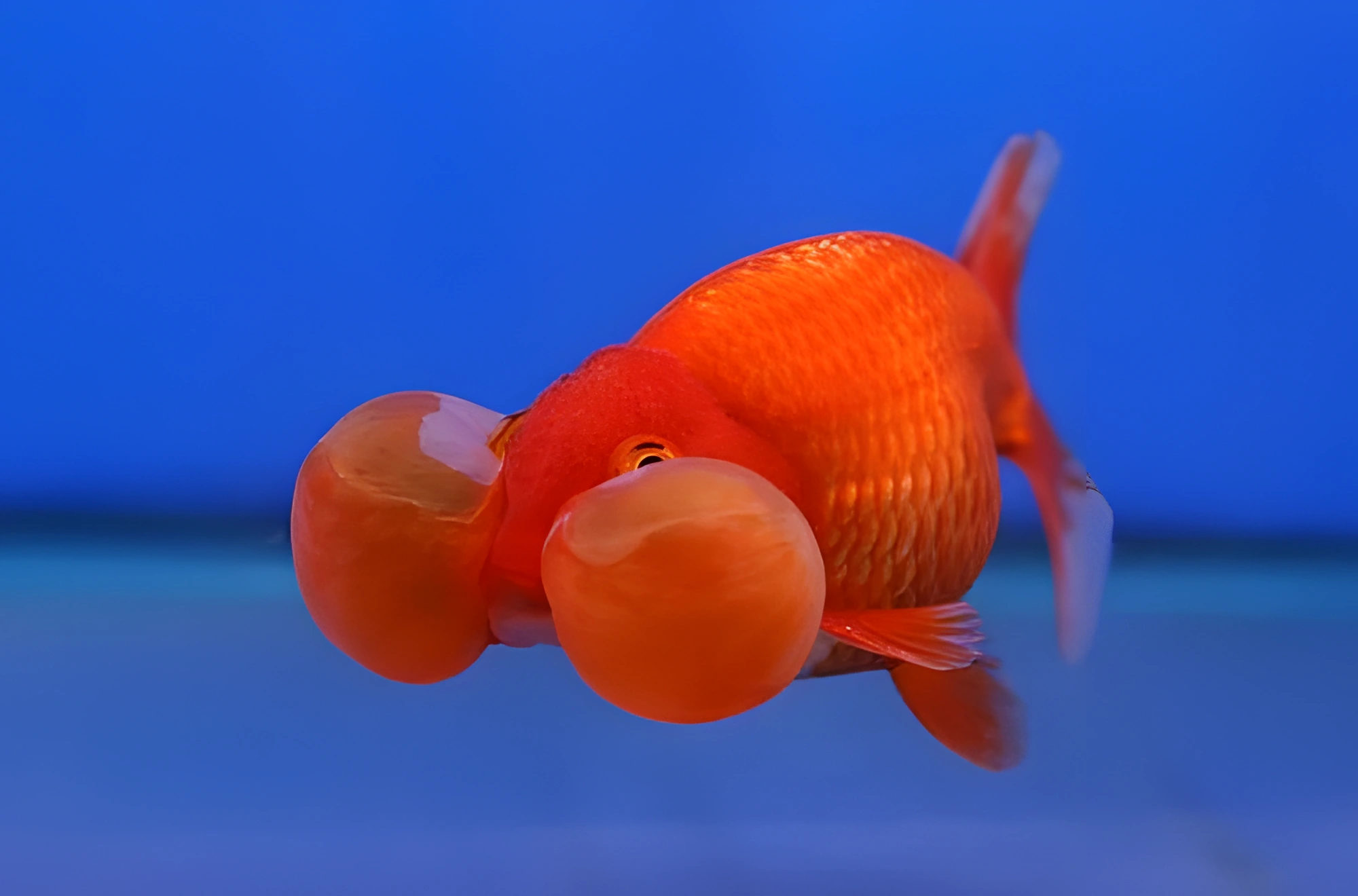
Among the variety of Goldfish, Bubble Eye Goldfish stand out with their unique appearance. Their distinctive feature is two water-filled sacs located directly beneath their eyes. These characteristic formations begin to appear in fish at 6-9 months of age, reaching full development by approximately two years. It is important to remember that these unusual sacs are very delicate and easily damaged. Although they are capable of regeneration, healing is slow and does not exclude the risk of serious infections. Furthermore, a new sac after regeneration may noticeably differ from the original in shape and size.
- Required aquarium volume
- 75 L
- Size in aquarium
- 13 cm
- Temperature
- 18 – 22 °C
- Temperament
- Peaceful (regular)
Parameters
Water pHSlightly acidic (6) – Slightly alkaline (8)
Water dHSoft (5) – Very hard (19)
Water salinityno salt (freshwater)
Size in aquarium13 cm
Lifespan15 years
TemperamentPeaceful (regular)
Toward small fishnot a predator
Required aquarium volume75 L
Lightingmoderate (regular)
Substrateany (no restrictions)
Water flowweak
FeedingMeat with plant additives (omnivores)
CareSmall group (3–4 individuals)
Description
The Bubble Eye is a selectively bred, short-bodied form of goldfish with an egg-shaped body and an absent dorsal fin. The main feature is two large, lymphatic fluid-filled sacs under the eyes, which begin to form at 3–4 months of age. In high-quality specimens, the sacs can reach up to a quarter of the body size. The coloration is varied: red, white, black, calico, and multi-colored variations are found. Sexual dimorphism is weakly expressed, however, during the spawning period, males develop a pearl rash on their gill covers and serrations on their pectoral fins.
Habitat
The species is an artificially bred selective form and is not found in the wild. All representatives of the breed originate from China. In aquarium conditions, these fish require stable water parameters consistent with the keeping of other ornamental goldfish: temperature 18–22 °C, pH 6.0–8.0, and general hardness 5–19 dGH.
Behavior and Compatibility
The fish are characterized by a calm and slow temperament. Due to their body structure, the absence of a dorsal fin, and the presence of fragile eye sacs, they are poor swimmers and have limited vision. Intraspecific aggression is practically absent, but due to their slowness and vulnerability, it is not recommended to keep them with active or aggressive fish species that could damage their sacs or deprive them of food.
Care and Maintenance
Keeping them requires a spacious aquarium with effective filtration and aeration, as the fish create a high biological load. It is important to exclude any sharp objects, stones with edges, or coarse substrate from the decor that could damage the delicate sacs. It is recommended to use soft sand or smooth fine gravel. Plants with tough leaves are best, or artificial alternatives can be used. Weekly water changes of 25–30% are essential for maintaining health.
Diet
The fish are omnivorous and prone to overeating. Their diet should include high-quality dry foods in the form of sinking pellets, as they swallow a lot of air when eating food from the surface, which can lead to swim bladder problems. It is beneficial to supplement their diet with plant-based foods, frozen or live foods such as daphnia, brine shrimp, or bloodworms. Feeding should be done in small portions several times a day.
Breeding and Reproduction
Breeding is similar to other goldfish breeds. Sexual maturity is reached by two years of age. To stimulate spawning, the temperature is raised by 3–5 degrees and fresh soft water is added. Spawning is paired or in groups; it is advisable to have a protective net at the bottom of the spawning tank to prevent parents from eating the eggs. After hatching, the fry are fed rotifers and brine shrimp.
Diseases
The most characteristic problems are related to trauma to the eye sacs, which opens the way for bacterial and fungal infections. If damaged, the sac can regenerate, but often changes shape or size. The fish are also susceptible to common goldfish diseases: fin rot, dropsy, and swim bladder disorders caused by improper feeding or poor water quality.
How to choose
When choosing, attention should be paid to the symmetry and integrity of the eye sacs — they should not show signs of tears, redness, or ulcers. A healthy specimen should be active, without signs of lethargy or an unnatural body tilt when swimming. It is recommended to avoid purchasing fish with signs of skin or fin damage, as a weakened immune system makes them extremely susceptible to infections.
Frequently asked questions
The essentials: size, tank volume, water parameters and care
How big does Bubble Eye Goldfish get?
An adult reaches 13 cm in length. Plan the tank around the maximum size: the fish quickly outgrows a cramped setup.
What size aquarium does Bubble Eye Goldfish need?
The minimum recommended volume is 75 L. A smaller tank speeds up nitrate build-up and raises stress levels.
What water parameters does Bubble Eye Goldfish need?
Temperature 18–22 °C, pH 6–8, hardness 5–19 dGH. Stability matters more than exact values: sudden swings are harder on the fish than a small deviation from the ideal.
How long does Bubble Eye Goldfish live?
Around 15 years when kept properly. Lifespan depends directly on tank volume, water quality and a varied diet.
Is Bubble Eye Goldfish aggressive?
Temperament: peaceful (regular). Keep this in mind when choosing tank mates.
How many Bubble Eye Goldfish should be kept together?
Recommended setup: small group (3–4 individuals). Ignoring this is a common cause of stress and disease.
What does Bubble Eye Goldfish eat?
Diet type: meat with plant additives (omnivores). Feed small portions that are finished within a couple of minutes — overfeeding does more harm than underfeeding.
What is the scientific name of Bubble Eye Goldfish?
The scientific name of the species is Carassius auratus, family Cyprinids (Cyprinidae). It also appears in the literature as: Carasius auratus, Carassius buergeri, Carassius burgeri.