Temperature23 – 26 °C
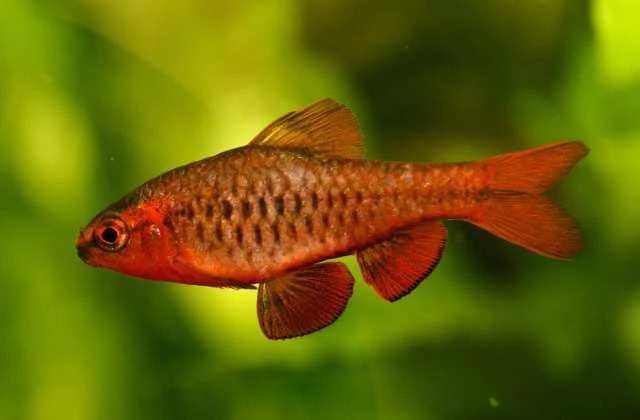
Other scientific names: Barbus titteya, Capoeta titteya
This species, the Cherry Barb, or Cherry Puntius (Puntius titteya), belongs to the Cyprinidae family. Thanks to its vibrant red coloration, this fish can brighten up any aquarium. It easily becomes a true pet due to its undemanding nature and ability to get along well with most other aquarium inhabitants. The Cherry Barb is an excellent choice even for small nano-aquariums.
The Cherry Puntius is a small species, typically not exceeding 5 cm in size. The fish has a rather robust body, distinguished by its bright coloration, which varies from cherry red to a rich dark burgundy. A prominent dark stripe runs along its lateral line, from head to tail. During spawning, the males' coloration becomes more intense. Notably, if the fish is kept alone, its color may noticeably fade. Young individuals of this species show virtually no visible differences. Characteristic features only begin to appear in adulthood. Males usually appear more slender and have brighter coloration compared to females.
Initially, the Cherry Barb was discovered as an endemic species in the river systems of Sri Lanka. Since its discovery in the early 20th century, it has been actively caught for the aquarium trade. Over time, due to human activity, this species appeared in water bodies of South and Southeast Asia, and in the 2000s, wild populations were also found in Central and South America. Currently, these fish are supplied to home aquariums from commercial fish farms, and they are no longer caught from the wild. In Sri Lanka, the natural habitats of this species are shaded streams and small rivers with moderate currents. The fish prefer to stay in shallow water, swimming among fallen branches and leaves. In nature, their diet consists of diatoms and various small invertebrates. (Brief information:)
This fish coexists perfectly with most other peaceful species of similar size. It is recommended to keep them in a group. In the company of their kin, cherry barbs usually show activity within their group and do not bother other aquarium inhabitants. This is a schooling species: buy at least 6–10 specimens. Kept alone, the fish becomes sluggish and its colour fades.
The Cherry Barb has been successfully kept in artificial aquarium environments for many decades, allowing it to adapt well to conditions different from its natural habitat. This fish has adapted perfectly to a wide range of pH and GH values, which significantly simplifies the water preparation process. For a group of 5-6 individuals, an aquarium of 40 to 50 liters is optimal. When decorating, it is recommended to create areas for free swimming and provide shelters using plant thickets. The presence of floating plants is welcome, as they provide additional shading. Natural driftwood will add harmony, and a dark substrate will effectively highlight the fish's coloration.
In a home aquarium, the fish readily accepts most common foods, whether dry, frozen, or live. The daily diet can consist of daphnia, bloodworms, brine shrimp, and other specialized products for aquarium fish.
For successful breeding of this species, a separate, specially equipped spawning aquarium will be required. The tank should be fitted with a simple air-driven filter and a heater. Artificial or live fine-leaved aquatic plants and ferns can be used for decoration, placed on the bottom. Optimal water parameters for spawning are: hardness 10-12 GH, slightly acidic pH in the range of 6.0-6.5, and a temperature of 24 to 26 °C. For breeding, the largest females and brightest males are selected and placed in the spawning tank. A protein-rich diet serves as a stimulating factor for spawning. During the breeding period, the female lays 1 to 3 eggs at a time, attaching them to plants. The total number of eggs in a clutch can reach about 300. After spawning, the adult fish should be returned to the main aquarium to prevent them from eating the eggs and fry. Fry hatch within 24 hours. They should be fed microscopic food, such as brine shrimp nauplii.
Under optimal conditions, the Cherry Barb is generally not susceptible to diseases. Health problems most often arise due to poor quality food, contact with sick fish, or keeping them in a neglected, polluted aquarium.
When choosing cherry barbs, pay attention to their activity and appearance. Healthy individuals stay in a school, swim actively, and show curiosity. Avoid purchasing fish with damaged fins, white film on the body, ulcers, or an unnaturally swollen abdomen. In the store, fish may look pale due to stress, but their coloration should be clear, and the black stripe along the body should be pronounced. It is recommended to purchase individuals from the same batch to minimize the risk of introducing infections into the aquarium. Before buying, make sure the fish in the aquarium do not show signs of apathy or stay at the water surface, which may indicate problems with water quality or diseases.
The essentials: size, tank volume, water parameters and care
An adult reaches 5 cm in length. Plan the tank around the maximum size: the fish quickly outgrows a cramped setup.
The recommended volume is 54 L. A smaller tank speeds up nitrate build-up and raises stress levels.
Temperature 23–26 °C, pH 6–8, hardness 5–15 dGH. Stability matters more than exact values: sudden swings are harder on the fish than a small deviation from the ideal.
Around 5 years when kept properly. Lifespan depends directly on tank volume, water quality and a varied diet.
Temperament: peaceful (regular). Keep this in mind when choosing tank mates.
Recommended setup: schooling (usually from 5–6 individuals and more). Ignoring this is a common cause of stress and disease.
Diet type: any (universal). Feed small portions that are finished within a couple of minutes — overfeeding does more harm than underfeeding.
The scientific name of the species is Puntius titteya, family Cyprinids (Cyprinidae). It also appears in the literature as: Barbus titteya, Capoeta titteya.
Matched by family, categories and overlapping keeping conditions
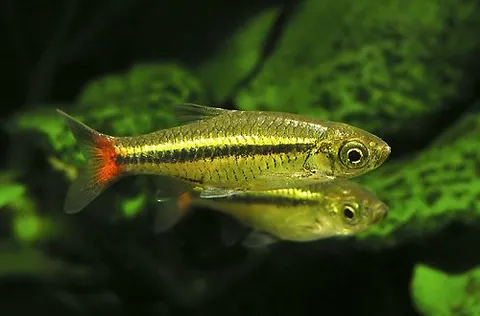
Rasbora borapetensis
Rasbora borapetensis, also known as the Red-tailed or Black-striped Rasbora, belongs to the family Cyprinidae. This attractive aquarium fish is valued for its unpretentiousness in care, compatibility with many other…
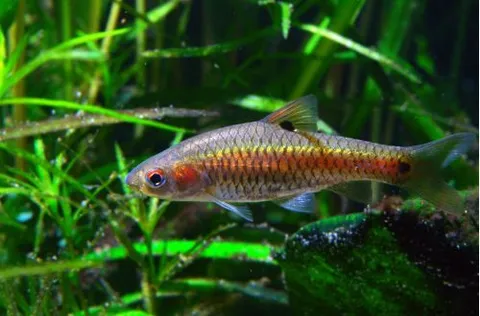
Puntius bimaculatus
Puntius bimaculatus, or the Two-Spot Barb, belongs to the family Cyprinidae. Kept in a school, these fish make a wonderful addition to almost any aquarium. They are undemanding in care, easy to breed, and compatible…
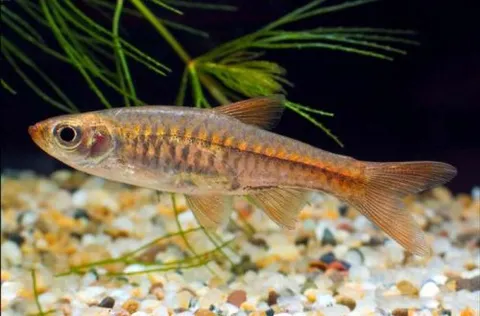
Rasbora vulcanus
The scientific name Rasbora vulcanus belongs to the Volcano Rasbora, a member of the family Cyprinidae, or carps. Its name is quite remarkable and has a simple explanation: dominant males display a bright orange-red…
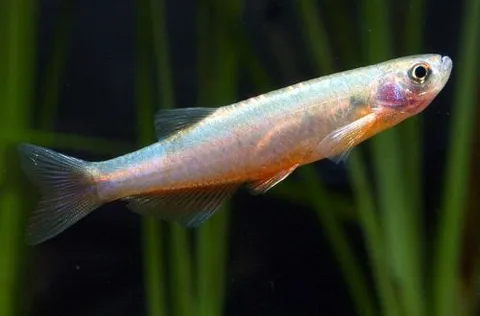
Danio roseus
The Rosy Danio, scientifically known as Danio roseus, belongs to the family Cyprinidae (Carps). This fish is a relatively recent addition to the aquarium hobby but has quickly gained popularity. Its care and breeding…