Temperature24 – 28 °C
Natural range
- New Guinea area
- Collingwood Bay area
RainbowfishConservation status: Data deficient DD
Other scientific names: Popondetta furcata, Popondichthys furcatus
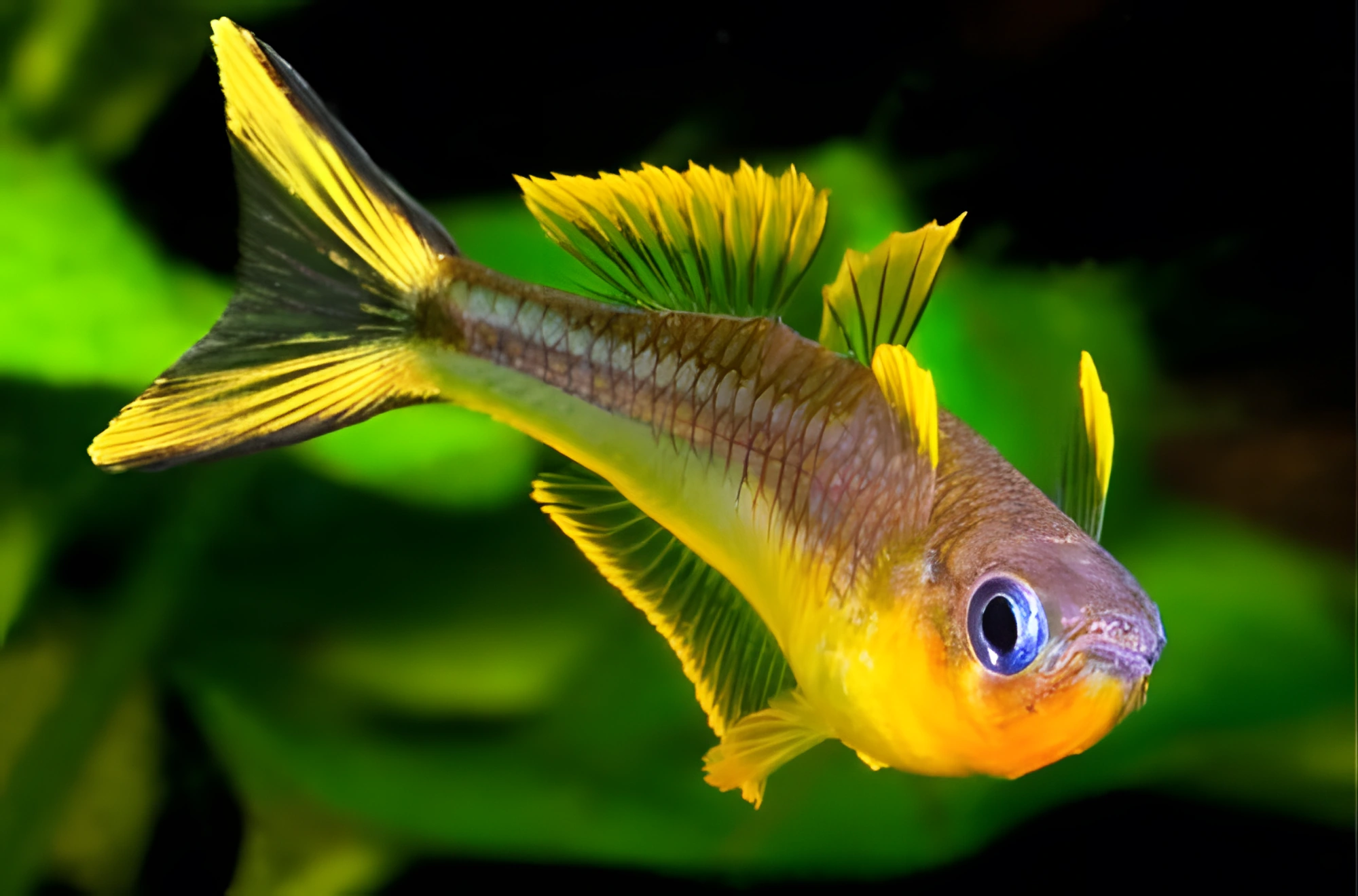
The Forktail Rainbowfish, or Popondetta furcata (Pseudomugil furcatus), a representative of the family Pseudomugilidae, is a vibrant and attractive addition to any freshwater aquarium. This species became available to aquarists relatively recently, first appearing in the 1980s. Notably, all fish offered for sale are bred in artificial conditions in commercial or amateur aquariums, meaning they are not caught from natural bodies of water.
- Required aquarium volume
- 60 L
- Size in aquarium
- 6 cm
- Temperature
- 24 – 28 °C
- Temperament
- Peaceful (regular)
Parameters
Water pHNeutral (7) – Slightly alkaline (8)
Water dHHard (15) – Very hard (30)
Water salinityno salt (freshwater)
Size in aquarium6 cm
Lifespan3 years
TemperamentPeaceful (regular)
Toward small fishnot a predator
Required aquarium volume60 L
Lightingdimmed
Substrateany (no restrictions)
Water flowweak
FeedingAny (universal)
CareGroup (8–10 individuals)
Description
Adults reach 4–6 cm in length. Males differ from females by being slightly larger, having brighter coloration, and elongated fins. The main body color is yellow, with males potentially developing red hues on the lower part of their body. A characteristic feature that gave these fish their name is the blue outline around their eyes.
Habitat
The natural habitat of this species is located on the island of New Guinea, where the fish inhabit river basins flowing into Collingwood and Dyke Ackland Bays at the eastern end of the island. They prefer clear, calm sections of water bodies with abundant aquatic vegetation, surrounded by tropical forests. Seasonal changes significantly affect their natural environment: during monsoons, heavy rains raise water levels, lower its temperature, and saturate it with organic matter from the forest litter. During dry periods, small rivers may partially dry up.
Behavior and Compatibility
These peaceful and calm fish adapt well in a community aquarium with species of similar temperament and size. It is recommended to keep them in schools of at least 8–10 individuals of both sexes. Such keeping will allow the Forktail Rainbowfish to feel more comfortable and display their most vibrant colors. This is especially noticeable in males, who, competing for the attention of females, use their coloration as a display tool.
Care and Maintenance
For a small school of fish, an aquarium of at least 60 liters will be needed. It is recommended to use many rooted and floating plants, grouped into thickets, as well as several snags imitating roots or tree branches, in the aquascape. When choosing and installing equipment, it is important to consider that the Forktail Rainbowfish prefers subdued lighting and well-oxygenated water. In addition, these fish do not tolerate strong currents well, so appropriate lighting and filtration systems should be chosen.
Diet
The diet of the Forktail Rainbowfish can include all types of appropriately sized foods, including dry, live, and frozen. To ensure a balanced diet, it is recommended to offer live foods, such as bloodworms or Artemia, at least several times a week.
Breeding and Reproduction
Although breeding this species is considered simple, the offspring are often weakened, and more than half of the eggs in a clutch may turn out to be infertile. The main reason for this problem is that most of the fish available on the market are descendants of one of the first populations exported from the island in 1981, which led to a significant reduction in genetic diversity due to inbreeding. In a home aquarium, fish can spawn year-round. Spawning for a single female lasts only one day and occurs among thickets of low, fine-leaved plants, where she lays her eggs. After the breeding period, parental instincts fade, and the fish may eat their own eggs and fry. To protect future offspring, eggs are often transferred to a separate tank with similar water conditions, equipped with a simple air-lift sponge filter. It is worth noting that fry can successfully develop in the main aquarium, especially if they are provided with reliable shelters of dense floating vegetation, as they prefer to stay in the upper layers of the water when young. The incubation period is about 3 weeks; its duration depends on the water temperature. Fry should be fed specialized powdered foods or live foods, such as small Daphnia and Artemia nauplii.
Diseases
Health problems in these fish arise only in the presence of injuries or keeping in unsuitable conditions, which leads to a weakening of the immune system and the subsequent occurrence of various diseases. At the first signs of illness, it is necessary first to check the water parameters for exceeding permissible values or the presence of toxic substances (such as nitrites, nitrates, ammonia). If deviations are found, all indicators should be normalized, and then treatment should begin. More detailed information on symptoms and treatment methods is available in the "Diseases of Aquarium Fish" section.
How to choose
When purchasing, choose active, mobile individuals with clean fins and no visible damage or film on the body. Avoid fish with signs of lethargy, clamped fins, or emaciation, as the species can be sensitive to transport and keeping conditions. Given that all commercial specimens are descendants of a limited population, it is important to assess the overall health of the entire school in the store's aquarium.
- acquire a group of 8–10 individuals to reduce stress
- check for signs of disease, such as velvet disease
- prefer individuals with bright coloration characteristic of the species
Frequently asked questions
The essentials: size, tank volume, water parameters and care
How big does Forktail Rainbowfish get?
An adult reaches 6 cm in length. Plan the tank around the maximum size: the fish quickly outgrows a cramped setup.
What size aquarium does Forktail Rainbowfish need?
The minimum recommended volume is 60 L. A smaller tank speeds up nitrate build-up and raises stress levels.
What water parameters does Forktail Rainbowfish need?
Temperature 24–28 °C, pH 7–8, hardness 15–30 dGH. Stability matters more than exact values: sudden swings are harder on the fish than a small deviation from the ideal.
How long does Forktail Rainbowfish live?
Around 3 years when kept properly. Lifespan depends directly on tank volume, water quality and a varied diet.
Is Forktail Rainbowfish aggressive?
Temperament: peaceful (regular). Keep this in mind when choosing tank mates.
How many Forktail Rainbowfish should be kept together?
Recommended setup: group (8–10 individuals). Ignoring this is a common cause of stress and disease.
What does Forktail Rainbowfish eat?
Diet type: any (universal). Feed small portions that are finished within a couple of minutes — overfeeding does more harm than underfeeding.
What is the scientific name of Forktail Rainbowfish?
The scientific name of the species is Pseudomugil furcatus, family Pseudomugilidae. It also appears in the literature as: Popondetta furcata, Popondichthys furcatus.