Temperature23 – 26 °C
Natural range
- Da Nang Province area
- Vietnam area
Loaches
The scientific name Lepidocephalichthys sp. «LE1» is assigned to the Vietnamese Marble Loach, a representative of the family Cobitidae, or true loaches. This fish is sometimes encountered by aquarists, but its exact species identification remains unclear, which explains the alphanumeric index in its Latin name.
- Required aquarium volume
- 40 L
- Size in aquarium
- 5 cm
- Temperature
- 23 – 26 °C
- Temperament
- Peaceful (regular)
Parameters
Water pHSlightly acidic (6) – Neutral (7.5)
Water dHVery soft (1) – Medium hardness (9)
Water salinityno salt (freshwater)
Size in aquarium5 cm
Lifespan4 years
TemperamentPeaceful (regular)
Toward small fishnot a predator
Required aquarium volume40 L
Lightingdimmed
Substratesandy (regular, light)
Water flowweak
FeedingSinking (meat / protein)
CareSmall group (3–4 individuals)
Description
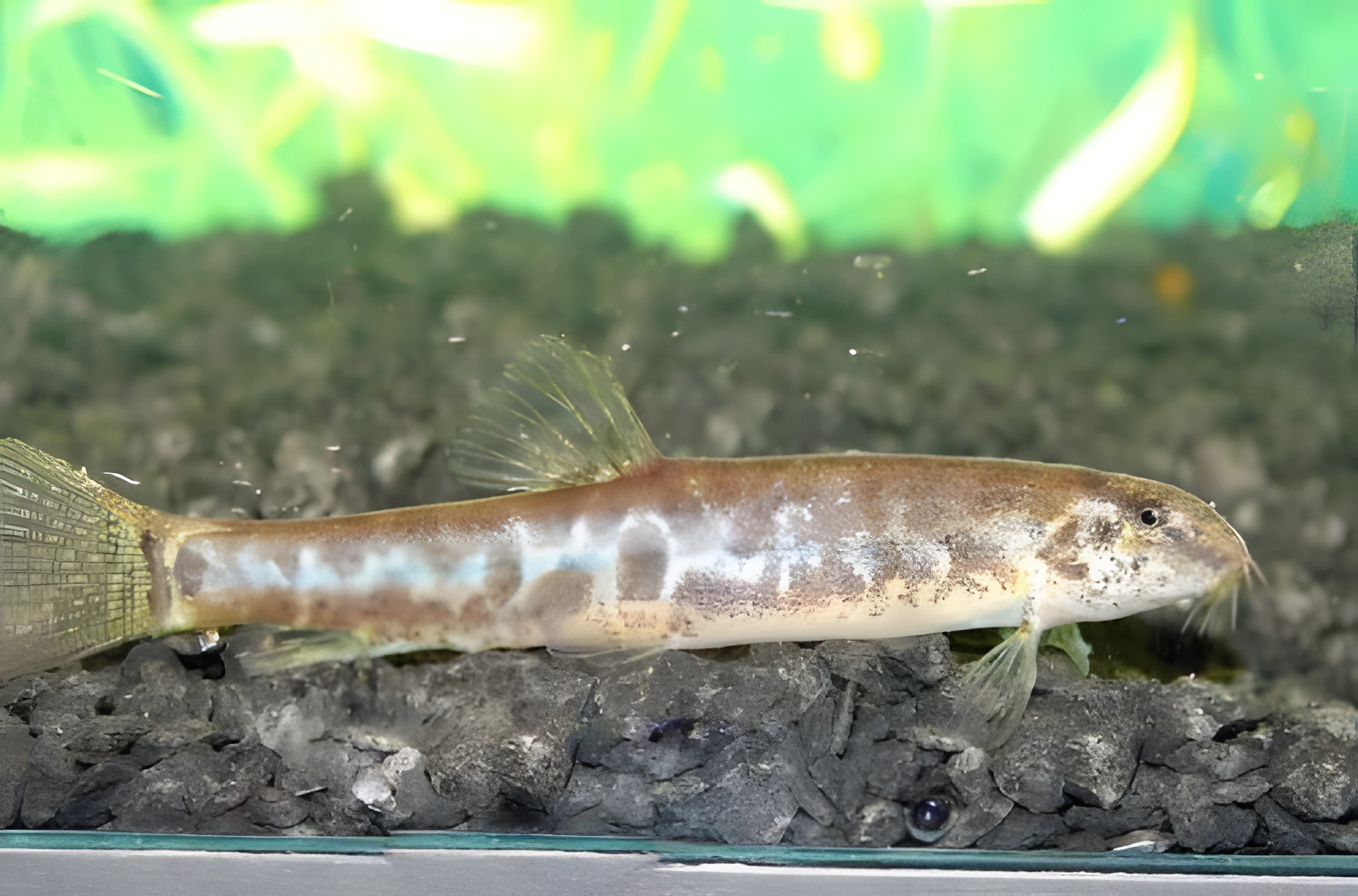
Adults grow up to 5 cm in length. Their coloration consists of a gray background with silvery streaks, creating a pattern that vaguely resembles marble, hence the species' name. Their fins are short and translucent. Around the mouth are three pairs of sensitive barbels, which Vietnamese Marble Loaches use to search for food in sand and silt. Differences between males and females are subtle, making them practically indistinguishable.
Habitat
The natural habitat of this species covers Southeast Asia. Initially, wild specimens were found within a small area of Vietnam's Da Nang province. These fish prefer to live in shallow, slow-moving bodies of water, such as lakes, river backwaters, and swamps, located among dense humid forests. They are also often found in rice paddies.
Behavior and Compatibility
These fish are peaceful both towards their conspecifics and other species. They exhibit schooling behavior, so it is advisable to keep them in groups, acquiring a minimum of 4 individuals. Fish of similar size that primarily inhabit the upper or middle water layers would be ideal tank mates.
Care and Maintenance
An aquarium of at least 40 liters is suitable for a group of 4 fish. Special attention should be paid to the substrate in the aquascape. It is important to note that the Vietnamese Marble Loach has specific feeding habits that require a soft sandy substrate. This is because larger particles, such as small pebbles, can accidentally enter the mouth or damage the fish's gills. Accordingly, the choice of aquatic plants also has its peculiarities: plants with a weak root system are unlikely to hold in such a substrate and will be uprooted. Other decorative elements can be chosen according to your taste or based on the needs of other aquarium inhabitants. Caring for these fish is not difficult. The main thing is to ensure stable water parameters, maintaining temperature and hydrochemical indicators within an acceptable range, avoiding the accumulation of organic matter, and regularly performing the necessary aquarium maintenance.
Diet
In natural conditions, these fish feed by sifting through the substrate with their mouths in search of small invertebrates, such as insects, their larvae, and crustaceans. In aquarium conditions, they should be offered similar food products. These can be fresh, frozen, or live foods – bloodworms, artemia, daphnia. Dry sinking foods in the form of flakes, granules, or tablets containing a significant amount of protein are also suitable.
Breeding and Reproduction
In their natural environment, the breeding period for this species is determined by seasonal changes, and modifications in external conditions serve as a stimulus for spawning. Recreating natural processes in a home aquarium is quite problematic. At the time of writing, successful cases of breeding Vietnamese Marble Loach have not been recorded.
Diseases
A good guarantee against diseases is proper fish keeping in suitable conditions, providing a balanced diet, and the absence of external stresses, such as attacks from tank mates. The appearance of signs of illness can be a signal of care problems. As a rule, normalizing living conditions promotes self-healing, but if the fish's condition has significantly worsened, medication may be required. More detailed information on symptoms and treatment methods can be found in the "Diseases of Aquarium Fish" section.
How to choose
When choosing a Vietnamese Marble Loach, attention should be paid to the activity of the fish and the condition of their skin. Healthy individuals should be active, without visible damage, ulcers, white spots, or areas with unnaturally pale coloration. Avoid purchasing fish with sunken bellies, which may indicate emaciation or the presence of internal parasites, characteristic of some loach species.
Before purchasing, it is recommended to ask store staff to feed the fish to ensure their appetite and the absence of signs of depression. Since this species is bottom-dwelling and often spends time burrowing into the substrate, it is important to assess the integrity of the barbels, which should be straight and undamaged. It is also worth considering that fish in the store may be frightened and exhibit shyness, but excessive apathy when attempting to feed is an alarming sign.
Frequently asked questions
The essentials: size, tank volume, water parameters and care
How big does Vietnamese Marble Loach get?
An adult reaches 5 cm in length. Plan the tank around the maximum size: the fish quickly outgrows a cramped setup.
What size aquarium does Vietnamese Marble Loach need?
The minimum recommended volume is 40 L. A smaller tank speeds up nitrate build-up and raises stress levels.
What water parameters does Vietnamese Marble Loach need?
Temperature 23–26 °C, pH 6–7.5, hardness 1–9 dGH. Stability matters more than exact values: sudden swings are harder on the fish than a small deviation from the ideal.
How long does Vietnamese Marble Loach live?
Around 4 years when kept properly. Lifespan depends directly on tank volume, water quality and a varied diet.
Is Vietnamese Marble Loach aggressive?
Temperament: peaceful (regular). Keep this in mind when choosing tank mates.
How many Vietnamese Marble Loach should be kept together?
Recommended setup: small group (3–4 individuals). Ignoring this is a common cause of stress and disease.
What does Vietnamese Marble Loach eat?
Diet type: sinking (meat / protein). Feed small portions that are finished within a couple of minutes — overfeeding does more harm than underfeeding.
What is the scientific name of Vietnamese Marble Loach?
The scientific name of the species is Lepidocephalichthys sp. «LE1», family Cobitidae (Loaches).