Temperature18 – 24 °C
Natural range
- Venezuela area
- Argentina area
- Amazon Basin
CatfishConservation status: Least concern LC
Other scientific names: Loricaria laticeps
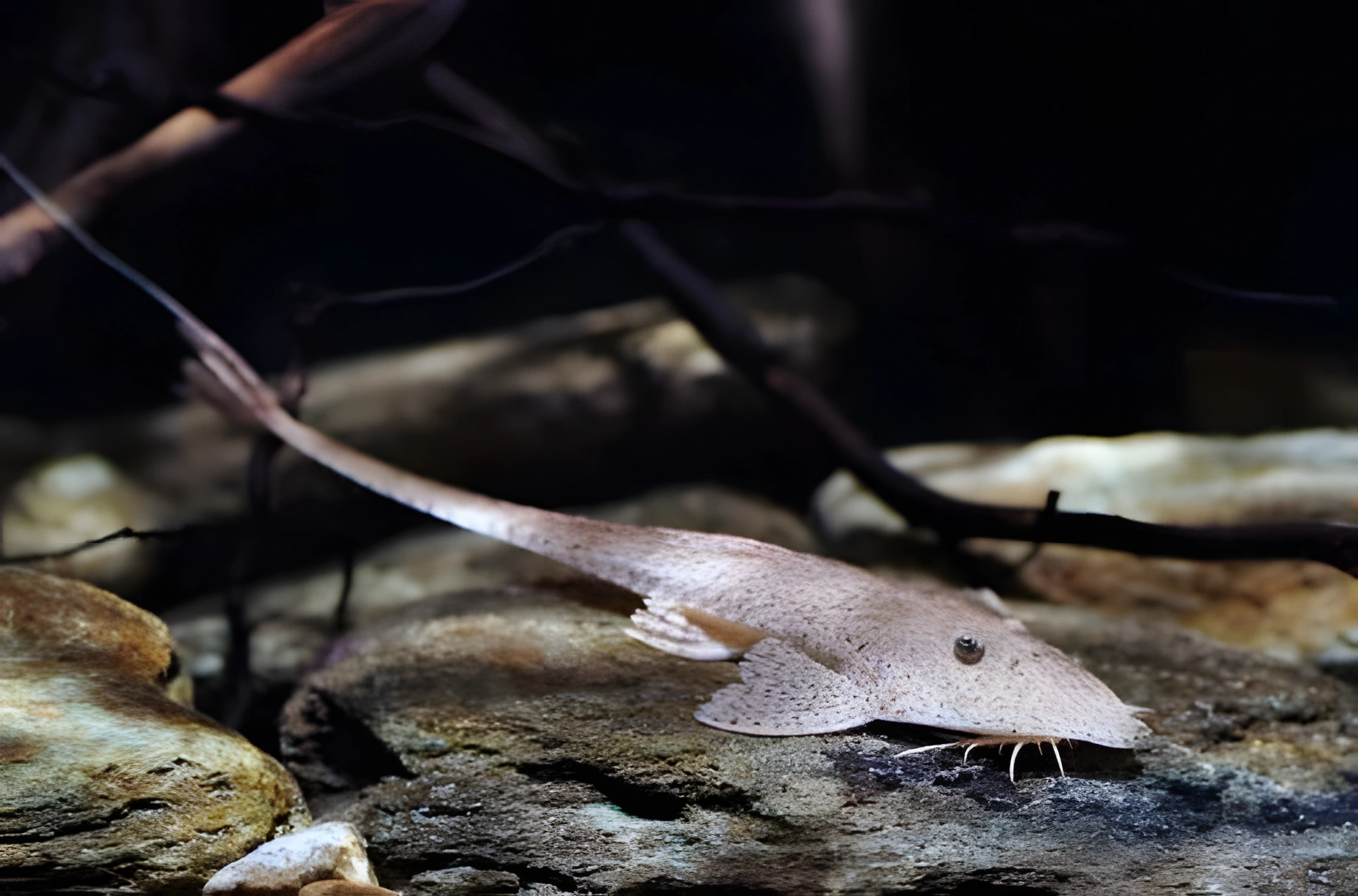
Pseudohemiodon laticeps, known as the Narrow-headed Catfish, is a member of the armored catfish family (Loricariidae). Its unusual appearance combined with its unpretentious nature makes this catfish highly desirable for enthusiasts of various exotic and unique fish.
- Required aquarium volume
- 500 L
- Size in aquarium
- 25 – 30 cm
- Temperature
- 18 – 24 °C
- Temperament
- Peaceful (regular)
Parameters
Water pHSlightly acidic (6) – Neutral (7.5)
Water dHVery soft (2) – Hard (12)
Water salinityno salt (freshwater)
Size in aquarium25 – 30 cm
Lifespan15 years
TemperamentPeaceful (regular)
Toward small fishnot a predator
Required aquarium volume500 L
Lightingdimmed
Substratefine-grained (fine crushed stone, gravel, etc.)
Water flowweak or moderate
FeedingSinking (any)
CareBoth solitary and in group (flexible)
Description
Adults of this fish reach a length of 25 to 30 cm. The catfish is characterized by a flat and elongated body, and its head, when viewed from above, is triangular. Its pectoral and pelvic fins are wide, in contrast to its narrow caudal fin. Numerous sensitive barbels are located around its mouth, used for probing the sand in search of food. The coloration is light, with dark speckles. This body shape and color camouflage serve to conceal the fish on a sandy background and allow it to burrow into the substrate, leaving only its eyes exposed.
Habitat
The origin of this species is South America, where its natural range extends from Venezuela to the northern territories of Argentina. It prefers calm river currents and areas with soft sandy substrates. For shelter, the catfish uses an abundance of submerged tree roots and other driftwood, finding refuge there during the day.
Behavior and Compatibility
This fish is non-aggressive and peaceful, which allows it to coexist well with other species of similar size. In large aquariums, intraspecific conflicts are extremely rare, but in limited spaces, competition for territory on the bottom is possible. Depending on the aquarium volume, catfish can be kept individually or in groups.
Care and Maintenance
For a single Narrow-headed Catfish, an aquarium of at least 500 liters is recommended. The aquarium interior should include a soft sandy substrate and several sufficiently large hiding places so that the fish can behave naturally. Although the catfish is nocturnal, constant dim lighting is not mandatory; its activity begins after the main lights are turned off. For those who wish to observe the fish, evening lighting with a red spectrum can be used. Success in keeping the Narrow-headed Catfish depends on many parameters, such as a balanced diet and compatibility with other inhabitants. However, the key aspect remains maintaining high water quality, including optimal temperature, pH, and dGH values. Environmental stability is ensured by effective filtration systems and regular aquarium maintenance, including waste removal and partial water changes.
Diet
This species is omnivorous; in its natural environment, it feeds on everything it finds on the bottom, whether plant debris or small invertebrates. In a home aquarium, the Narrow-headed Catfish readily accepts most available foods, provided they are sinking.
Breeding and Reproduction
A distinctive feature of this species is paternal care for the offspring. The male takes full responsibility for the eggs and fry. After spawning, the male attaches the eggs to his barbels and carries them for approximately two weeks. During the incubation period, he continues his normal life, feeding on zooplankton and burrowing into the substrate. Apparently, this does not negatively affect the development of the eggs. The maternal instinct fades when the fry emerge. Successful breeding in home aquariums is quite common. However, for the survival of the fry, it is recommended to move them to a separate tank.
Diseases
Most health problems in fish often arise from unsuitable keeping conditions. Maintaining a stable and comfortable habitat is a key factor for successful keeping. If symptoms of illness appear, the first step is to check the water quality. If deviations are found, it is important to take immediate measures to eliminate them. If the symptoms do not disappear or worsen, medicinal treatment may be required. More detailed information on symptoms and treatment methods can be found in the "Diseases of Aquarium Fish" section.
How to choose
When choosing Pseudohemiodon laticeps, it is important to assess the condition of the skin and fins: there should be no ulcers, white spots, damage, or signs of fungal growth on the body. The fish should exhibit natural activity, often burrowing into the sandy substrate, which is normal for this species. Avoid individuals with sunken bellies or apathetic behavior, as this may indicate emaciation or internal diseases.
- Check for external parasites on the gill covers and fins.
- Ensure the fish's eyes remain clear, without cloudiness.
- Inquire about the diet at the store, as adaptation to artificial foods can be difficult for wild-caught specimens.
Frequently asked questions
The essentials: size, tank volume, water parameters and care
How big does Narrow-headed Catfish get?
An adult reaches 25–30 cm in length. Plan the tank around the maximum size: the fish quickly outgrows a cramped setup.
What size aquarium does Narrow-headed Catfish need?
The minimum recommended volume is 500 L. A smaller tank speeds up nitrate build-up and raises stress levels.
What water parameters does Narrow-headed Catfish need?
Temperature 18–24 °C, pH 6–7.5, hardness 2–12 dGH. Stability matters more than exact values: sudden swings are harder on the fish than a small deviation from the ideal.
How long does Narrow-headed Catfish live?
Around 15 years when kept properly. Lifespan depends directly on tank volume, water quality and a varied diet.
Is Narrow-headed Catfish aggressive?
Temperament: peaceful (regular). Keep this in mind when choosing tank mates.
How many Narrow-headed Catfish should be kept together?
Recommended setup: both solitary and in group (flexible). Ignoring this is a common cause of stress and disease.
What does Narrow-headed Catfish eat?
Diet type: sinking (any). Feed small portions that are finished within a couple of minutes — overfeeding does more harm than underfeeding.
What is the scientific name of Narrow-headed Catfish?
The scientific name of the species is Pseudohemiodon laticeps, family Armored Catfishes (Loricariidae). It also appears in the literature as: Loricaria laticeps.