Temperature22 – 28 °C
Other scientific names: Callichthys aeneus, Corydoras aeheus, Corydoras aenaeus, Corydoras macrosteus, Corydoras microps, Corydoras schultzei
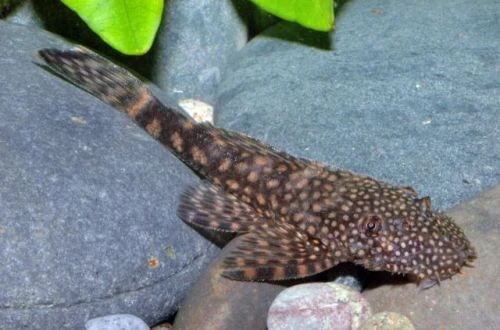
The Dark Ancistrus, also known as the Bristlenose Pleco (Ancistrus cirrhosus), possesses a rather unusual appearance that might remind one of something shaggy. This fish can remain motionless for long periods, which, combined with its camouflage coloration, makes it almost invisible in its natural habitat. For some aquarists, the abundance of "bristles" on its snout might seem off-putting, while for others, it will be a reason to acquire such an amusing pet.
A distinctive feature of the Dark Ancistrus is the presence of numerous outgrowths on its head, resembling tentacles or dense bristles; in males, these outgrowths are fleshier than in females. Such growths are a unique characteristic of the genus Ancistrus. These small fish, reaching no more than 9 cm in adulthood, have spines at the ends of their pectoral fins, and their bodies are uniformly covered with rows of bony plates. Due to their feeding habits, their mouth has transformed into a sucker, allowing them to effectively scrape algae from various surfaces. Their body coloration is most often uneven: brown, black, olive, or gray, with white or yellow spots that can vary depending on the region of origin. There is also a "piebald" variant with large light spots all over the body. The fish's belly is flat and noticeably lighter than the main coloration. In most Ancistrus males, the tentacles are more numerous, and there are also protrusions on the head resembling horns. In females, the tentacles are significantly smaller and not located all over the head.
The Dark Ancistrus, or Bristlenose Pleco (Ancistrus cirrhosus), was first described by researcher Achille Valenciennes in 1836. The species was described from the Argentine provinces of Misiones and Buenos Aires and inhabits the Paraná River basin, in Brazil, Paraguay, Argentina and Uruguay; it does not occur in the Amazon. The genus Ancistrus is the largest in the Ancistrini group and currently includes 64 recognized species. This catfish species is very widespread, and although wild-caught specimens are sometimes available for sale, it is quite rare in the European market. Their habitat extends from fast-flowing rivers with gravel or rocky bottoms to murky, silty stagnant waters. During the rainy season, these catfish can be found in flooded forest areas. Adults prefer to stay in deep, dark places, while juveniles are often found in shallow waters.
Representatives of this catfish species get along well with each other and with other aquarium inhabitants; however, males, especially during courtship, may engage in skirmishes. In a large aquarium, such clashes usually do not lead to serious consequences. Although these fish do not pose a threat to other adult inhabitants, they may eat eggs and fry. Ancistrus are one of the few species that can be kept with small aggressive or predatory fish, such as cichlids, thanks to their reliable protection in the form of bony plates and spines. An important condition is that the predatory fish must be equal in size to or smaller than the Ancistrus.
Ancistrus catfish are known for their hardiness and unpretentiousness to specific conditions; they tolerate significant fluctuations in water parameters well. When cleaning the aquarium and glass, care should be taken not to accidentally touch the fish and damage the fleshy outgrowths on its head. When the fish is agitated, these outgrowths raise, creating a "bristly" appearance; additionally, one should be wary of the spines on their fins. Since the fish spends most of its life at the bottom and is primarily nocturnal, it needs a sufficient number of shelters where it can hide during the day. Dense plants with strong root systems, large snags, or twisted roots are suitable for this. Wooden aquarium decorations are an optimal solution, as they not only serve as shelter but also create excellent surfaces for algae growth, which the catfish feed on. To maintain the fish's well-being, the water must be oxygen-rich, and a moderate water flow should be provided. Modern filters combined with aerators handle this task excellently. If it is noticed that the fish periodically rises to the surface to gulp air, this indicates a lack of oxygen or the presence of ammonia/nitrites in the water, which is usually caused by a filter malfunction or clogging. There are no lighting requirements, provided there are sufficient hiding places. Due to their nocturnal lifestyle, night lighting can be installed in the aquarium for observing the pets. Water parameters: Water changes should be performed once every two weeks, replacing at least 25% of the aquarium volume.
This species is herbivorous. In addition to algae, they readily eat almost any green from the garden, such as spinach, carrots, lettuce, zucchini, cucumbers, and even peas. It is recommended to purchase specialized sinking plant-based foods designed specifically for herbivorous fish. Vegetables should be offered as a supplementary part of the diet, not replacing the main food; their proportion should not exceed 15% of the total food volume. How to serve vegetables? Vegetables such as cucumber or zucchini should be thoroughly washed and cut into small pieces; cucumber can be served in slices, and it is not necessary to remove the skin. The pieces should be secured at the bottom of the aquarium, weighed down with a heavy stone or using a stainless steel clip. Despite being herbivorous, these fish do not pose a threat to aquarium plants, provided they are not starving. Fish should be fed once or twice a day, preferably after the lights are turned off, as Ancistrus are nocturnal.
Breeding the Dark Ancistrus (Ancistrus cirrhosus) is relatively straightforward, primarily occurring in the winter months, which corresponds to the rainy season in the Amazon, when there is an influx of cooler water. Successful breeding is also possible in a regular aquarium, provided similar conditions are created, although it should be noted that not all aquarium inhabitants may appreciate this. To stimulate spawning in catfish, you can partially replace the water with cooler water. In late autumn (the beginning of the rainy season in the Amazon), it is recommended to replace at least 75% of the water with water at about 18°C, with a pH of 6.5–7.0 and soft hardness. For successful breeding of a single pair, an aquarium of at least 40 liters is required; if there are several males, the tank should be significantly larger to avoid territorial conflicts. The presence of caves or snags is essential, which the male uses to set up his nest, meticulously cleaning it and the surrounding area of debris. During courtship, the male spreads his dorsal and caudal fins, trying to attract the female to his nest. If successful, the female can lay 20 to 200 sticky eggs. The eggs attach to cracks in snags or roots, after which the female leaves the nest and no longer participates in the care of the eggs and fry. The male, on the other hand, does not leave the nest for the next 7–10 days until the fry appear, only occasionally venturing out to feed. He takes care of the cleanliness of the nest, removes non-viable eggs, and actively fans them with his fins, ensuring sufficient oxygen circulation. After hatching, the fry attach themselves with suckers to the surface of snags or the sides of the aquarium. For 4 days, they feed on the remnants of the yolk sac, and then switch to algae, if available. Fry can be fed by dissolving a small amount of baby puree made from zucchini, broccoli, or other vegetables in the water. Subsequently, the fry can be offered powdered dry vegetable food.
This catfish has high resistance to diseases. In a well-maintained aquarium, health problems are extremely rare. However, due to their specific structure and lifestyle, catfish are particularly sensitive to ammonia content in the water, which can provoke a disease of the barbels, hindering orientation and normal feeding.
When selecting individuals, attention should be paid to the integrity of the fins and the absence of skin damage. In healthy fish, the barbels should be long, without signs of erosion or shortening, as their condition directly indicates the quality of previous keeping conditions. Avoid purchasing fish with sunken bellies, spots on the body, or unnatural behavior, such as constant swimming near the water surface, which may be a sign of intoxication or disease. In the store, catfish should be active in the bottom layer, not lying motionless or constantly trying to hide in a corner. They are usually kept singly, or one male with several females: mature males are territorial and fight one another over caves.
The essentials: size, tank volume, water parameters and care
An adult reaches 9 cm in length. Plan the tank around the maximum size: the fish quickly outgrows a cramped setup.
The recommended volume is 80 L. A smaller tank speeds up nitrate build-up and raises stress levels.
Temperature 22–28 °C, pH 5.8–7.5, hardness 4–15 dGH. Stability matters more than exact values: sudden swings are harder on the fish than a small deviation from the ideal.
Around 5 years when kept properly. Lifespan depends directly on tank volume, water quality and a varied diet.
Temperament: peaceful (regular). Keep this in mind when choosing tank mates.
Recommended setup: solitary + other species (large / compatible). Ignoring this is a common cause of stress and disease.
Diet type: plant-based (algae, vegetables). Feed small portions that are finished within a couple of minutes — overfeeding does more harm than underfeeding.
The scientific name of the species is Ancistrus cirrhosus, family Armored Catfishes (Loricariidae). It also appears in the literature as: Callichthys aeneus, Corydoras aeheus, Corydoras aenaeus.
Matched by family, categories and overlapping keeping conditions
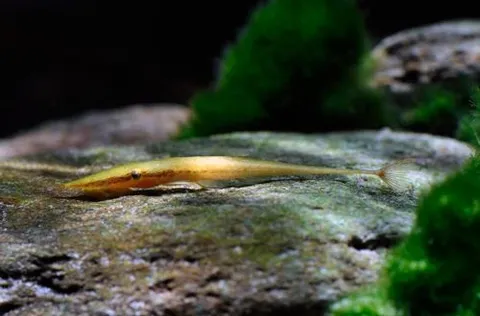
Acestridium dichromum
The Whiptail Catfish, or Acestridium dichromum, belongs to the family Loricariidae, which includes armored catfish. This species first became available to aquarists in the late 1990s, making it relatively new to the…
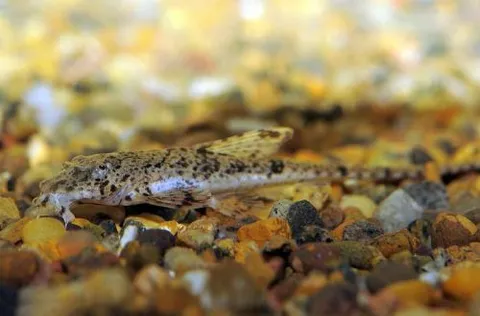
Rineloricaria microlepidogaster
The fish known as the Golden Loricarid or Six-banded Loricarid, scientifically named Rineloricaria microlepidogaster, is a member of the Armored Catfish family (Loricariidae). This catfish originates from South America.…
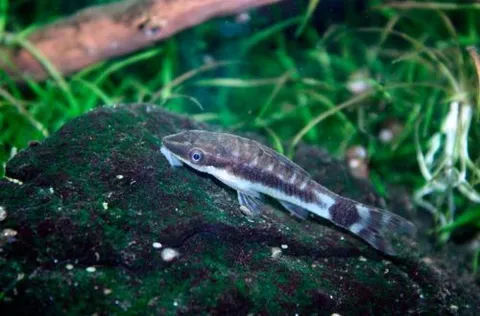
Otocinclus hoppei
Hoppe's Otocinclus, Otocinclus hoppei — its scientific name — is a member of the armored catfish family (Loricariidae). This fish is native to South America, where it inhabits the Madeira and Ucayali river basins, part…
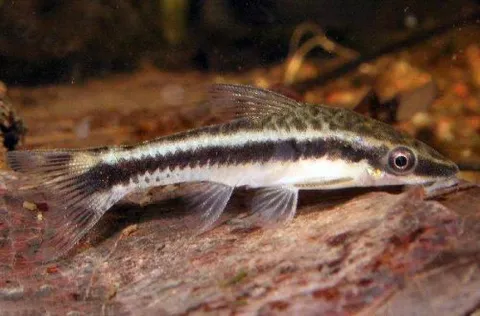
Otocinclus vittatus
Otocinclus vittatus, the scientific name for the dwarf oto, belongs to the armored catfish family (Loricariidae). This species is often used in aquariums to control algae growth. Despite its unassuming coloration, the…