Temperature16 – 24 °C
Natural range
- Eastern India area
- Bangladesh area
CyprinidsConservation status: Least concern LC
Other scientific names: Cyprinus dangila, Perilampus reticulatus
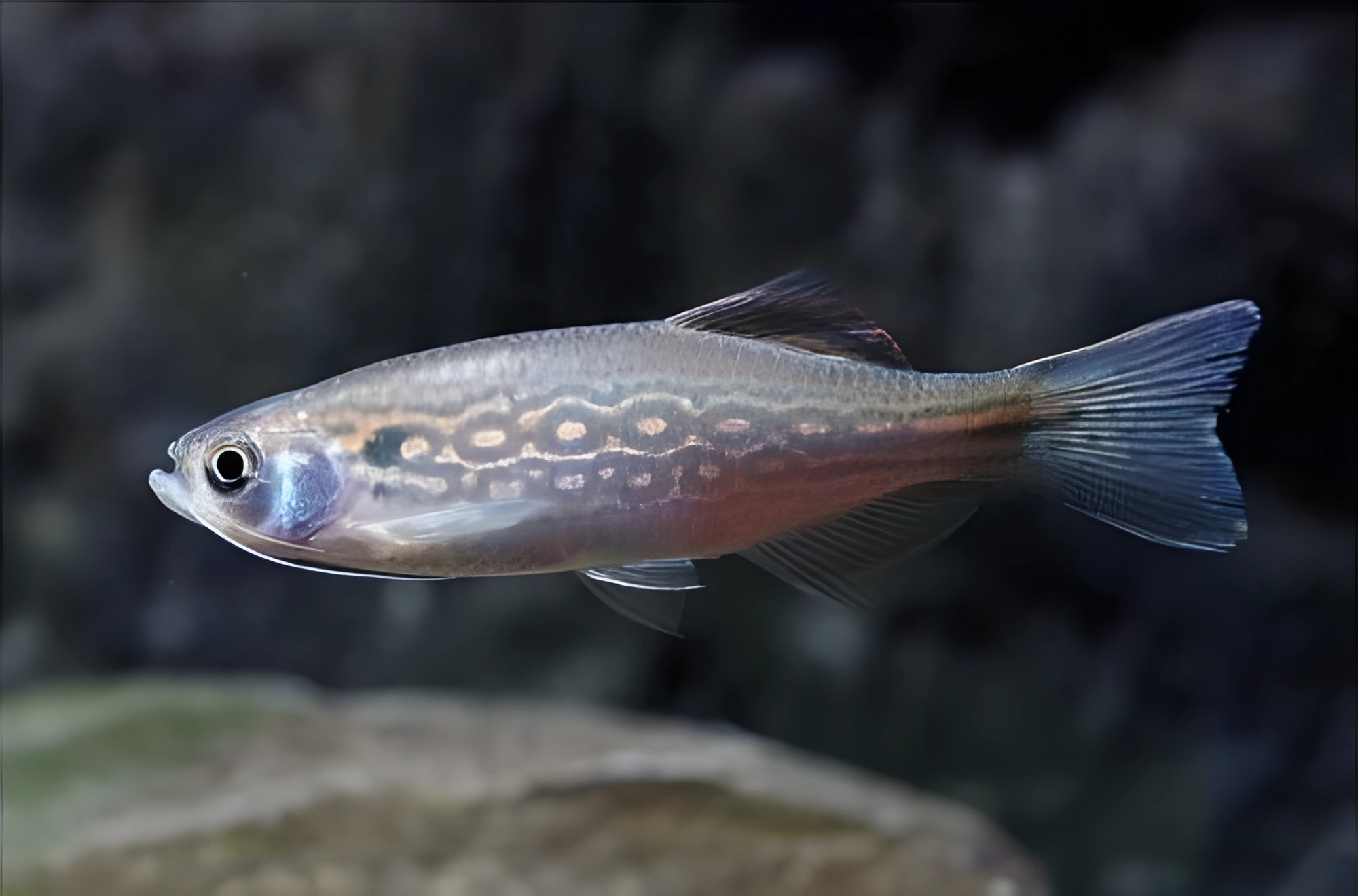
Danio dangila, or Whiskered Danio (scientific name Danio dangila), belongs to the family Cyprinidae, known as carps. This fish stands out from other Danios due to its noticeably longer barbels. Its ease of care, relative unpretentiousness, and excellent compatibility with many other peaceful fish make it attractive.
- Required aquarium volume
- 200 L
- Size in aquarium
- 6 – 13 cm
- Temperature
- 16 – 24 °C
- Temperament
- Peaceful (regular)
Parameters
Water pHNeutral (6.5) – Neutral (7.5)
Water dHVery soft (2) – Hard (15)
Water salinityno salt (freshwater)
Size in aquarium6 – 13 cm
Lifespan4 years
TemperamentPeaceful (regular)
Toward small fishnot a predator
Required aquarium volume200 L
Lightingany
Substrateany (no restrictions)
Water flowweak or moderate
FeedingAny (universal)
CareGroup (8–10 individuals)
Description
Adults reach sizes of 6 to 13 cm. Their length can vary depending on the specific region of origin: in the upper reaches of rivers, fish are usually smaller, while closer to the mouth, where there are extensive floods and backwaters, they grow larger. Their coloration is silvery, and the body pattern consists of wavy lines and spots. Distinctive features include black spots located immediately behind the gill cover, as well as characteristic long, filamentous appendages—barbels—which gave this species its name.
Habitat
Previously, it was believed that the habitat range of this species covered the entire Ganges River delta in modern-day India. However, later studies did not confirm this initial assumption. Currently, information about their habitat points to the Brahmaputra River, which flows through the eastern parts of India and extends across Bangladesh. The fish has been found in both moderately flowing mountain streams and swampy areas rich in aquatic vegetation.
Behavior and Compatibility
This active schooling fish prefers to live in groups, so it is recommended to keep at least 8–10 individuals. It coexists well with other non-aggressive freshwater species of comparable size. However, when choosing tank mates, it should be noted that not all fish may feel comfortable next to overly active Danios.
Care and Maintenance
A sufficiently spacious aquarium will be required for a school of ten fish. The minimum permissible volume is 200 liters. Since the fish inhabits diverse biotopes in its natural environment, the aquarium design can be chosen by the aquarist purely according to their taste. The main condition is to provide ample free swimming space. When keeping Whiskered Danios, it is crucial to maintain stable water parameters: prevent the accumulation of organic waste (food remnants, excrement), and maintain an acceptable range of pH / dGH values and temperature. Aquarium care includes several standard procedures: regular equipment checks, weekly 20–40% water changes with fresh water, and cleaning the substrate along with decor elements.
Diet
Feeding these fish presents no difficulties. In a home aquarium, they readily accept most popular foods intended for aquarium inhabitants, such as dry, freeze-dried, frozen, and live foods.
Breeding and Reproduction
Breeding in a home aquarium is quite feasible. Under favorable conditions, spawning can occur regularly. The fish scatter their eggs directly onto the substrate or among plant thickets. The incubation period takes about 48 hours, after which the fry begin to swim freely after approximately two days. It is important to note that the survival rate of fry in a community tank will be extremely low, as they may become prey for adult fish and face difficulties in finding suitable food. To preserve offspring, it is recommended to use a separate tank with identical water conditions, where fertilized eggs or already hatched fry are moved. This tank is equipped with a simple air-driven sponge filter and a heater. Additional lighting is not required; light coming from the room will be sufficient. The decor is at the owner's discretion. Fry are fed with specialized powdered foods or, if available, Artemia nauplii. They grow quickly and reach a length of up to 1.5 cm within a month.
Diseases
In a balanced aquarium ecosystem that meets the needs of this species, diseases are rare. Most often, ailments are provoked by deteriorating environmental conditions, contact with already sick fish, or mechanical damage. If the fish shows clear signs of illness, medicinal treatment should be applied. More detailed information on symptoms and therapy methods can be found in the “Aquarium Fish Diseases” section.
How to choose
When selecting individuals, pay attention to their activity and the absence of visible damage, such as ulcers, film, or fin deformities. A healthy fish should exhibit natural mobility and react quickly to external stimuli. Avoid purchasing specimens that isolate themselves, appear emaciated, or have an unnaturally swollen abdomen.
- Inspect fish for intact barbels, as their absence can be a sign of injury or poor water quality in the aquarium.
- Ensure that the fish in the store are kept in conditions close to those recommended and do not show signs of apathy.
- Purchase a school of 8–10 individuals at once, as solitary keeping causes stress and timidity in this species.
Frequently asked questions
The essentials: size, tank volume, water parameters and care
How big does Whiskered Danio get?
An adult reaches 6–13 cm in length. Plan the tank around the maximum size: the fish quickly outgrows a cramped setup.
What size aquarium does Whiskered Danio need?
The minimum recommended volume is 200 L. A smaller tank speeds up nitrate build-up and raises stress levels.
What water parameters does Whiskered Danio need?
Temperature 16–24 °C, pH 6.5–7.5, hardness 2–15 dGH. Stability matters more than exact values: sudden swings are harder on the fish than a small deviation from the ideal.
How long does Whiskered Danio live?
Around 4 years when kept properly. Lifespan depends directly on tank volume, water quality and a varied diet.
Is Whiskered Danio aggressive?
Temperament: peaceful (regular). Keep this in mind when choosing tank mates.
How many Whiskered Danio should be kept together?
Recommended setup: group (8–10 individuals). Ignoring this is a common cause of stress and disease.
What does Whiskered Danio eat?
Diet type: any (universal). Feed small portions that are finished within a couple of minutes — overfeeding does more harm than underfeeding.
What is the scientific name of Whiskered Danio?
The scientific name of the species is Danio dangila, family Cyprinids (Cyprinidae). It also appears in the literature as: Cyprinus dangila, Perilampus reticulatus.