Temperature20 – 25 °C
Natural range
- Borneo area
- Kalimantan area
CyprinidsConservation status: Least concern LC
Other scientific names: Puntius trifasciatus
The Three-banded Barb, scientifically known as Desmopuntius trifasciatus, belongs to the carp family (Cyprinidae). Its name vividly reflects the characteristic body pattern, adorned with rows of dark stripes. This species is not commonly found among aquarium inhabitants, although it surprisingly coexists well with many freshwater neighbors and demonstrates undemanding care requirements.
- Required aquarium volume
- 200 L
- Size in aquarium
- 8 – 10 cm
- Temperature
- 20 – 25 °C
- Temperament
- Peaceful (regular)
Parameters
Water pHSlightly acidic (5) – Neutral (7)
Water dHVery soft (1) – Medium hardness (10)
Water salinityno salt (freshwater)
Size in aquarium8 – 10 cm
Lifespan4 years
TemperamentPeaceful (regular)
Toward small fishnot a predator
Required aquarium volume200 L
Lightingany
Substratesoft sandy (including silted)
Water flownone or stagnant (no flow)
FeedingAny (universal)
CareGroup (8–10 individuals)
Description
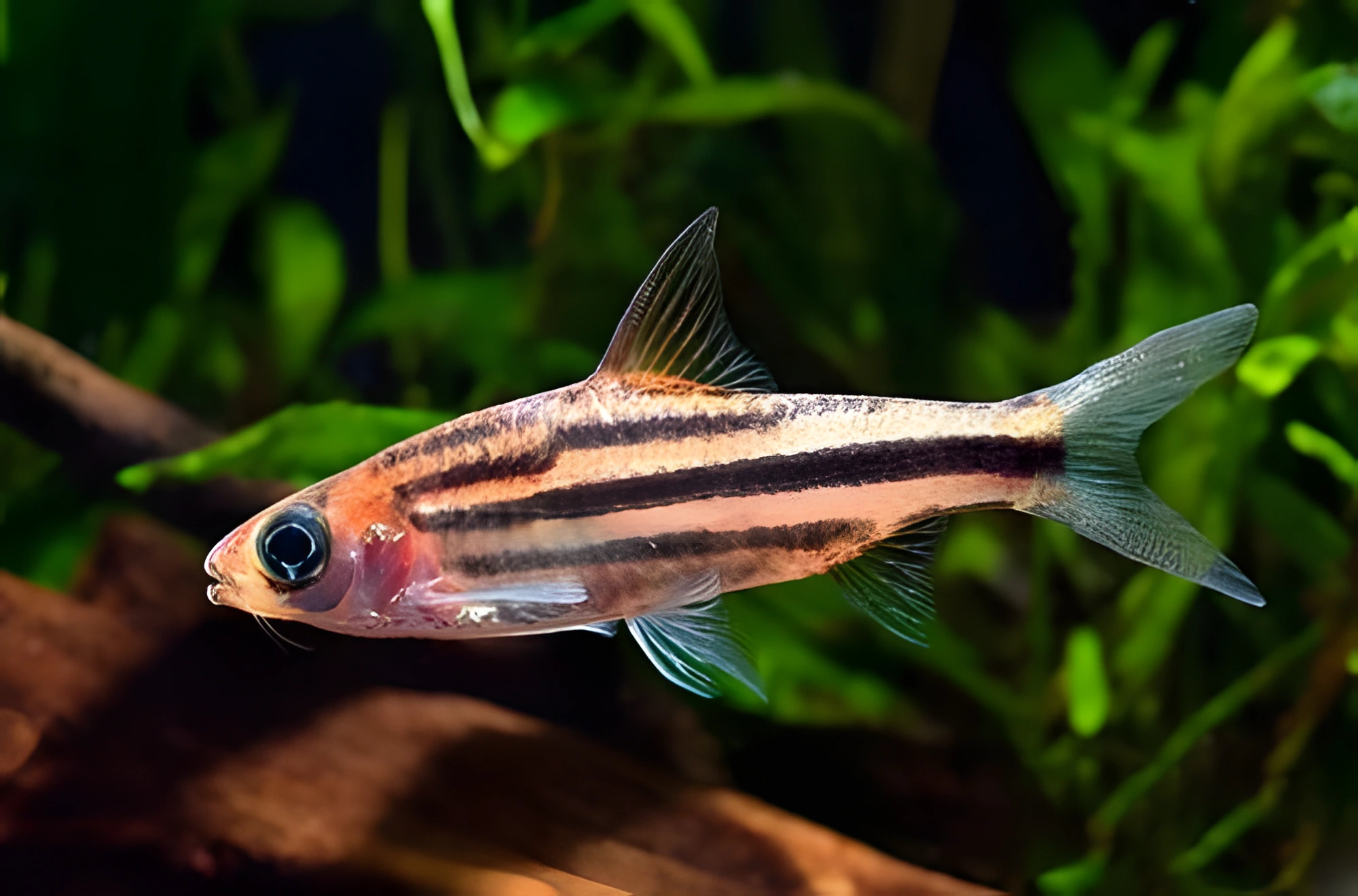
Visually, this barb resembles the Five-banded and Line Barbs, which are found in similar conditions. Adult specimens reach a length of up to 10 cm. Their bodies are colored in silvery-pink tones and adorned with longitudinal black stripes arranged in rows. One wide dark stripe runs along the lateral line, with a thinner stripe extending on each side of it. The fins and tail remain translucent. Thread-like barbels are located near the mouth on the head—these organs help the fish find food in murky natural waters.
Habitat
Its homeland is Southeast Asia, specifically the island of Borneo (Kalimantan). There, it inhabits peat swamps, as well as associated rivers and streams. The natural environment of these fish is notable for its dark, brownish water, which acquires this hue due to tannins actively released during the decomposition of organic plant remains. Such bodies of water typically abound with dense aquatic vegetation, and their bottoms are covered with a thick layer of silt, fallen leaves, branches, and tree roots.
Behavior and Compatibility
This peaceful and active fish prefers to live in shoals of at least 8–10 individuals. It coexists perfectly with other Southeast Asian species living in similar conditions.
Care and Maintenance
It is recommended to keep a small shoal of Three-banded Barbs in an aquarium of at least 200 liters. The tank's decor should recreate the natural habitat of these fish: provide areas with dense thickets of shade-loving plants and use a dark, soft substrate. Lighting should be subdued. Dried tree leaves can serve as an additional decorative element; as they decompose, they will stain the water brown and contribute to creating optimal hydrochemical parameters by acidifying the water. More detailed information is available in the article "What Tree Leaves Can Be Used in an Aquarium." For Barbs, as with any other aquarium inhabitants, it is extremely important to maintain stable water conditions that meet their needs. To achieve this, an effective filtration system is installed, and regular aquarium maintenance is performed, which includes weekly water changes of 15–25% of the total volume with fresh water, systematic removal of organic waste (food remnants, excrement, etc.), and checking and, if necessary, adjusting pH and dGH values.
Diet
The species Desmopuntius trifasciatus is not particularly picky about food. In a home aquarium, it readily accepts most common foods, including dry flakes, granules, as well as live or frozen bloodworms, brine shrimp, and daphnia. It is important that the diet also includes plant-based components.
Breeding and Reproduction
At the time of writing this article, there is no reliable information about successful breeding of Three-banded Barbs in home aquariums. This circumstance is largely explained by their limited prevalence among amateur aquarists.
Diseases
In a balanced aquarium ecosystem that meets the needs of this species, diseases are rare. Most often, ailments are provoked by deteriorating environmental conditions, contact with already sick fish, or mechanical damage. If the fish shows clear signs of illness, medicinal treatment should be applied. More detailed information on symptoms and therapy methods can be found in the “Aquarium Fish Diseases” section.
How to choose
When purchasing, choose active individuals with clean fins and no visible damage or sores on their bodies. It is important to ensure that the fish's coloration matches the species characteristics: the presence of clear longitudinal stripes, typical for adults, or vertical stripes in juveniles. Avoid specimens with signs of emaciation, sunken bellies, or unnatural behavior, such as apathy or constant presence at the water surface.
It is recommended to acquire a group of fish, as this species is schooling and experiences severe stress when alone, which negatively affects its immunity. Before purchasing, ask the seller about the conditions in the store and their diet. Since the species requires specific water parameters, ensure that the fish are adapted to conditions similar to yours and have undergone quarantine. A sign of health is the coordinated movement of the group in the water column.
Frequently asked questions
The essentials: size, tank volume, water parameters and care
How big does Three-banded Barb get?
An adult reaches 8–10 cm in length. Plan the tank around the maximum size: the fish quickly outgrows a cramped setup.
What size aquarium does Three-banded Barb need?
The minimum recommended volume is 200 L. A smaller tank speeds up nitrate build-up and raises stress levels.
What water parameters does Three-banded Barb need?
Temperature 20–25 °C, pH 5–7, hardness 1–10 dGH. Stability matters more than exact values: sudden swings are harder on the fish than a small deviation from the ideal.
How long does Three-banded Barb live?
Around 4 years when kept properly. Lifespan depends directly on tank volume, water quality and a varied diet.
Is Three-banded Barb aggressive?
Temperament: peaceful (regular). Keep this in mind when choosing tank mates.
How many Three-banded Barb should be kept together?
Recommended setup: group (8–10 individuals). Ignoring this is a common cause of stress and disease.
What does Three-banded Barb eat?
Diet type: any (universal). Feed small portions that are finished within a couple of minutes — overfeeding does more harm than underfeeding.
What is the scientific name of Three-banded Barb?
The scientific name of the species is Desmopuntius trifasciatus, family Cyprinids (Cyprinidae). It also appears in the literature as: Puntius trifasciatus.