Temperature22 – 30 °C
Natural range
- South America area
Characins
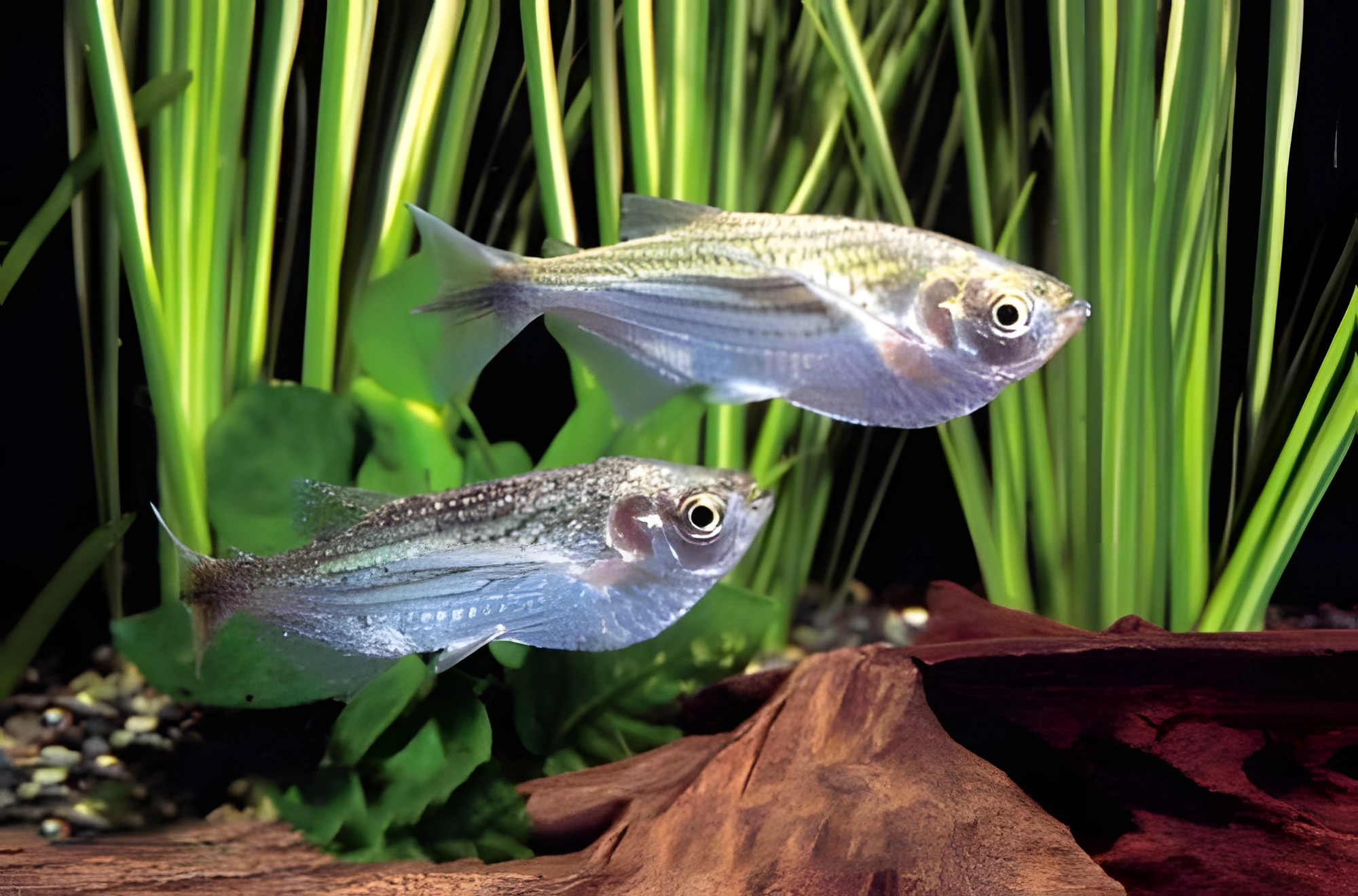
The Dusky Narrow Hatchetfish (scientific name Triportheus angulatus) belongs to the Characidae family. Interestingly, in English, it is often called the Dusky Narrow Hatchetfish, and due to some external resemblance, this fish is also referred to as a freshwater Sardine.
- Required aquarium volume
- 150 L
- Size in aquarium
- 16 cm
- Temperature
- 22 – 30 °C
- Temperament
- Peaceful, active/mobile
Parameters
Water pHSlightly acidic (5.5) – Neutral (7.5)
Water dHVery soft (0) – Very hard (18)
Water salinityno salt (freshwater)
Size in aquarium16 cm
Lifespan10 years
TemperamentPeaceful, active/mobile
Toward small fishnot a predator
Required aquarium volume150 L
Lightingdimmed or moderate
Substrateany (no restrictions)
Water flowweak
FeedingHigh protein (predominantly meat)
CareMedium group (6–8 individuals)
Description
The Dusky Narrow Hatchetfish has a laterally compressed, keeled body, which gives it an external resemblance to a sardine or hatchetfish. The main coloration is silvery with a grayish back, and rows of small black spots run along the body. A characteristic feature is the large pectoral fins, resembling wings. Adults reach about 16 cm in length. Sexual dimorphism is weakly expressed; males and females are practically indistinguishable outside the spawning period.
Habitat
This fish originates from South America, where it can be found throughout the vast Amazon River basin. Dusky Narrow Hatchetfish prefer shallow areas of streams and rivers, where they gather in large schools near the water surface in search of food.
Behavior and Compatibility
These fish are very active and mobile, yet there are no conflicts within the school. It is advisable to acquire a group of 5 or more individuals. Dusky Narrow Hatchetfish coexist well with similarly sized tank mates that inhabit the water column or the bottom. Such tank mates can include various types of small catfish, such as Corydoras, as well as geophaguses and peaceful South American cichlids.
Care and Maintenance
The Dusky Narrow Hatchetfish exhibits a wide tolerance to fluctuations in hydrochemical parameters (pH and dGH), which significantly simplifies water preparation. Nevertheless, it is crucial to provide the aquarium with clean, richly oxygenated water. Since these fish require high temperatures, additional aeration of the aquarium becomes necessary. Aquarium maintenance does not go beyond standard procedures. It includes weekly partial water changes, regular cleaning of the substrate from organic debris (excrement and uneaten food), and preventive inspection of equipment according to manufacturers' recommendations. Therefore, creating comfortable conditions for keeping these fish will not be difficult, provided the above requirements are met. The fish feel better in a group, so they should be kept in quantities of at least 5–6 individuals, for which an aquarium of at least 150 liters will be required. It should be noted here that the water surface area is more important than the depth, as Dusky Narrow Hatchetfish spend most of their time near the surface. This aspect also influences the aquarium's design: the upper water layer should remain free for their swimming. Tall aquarium plants are recommended to be placed along the sides, and floating plants should not completely cover the surface. Given these fish's tendency to jump out of the water, an aquarium lid is mandatory. The diet includes various types of food, as the fish are omnivorous. Dry floating foods are preferred, as they are likely to ignore sinking products.
Diet
Being omnivorous, these fish readily accept a variety of foods. Dry floating foods are especially suitable for their daily diet. It is important to note that sinking foods generally remain ignored. Dusky Narrow Hatchetfish are active and mobile, and intraspecific conflicts are not observed among them. It is recommended to keep them in groups of 5 or more individuals. They are perfectly compatible with other fish of comparable size inhabiting the middle or lower layers of the aquarium. Small catfish, such as Corydoras, geophaguses, and peaceful South American cichlids, can be considered as tank mates.
Breeding and Reproduction
In aquarium conditions, the breeding of this species is practically undeveloped, so all fish available for sale are wild-caught specimens. In their natural habitat, spawning occurs in groups, with several males accompanying one female. Information on successful breeding in captivity is absent from reliable sources.
Diseases
The species is sensitive to water quality and the level of dissolved oxygen. Due to high activity and susceptibility to stress under poor keeping conditions, fish may be prone to typical characin bacterial and fungal infections arising from a weakened immune system. Prevention includes regular water changes, powerful aeration, and maintaining stable environmental parameters.
How to choose
When purchasing, choose active fish with clean scales without visible damage, ulcers, or film. It is important to assess the behavior of the school: healthy individuals stay together and show interest in the water surface. Avoid specimens with signs of emaciation, sunken bellies, or damaged fins. Since fish are prone to injury during transport, it is recommended to ensure there are no mechanical damages after capture.
Frequently asked questions
The essentials: size, tank volume, water parameters and care
How big does Dusky Narrow Hatchetfish get?
An adult reaches 16 cm in length. Plan the tank around the maximum size: the fish quickly outgrows a cramped setup.
What size aquarium does Dusky Narrow Hatchetfish need?
The minimum recommended volume is 150 L. A smaller tank speeds up nitrate build-up and raises stress levels.
What water parameters does Dusky Narrow Hatchetfish need?
Temperature 22–30 °C, pH 5.5–7.5, hardness 0–18 dGH. Stability matters more than exact values: sudden swings are harder on the fish than a small deviation from the ideal.
How long does Dusky Narrow Hatchetfish live?
Around 10 years when kept properly. Lifespan depends directly on tank volume, water quality and a varied diet.
Is Dusky Narrow Hatchetfish aggressive?
Temperament: peaceful, active/mobile. Keep this in mind when choosing tank mates.
How many Dusky Narrow Hatchetfish should be kept together?
Recommended setup: medium group (6–8 individuals). Ignoring this is a common cause of stress and disease.
What does Dusky Narrow Hatchetfish eat?
Diet type: high protein (predominantly meat). Feed small portions that are finished within a couple of minutes — overfeeding does more harm than underfeeding.
What is the scientific name of Dusky Narrow Hatchetfish?
The scientific name of the species is Triportheus angulatus, family Characidae.