Temperature23 – 30 °C
Natural range
- South America area
Predators CharacinsConservation status: Least concern LC
Other scientific names: Erythrinus macrodon, Erythrinus trahira, Esox malabaricus, Esox tararira, Macrodon ferox, Macrodon malabaricus
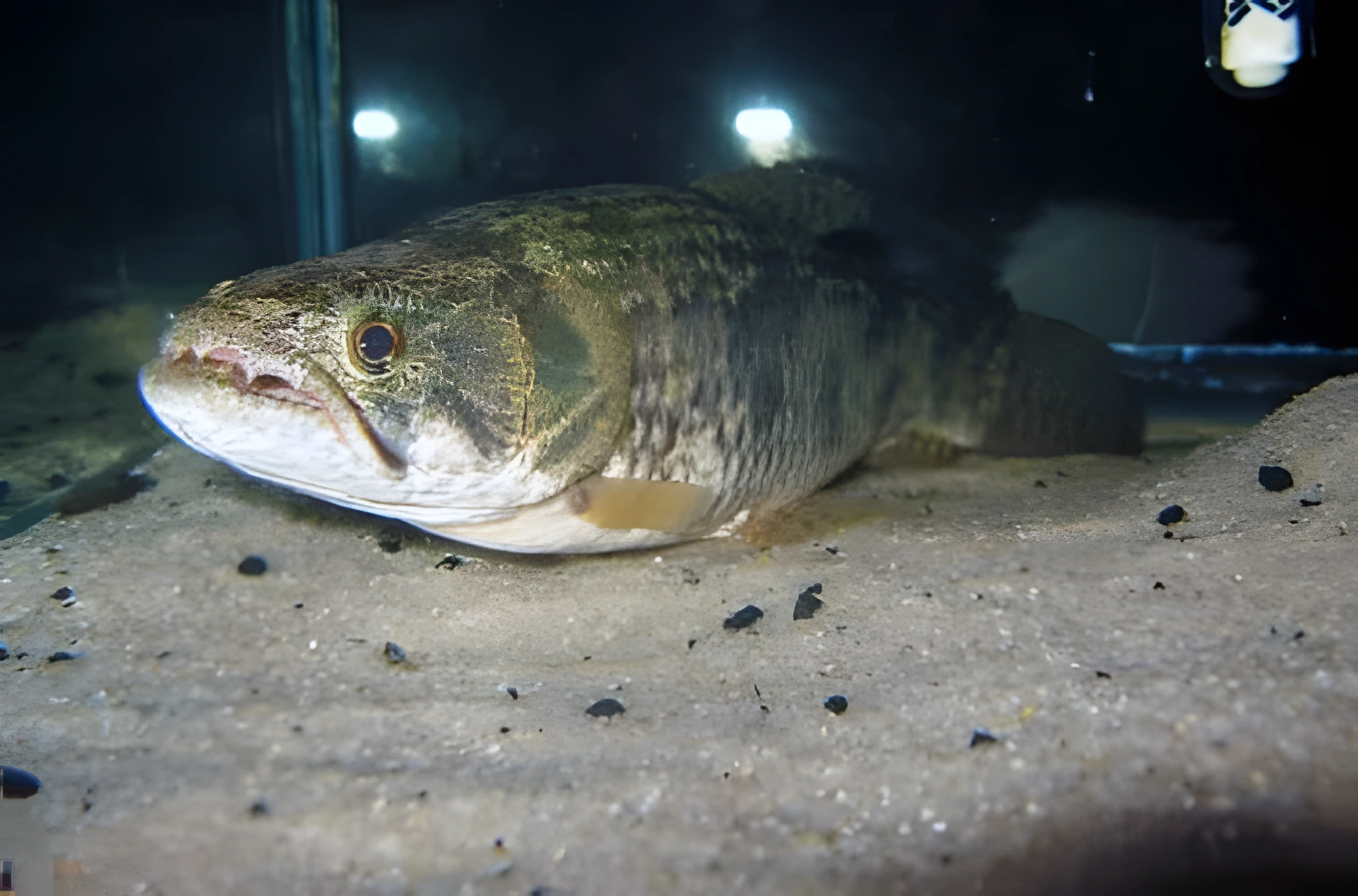
The wolf fish, also known as Traira or Terta-wolf (scientific name Hoplias malabaricus), belongs to the family Erythrinidae. This amazing predatory fish, which can reach impressive sizes, is a coveted trophy for many anglers and is considered one of the legends of the Amazon. Fishermen, including those from North America, specifically travel to hunt it. Episodes of popular programs such as "River Monsters" with Jeremy Wade (Discovery Channel) and "Monster Fish" with Zeb Hogan (Nat Geo Wild) have even been filmed about this species. However, the Traira is not often found in home aquariums. This species may be of interest to a very narrow circle of enthusiastic and, importantly, affluent aquarists, as its maintenance requires significant financial investment.
- Required aquarium volume
- 450 L
- Size in aquarium
- 50 – 65 cm
- Temperature
- 23 – 30 °C
- Temperament
- Aggressive / incompatible / unfriendly
Parameters
Water pHNeutral (6.5) – Slightly alkaline (8)
Water dHSoft (5) – Very hard (20)
Water salinityno salt (freshwater)
Size in aquarium50 – 65 cm
Lifespan9 years
TemperamentAggressive / incompatible / unfriendly
Toward small fishpredator
Required aquarium volume450 L
Lightingdimmed
Substrateany (no restrictions)
Water flownone or stagnant (no flow)
FeedingMeat / protein (live, frozen, fresh)
CareSolitary
Description
Adults of this fish can grow to half a meter or more in length. Distinguishing males from females is quite difficult, as sexual dimorphism is weakly expressed. The coloration is predominantly gray, but its shades—from dark to light tones—can vary depending on the specific habitat of the fish. The appearance of the Traira clearly reveals it as a predator: it has a powerful body, a large head, and a mouth filled with many sharp teeth.
Habitat
This species is widespread in the river systems of South America, especially in the Amazon. It prefers bodies of water with slow currents or stagnant water, such as backwaters and pools. Unfortunately, however, near populated areas, the wolf fish has practically disappeared due to the degradation of its natural habitat.
Behavior and Compatibility
Young wolf fish can form schools, but if there is a significant size difference between them, cannibalism becomes inevitable. As they mature, Trairas become increasingly independent and prefer to stay separate from their kin. Their predatory nature significantly limits the choice of compatible species. Only large but non-aggressive fish, such as Pacu, are suitable as tank mates.
Care and Maintenance
Since the Traira leads a sedentary lifestyle, it can be kept in an aquarium whose size, although it must correspond to its own, can be relatively small. The optimal tank volume for a single specimen starts from 450–500 L. For substrate, sand or fine gravel is used, along with large stones and driftwood that serve as shelters. Lighting is preferably subdued, and floating plants can create additional shade. As for rooted vegetation, its placement in the aquarium is at the discretion of the aquarist, but preference should be given to shade-tolerant varieties. A wide range of natural habitat conditions allows this species to be kept in various water parameters, but within acceptable pH and dGH values. A key aspect of successful keeping is maintaining high water quality. For this, the aquarium must be equipped with an efficient filtration and water composition monitoring system, and also require regular maintenance, including waste removal and partial water changes.
Diet
The diet of these fish consists exclusively of meaty foods, which do not necessarily have to be live. In its natural habitat, the wolf fish acts as a "sanitary worker" of the river, actively hunting sick or injured fish. Its diet can include freshwater shrimp, pieces of mussels, and various other fish.
Breeding and Reproduction
Although the breeding of wolf fish in artificial conditions has been achieved, it is extremely difficult to accomplish this in a home aquarium, so this aspect is not considered in the context of this article. In nature, adults, leading solitary lives, meet only for a short period for reproduction. The female is capable of laying up to 1000 eggs in a pre-dug pit on the bottom. After spawning, the male drives away the female and takes on the task of protecting the clutch, and then caring for the offspring until the fry grow to a certain size.
Diseases
This fish is highly resilient. Provided favorable conditions are created for its keeping, it is rarely susceptible to diseases. Health problems usually arise only when water quality deteriorates, which negatively affects its immunity. Detailed information on symptoms and treatment methods can be found in the "Diseases of Aquarium Fish" section.
How to choose
When choosing a Traira, attention should be paid to the overall plumpness of the specimen and the absence of external damage, such as ulcers, torn fins, or signs of fungal infections. A healthy fish should show alertness and react to movement near the aquarium, although during the day this species often behaves passively, preferring to hide in shelters. It is important to ensure that the fish does not have jaw deformities or signs of emaciation, as this may indicate feeding problems or chronic diseases.
- avoid specimens with cloudy eyes or an unnatural coating on the scales
- assess the cleanliness of the water in the retail aquarium, as poor keeping conditions negatively affect the fish's immunity
- ask the seller what the specific specimen eats, as accustoming it to non-live foods may require time and patience
Frequently asked questions
The essentials: size, tank volume, water parameters and care
How big does Traira get?
An adult reaches 50–65 cm in length. Plan the tank around the maximum size: the fish quickly outgrows a cramped setup.
What size aquarium does Traira need?
The minimum recommended volume is 450 L. A smaller tank speeds up nitrate build-up and raises stress levels.
What water parameters does Traira need?
Temperature 23–30 °C, pH 6.5–8, hardness 5–20 dGH. Stability matters more than exact values: sudden swings are harder on the fish than a small deviation from the ideal.
How long does Traira live?
Around 9 years when kept properly. Lifespan depends directly on tank volume, water quality and a varied diet.
Is Traira aggressive?
Temperament: aggressive / incompatible / unfriendly. This is a predatory species — any fish small enough to fit in its mouth will eventually be eaten.
How many Traira should be kept together?
Recommended setup: solitary. Ignoring this is a common cause of stress and disease.
What does Traira eat?
Diet type: meat / protein (live, frozen, fresh). Feed small portions that are finished within a couple of minutes — overfeeding does more harm than underfeeding.
What is the scientific name of Traira?
The scientific name of the species is Hoplias malabaricus, family Erythrinidae. It also appears in the literature as: Erythrinus macrodon, Erythrinus trahira, Esox malabaricus.