Temperature18 – 22 °C
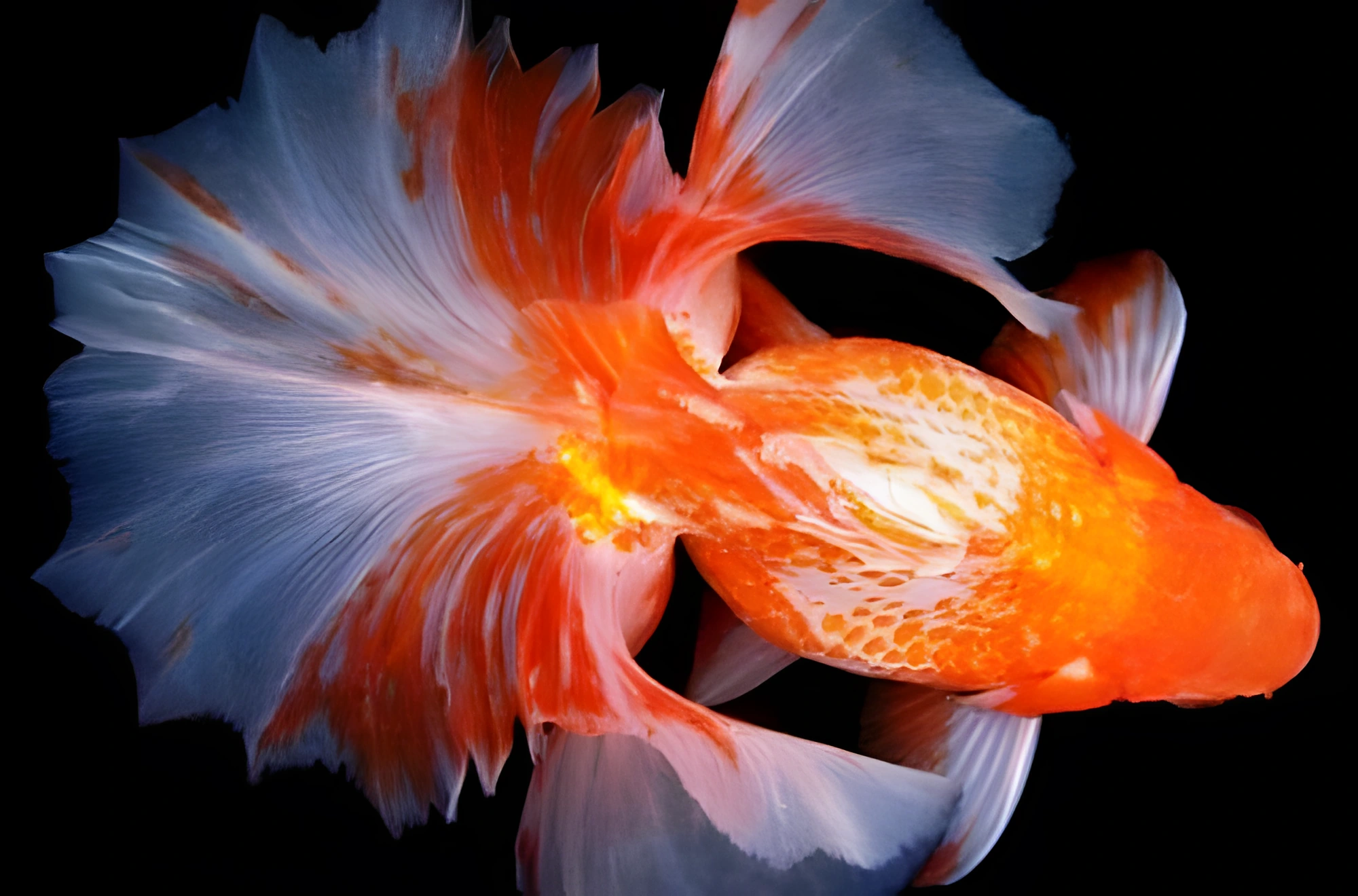
GoldfishConservation status: Least concern LC
Other scientific names: Carasius auratus, Carassius buergeri, Carassius burgeri, Carassius carassius, Carassius chinensis, Carassius coeruleus
Among the many goldfish varieties, the Tosakin Goldfish stands out for its unique originality. Its main asset is a luxurious fan-shaped caudal fin, which reaches its maximum spread in the horizontal plane. Therefore, the exceptional beauty of this fish can truly be appreciated by observing it from above, rather than from the side. The body coloration of the Tosakin includes various combinations of red, orange, and silver hues; there is also a variation with a deep dark metallic color.
- Required aquarium volume
- 60 L
- Size in aquarium
- 16 cm
- Temperature
- 18 – 22 °C
- Temperament
- Peaceful, active/mobile
Parameters
Water pHSlightly acidic (6) – Slightly alkaline (8)
Water dHHard (15) – Very hard (30)
Water salinityno salt (freshwater)
Size in aquarium16 cm
Lifespan9 years
TemperamentPeaceful, active/mobile
Toward small fishnot a predator
Required aquarium volume60 L
Lightingmoderate (regular)
Substrateany (no restrictions)
Water flownone or stagnant (no flow)
FeedingMixed diet (meat + plant-based)
CarePair (male/female)
Description
The Tosakin is a rare selective breed of goldfish with a short, egg-shaped body and a pointed head. Its main feature is a unique, undivided caudal fin that, when viewed from above, forms a wide fan curling forward at the edges. The fins are well-developed, and a dorsal fin is present. Coloration varies from red and orange to white, calico, and black. Adult specimens reach 15–20 cm in length.
Habitat
This species is an artificially bred selective form and does not occur in the wild. The breed was created in Japan in the 19th century (Kochi Prefecture). Due to the specific structure of their body and fins, these fish are not adapted to survival in natural bodies of water.
Behavior and Compatibility
A peaceful, slow-moving, and social fish. Due to the specific structure of their tail, Tosakins swim clumsily and slowly, making them less competitive for food compared to more active species. Species-only tanks or cohabitation only with other slow-moving goldfish breeds are recommended. These fish are prone to stress and require a calm environment.
Care and Maintenance
They require a spacious aquarium with a large surface area, preferably shallow. The absence of current is important, as these fish are weak swimmers. Effective filtration is necessary to maintain high water quality, as the species is sensitive to pollution. Regular water changes are recommended. The substrate should be smooth, without sharp edges, to avoid damaging fins and eyes.
Diet
An omnivorous species. Their diet should include high-quality dry foods in the form of pellets or flakes, supplemented with vegetable components (spinach, zucchini) and frozen foods (brine shrimp, daphnia, bloodworms). Moderation in feeding is important, as these fish are prone to overeating and digestive problems.
Breeding and Reproduction
Breeding is considered difficult and is best suited for experienced aquarists. Spawning can be in pairs or groups. To stimulate spawning, increased temperature and imitation of seasonal changes are used. Fry require careful selection (culling) to fix breed characteristics, especially tail shape. At an early age, juveniles are often kept in special containers for proper fin development.
Diseases
They are most susceptible to swim bladder diseases, which is often associated with their body shape and selective breeding. Fin damage, fungal infections, and parasitic diseases can also occur with poor water quality. They are sensitive to stress and sudden changes in environmental parameters, requiring stable keeping conditions.
How to choose
When purchasing, choose active, outwardly healthy specimens without signs of fin damage, ulcers, or unnatural film on the body. It is important to assess the symmetry of the tail, as this is a key breed characteristic. It is recommended to purchase fish from specialized breeders, as high-quality specimens are extremely rare in general retail.
Frequently asked questions
The essentials: size, tank volume, water parameters and care
How big does Tosakin get?
An adult reaches 16 cm in length. Plan the tank around the maximum size: the fish quickly outgrows a cramped setup.
What size aquarium does Tosakin need?
The minimum recommended volume is 60 L. A smaller tank speeds up nitrate build-up and raises stress levels.
What water parameters does Tosakin need?
Temperature 18–22 °C, pH 6–8, hardness 15–30 dGH. Stability matters more than exact values: sudden swings are harder on the fish than a small deviation from the ideal.
How long does Tosakin live?
Around 9 years when kept properly. Lifespan depends directly on tank volume, water quality and a varied diet.
Is Tosakin aggressive?
Temperament: peaceful, active/mobile. Keep this in mind when choosing tank mates.
How many Tosakin should be kept together?
Recommended setup: pair (male/female). Ignoring this is a common cause of stress and disease.
What does Tosakin eat?
Diet type: mixed diet (meat + plant-based). Feed small portions that are finished within a couple of minutes — overfeeding does more harm than underfeeding.
What is the scientific name of Tosakin?
The scientific name of the species is Carassius auratus, family Cyprinids (Cyprinidae). It also appears in the literature as: Carasius auratus, Carassius buergeri, Carassius burgeri.