Temperature18 – 28 °C
Natural range
- Brazil area
CatfishConservation status: Least concern LC
Other scientific names: Callichthys exaratus, Callichthys longifilis, Callichthys personatus, Callichthys thoracatus, Hoplosternum personatus, Hoplosternum thoracatum
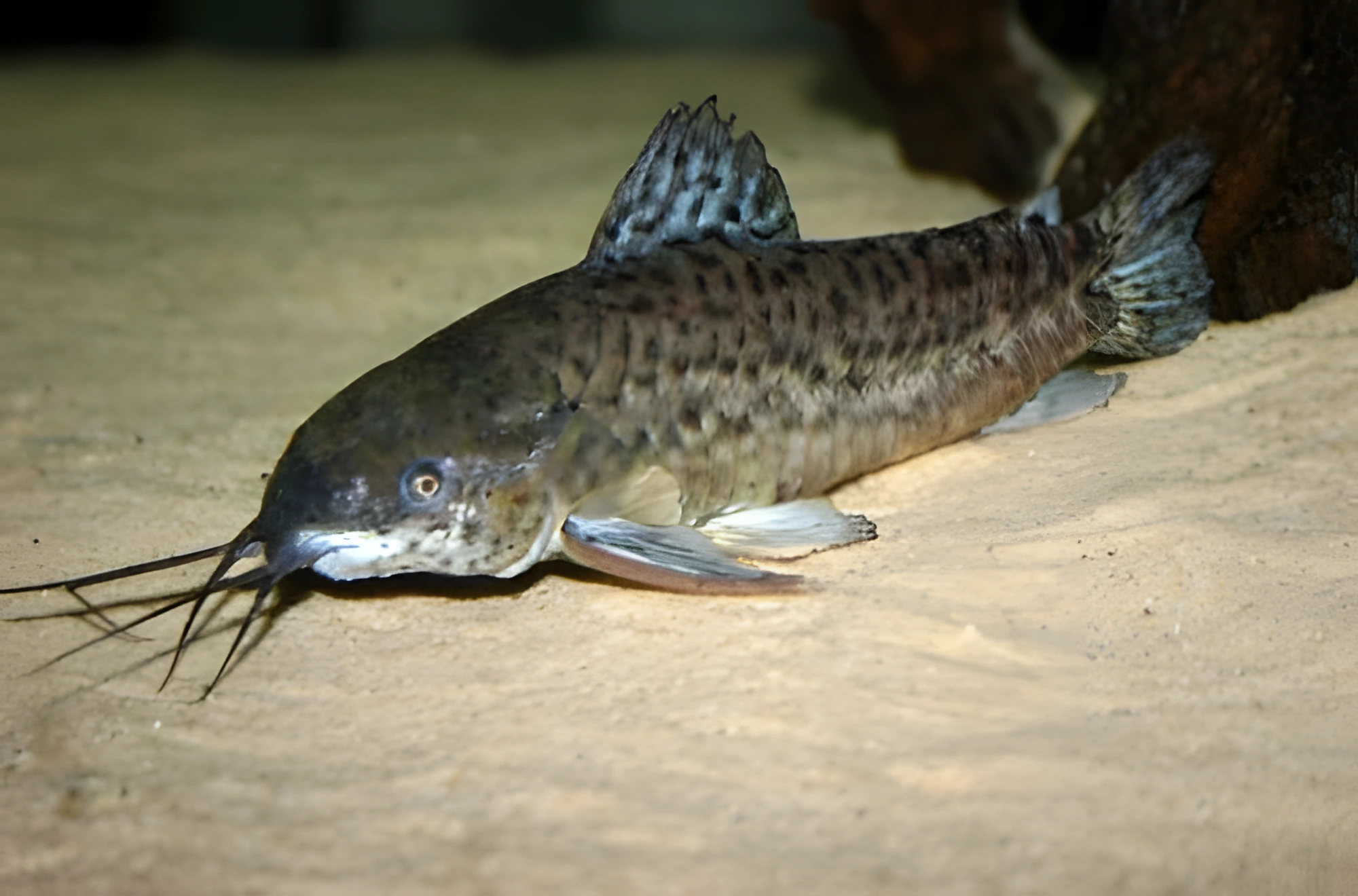
Megalechis thoracata, more commonly called Thoracatum (though the spelling Taracatum is also encountered), belongs to the family Callichthyidae – the armored or callichthyid catfishes. This medium-sized fish is known for its unpretentiousness in keeping. It often acts as a kind of aquarium cleaner, as it actively consumes leftover food from other inhabitants. This species is well-suited for most community tanks and can even coexist with some species of African cichlids.
- Required aquarium volume
- 140 L
- Size in aquarium
- 18 cm
- Temperature
- 18 – 28 °C
- Temperament
- Semi-peaceful (dangerous to smaller ones)
Parameters
Water pHSlightly acidic (6) – Slightly alkaline (8)
Water dHSoft (5) – Very hard (20)
Water salinityno salt (freshwater)
Size in aquarium18 cm
Lifespan10 years
TemperamentSemi-peaceful (dangerous to smaller ones)
Toward small fishnot a predator
Required aquarium volume140 L
Lightingmoderate (regular)
Substratecoarse sand / gravel / pebbles
Water flowweak
FeedingSinking (any)
CareMixed (solitary / pair / group)
Description
Their body is elongated and covered with two rows of bony plates, providing reliable protection. A distinctive feature of males is a serrated spine located on the first ray of the dorsal fin. The fish's coloration is predominantly light gray, with dark spots evenly distributed over the entire body. Females and young individuals have a white belly.
Habitat
These fish are widely distributed over vast territories: their range covers the entire Amazon and Orinoco river basins, as well as the upper reaches of the Paraguay River, located in modern-day Brazil. They prefer quiet backwaters and pools where the water is either stagnant or the current is very weak.
Behavior and Compatibility
This peaceful fish is nocturnal, usually hiding in shelters during the day. It has established itself as one of the best aquarium cleaners. Thanks to its reliable "armor," Thoracatum is compatible with many fish species, including aggressive ones, provided the latter are similar in size or smaller. They can be kept individually or in groups.
Care and Maintenance
A general freshwater aquarium with large, clean sand or fine gravel as substrate is suitable for keeping Thoracatum. The presence of plants with a strong root system is important. The creation of various shelters, for example, from snags, intertwined roots, or tree branches, is also welcome. The catfish shows high adaptability to various conditions, so water parameters such as pH and dH are not critical. Standard aquarium equipment includes a filter, heater, aerator, and lighting system. The regularity of aquarium maintenance is determined by the needs of its other inhabitants. As for the Thoracatum itself, it is sufficient to clean the substrate and perform partial water changes once every two weeks.
Diet
Thoracatum catfish are omnivorous and readily accept all available types of food: dry, live, or frozen. The most important condition is that the food must be sinking. Maintaining high fish health is ensured by a varied diet. It is recommended to feed them 2–3 times a day, providing an amount of food that will be eaten within 5 minutes. However, this time is conditional, as the Thoracatum is constantly moving in search of food, simultaneously cleaning the aquarium walls of algae and organic deposits.
Breeding and Reproduction
The reproduction of this catfish species is unique, as males build nests and then carefully guard the eggs. For spawning, it is recommended to use a separate tank with a sandy bottom and fine-leaved vegetation. Equipment needed includes a heater and a simple sponge filter operating at minimum power. A sign of readiness for spawning is the male beginning to build a bubble nest, which signals the pair's readiness to be moved to a separate tank. The male will immediately start creating another nest in the new location, where the female will lay her eggs. After this, the female should be returned to the main aquarium, and the male will remain alone to protect the clutch. During this period, his behavior becomes noticeably more aggressive; he may even attack the female. Fry hatch within 48 hours, and after 3–4 days, they begin to swim freely. They should be fed micro-foods such as Artemia nauplii, finely crushed flakes, or granules. It is important to immediately return the male to the main aquarium after the young appear, as there have been cases of parents eating their offspring.
Diseases
The main cause of health problems in Thoracatum catfish is an unsatisfactory habitat. In a balanced biosystem of a mature aquarium, such problems are extremely rare. More detailed information on symptoms and treatment methods can be found in the "Aquarium Fish Diseases" section.
How to choose
When choosing healthy specimens, pay attention to the cleanliness of their skin: there should be no white spots, ulcers, injuries, or film on the body. The fish should be active, not sluggish or apathetic, with clean fins without signs of splitting. It is important to check the condition of their barbels – they should be intact, without signs of erosion or shortening, as this is an indicator of water quality in the seller's aquarium. Avoid buying fish with severely sunken bellies, which may indicate emaciation or the presence of parasites. In the store, Thoracatum catfish often hide in shelters, but when fed, they should show pronounced feeding interest and move quickly along the bottom.
Frequently asked questions
The essentials: size, tank volume, water parameters and care
How big does Armored Catfish get?
An adult reaches 18 cm in length. Plan the tank around the maximum size: the fish quickly outgrows a cramped setup.
What size aquarium does Armored Catfish need?
The minimum recommended volume is 140 L. A smaller tank speeds up nitrate build-up and raises stress levels.
What water parameters does Armored Catfish need?
Temperature 18–28 °C, pH 6–8, hardness 5–20 dGH. Stability matters more than exact values: sudden swings are harder on the fish than a small deviation from the ideal.
How long does Armored Catfish live?
Around 10 years when kept properly. Lifespan depends directly on tank volume, water quality and a varied diet.
Is Armored Catfish aggressive?
Temperament: semi-peaceful (dangerous to smaller ones). Keep this in mind when choosing tank mates.
How many Armored Catfish should be kept together?
Recommended setup: mixed (solitary / pair / group). Ignoring this is a common cause of stress and disease.
What does Armored Catfish eat?
Diet type: sinking (any). Feed small portions that are finished within a couple of minutes — overfeeding does more harm than underfeeding.
What is the scientific name of Armored Catfish?
The scientific name of the species is Megalechis thoracata, family Callichthyidae. It also appears in the literature as: Callichthys exaratus, Callichthys longifilis, Callichthys personatus.