Temperature22 – 32 °C
Natural range
- Upper Amazon River Basin
- Brazil area
- Peru area
CatfishConservation status: Least concern LC
Other scientific names: Merodontotus tigrinus
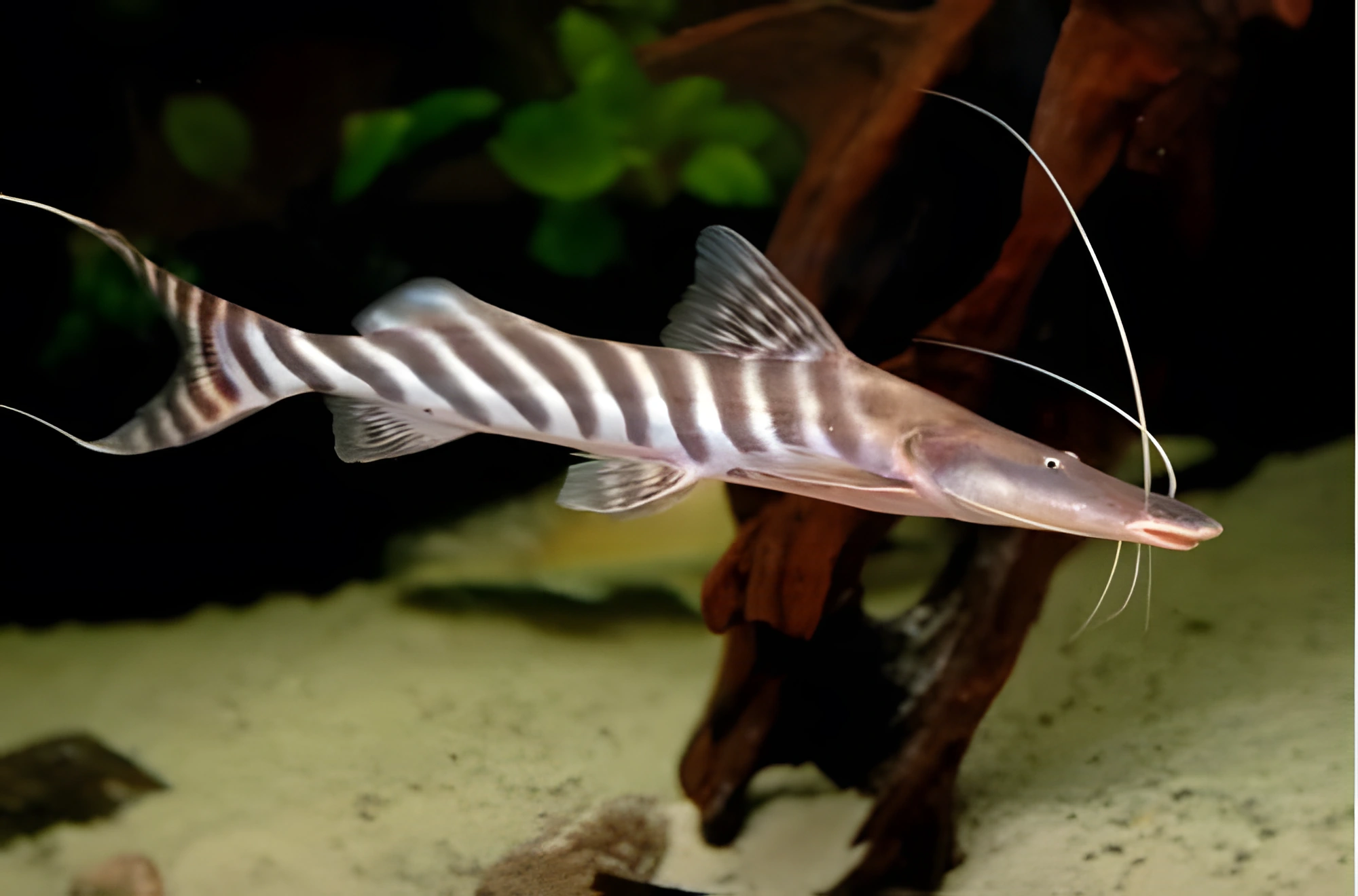
Brachyplatystoma tigrinum, also known as the Tiger Catfish, is a member of the family Pimelodidae (long-whiskered or flat-headed catfish). This large and impressive fish is compatible with other freshwater species, provided they are large enough not to become accidental prey. Any smaller fish will be perceived by the catfish as potential food. Due to its size and feeding habits, it is rarely found in amateur aquariums.
- Required aquarium volume
- 1000 L
- Size in aquarium
- 50 cm
- Temperature
- 22 – 32 °C
- Temperament
- Semi-peaceful (including aggression during spawning / intraspecific conflicts)
Parameters
Water pHSlightly acidic (6) – Slightly alkaline (7.6)
Water dHVery soft (1) – Hard (12)
Water salinityno salt (freshwater)
Size in aquarium50 cm
Lifespan15 years
TemperamentSemi-peaceful (including aggression during spawning / intraspecific conflicts)
Toward small fishnot a predator
Required aquarium volume1000 L
Lightingdimmed
Substrateany (no restrictions)
Water flowstrong
FeedingSinking (meat / protein)
CareBoth solitary and in group (flexible)
Description
Adults can reach up to 50 cm in length. However, fish offered for sale are typically 15–18 cm. It is not uncommon for aquarists, mistaken about their final size, to acquire these seemingly small catfish and then face housing problems as they grow. The catfish has an elongated, slender body and a characteristic flat, broad head, on which long, sensitive whisker-like barbels are located, serving as the primary organ of touch. The eyes of these fish are quite small and do not play a significant role in conditions of poor lighting or high water turbidity. The body features a color pattern of narrow dark vertical or oblique stripes, which can sometimes break into spots. The main body background is pale cream.
Habitat
The natural habitat of this catfish covers the upper reaches of the Amazon River basin in Brazil and Peru. In these areas, it prefers river sections with fast and turbulent currents, often finding shelter in deep water, at the base of waterfalls and rapids. Unlike adults, juveniles choose calm, shallow areas with abundant aquatic vegetation for living.
Behavior and Compatibility
Despite its carnivorous nature, this catfish exhibits a peaceful and calm disposition, remaining safe for other species of comparable size. When choosing tank mates, preference should be given to fish that tolerate strong water movement well.
Care and Maintenance
For a single specimen, the optimal aquarium volume starts from 1000 L. A key aspect of keeping them is creating strong water movement, which helps simulate natural habitat conditions. The aquarium decor must be appropriate: delicate structures or live plants are out of the question. It is recommended to use a sand-gravel substrate with accumulations of large stones, boulders, and massive snags. The size and diet of the Tiger Catfish lead to significant waste production. To maintain high water quality, it is necessary to refresh 50–70% of the water volume weekly, regularly clean the aquarium, and equip it with all necessary equipment, primarily a powerful filtration system.
Diet
As a carnivorous species, in its natural environment, the catfish feeds on both live and dead fish. In aquarium conditions, it readily accepts pieces of white fish meat, as well as freshwater shrimp and mussels. It should be remembered that at the first opportunity, it will certainly eat any unwary tank inhabitants if they can fit into its mouth.
Breeding and Reproduction
Breeding of these fish does not occur in artificial environments. For commercial purposes, juveniles are either caught in the wild or raised in specialized farms located on the dammed banks of rivers. In the Amazon, two main periods are clearly defined: the dry season and the rainy season, the latter leading to temporary flooding of parts of the tropical forests. In natural conditions, spawning begins at the end of the dry season, usually in November. Unlike other members of their genus, such as the Gold Zebra Catfish, these fish do not migrate to flooded areas to lay eggs. This particular feature allows for their breeding directly in their native habitats.
Diseases
When kept in favorable conditions, fish rarely experience health deterioration. The occurrence of diseases usually indicates problems in keeping, such as polluted water, poor quality food, or injuries. In most cases, eliminating the root cause leads to recovery. However, sometimes medication may be required. Detailed information on symptoms and treatment methods can be found in the section "Diseases of aquarium fish."
How to choose
When purchasing, choose active individuals with clean skin without visible damage, ulcers, or signs of fungal infections, which often occur when fish are injured by aquarium walls. It is important to ensure that the catfish shows no signs of emaciation and that its breathing is even. Since juveniles measuring 15–18 cm are most often available for sale, it is necessary to prepare an aquarium of appropriate volume in advance, as the fish grows quickly. It is recommended to clarify the keeping conditions and diet with the seller, and also to check the fish's reaction to food — healthy individuals show interest in food.
Frequently asked questions
The essentials: size, tank volume, water parameters and care
How big does Tiger Catfish get?
An adult reaches 50 cm in length. Plan the tank around the maximum size: the fish quickly outgrows a cramped setup.
What size aquarium does Tiger Catfish need?
The minimum recommended volume is 1000 L. A smaller tank speeds up nitrate build-up and raises stress levels.
What water parameters does Tiger Catfish need?
Temperature 22–32 °C, pH 6–7.6, hardness 1–12 dGH. Stability matters more than exact values: sudden swings are harder on the fish than a small deviation from the ideal.
How long does Tiger Catfish live?
Around 15 years when kept properly. Lifespan depends directly on tank volume, water quality and a varied diet.
Is Tiger Catfish aggressive?
Temperament: semi-peaceful (including aggression during spawning / intraspecific conflicts). Keep this in mind when choosing tank mates.
How many Tiger Catfish should be kept together?
Recommended setup: both solitary and in group (flexible). Ignoring this is a common cause of stress and disease.
What does Tiger Catfish eat?
Diet type: sinking (meat / protein). Feed small portions that are finished within a couple of minutes — overfeeding does more harm than underfeeding.
What is the scientific name of Tiger Catfish?
The scientific name of the species is Brachyplatystoma tigrinum, family Pimelodidae (Long-whiskered Catfishes). It also appears in the literature as: Merodontotus tigrinus.