Temperature22 – 26 °C
Natural range
- Malay Peninsula area
- Perak River
- Selangor River
- Sumatra area
Predators UnusualConservation status: Least concern LC
Other scientific names: Coius microlepis
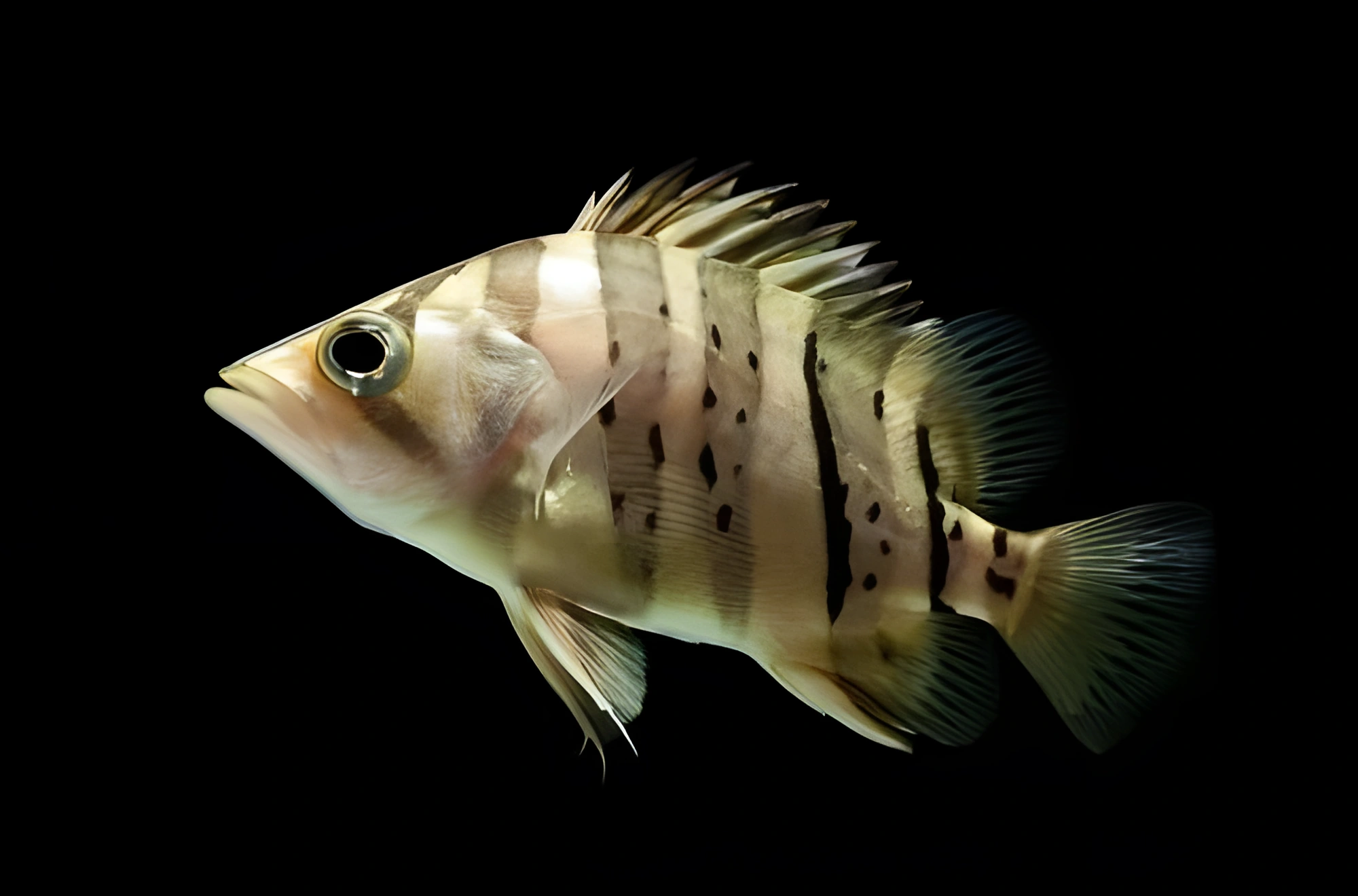
The Tiger Siamese Perch, or Indonesian Tiger Perch, scientifically known as Datnioides microlepis, belongs to the family Datnioididae. This fish is characterized by its large size and bright, contrasting coloration, making it a prominent inhabitant of the aquarium. Despite its predatory nature, it can coexist with other large species in community tanks. However, it should be noted that its maintenance requires significant financial investment due to the need for a large aquarium and corresponding expensive equipment.
- Required aquarium volume
- 600 L
- Size in aquarium
- 50 cm
- Temperature
- 22 – 26 °C
- Temperament
- Semi-peaceful (including aggression during spawning / intraspecific conflicts)
Parameters
Water pHNeutral (6.5) – Neutral (7.5)
Water dHVery soft (2) – Hard (15)
Water salinityno salt (freshwater)
Size in aquarium50 cm
Lifespan15 years
TemperamentSemi-peaceful (including aggression during spawning / intraspecific conflicts)
Toward small fishpredator
Required aquarium volume600 L
Lightingmoderate (regular)
Substrateany (no restrictions)
Water flowweak or moderate
FeedingMeat / protein (live, frozen, fresh)
CareSolitary + other species (large / compatible)
Description
Adults of this fish can reach a length of about 50 cm. Sexual dimorphism is poorly expressed, making it difficult to distinguish between male and female. The fish's body has a swift, streamlined shape. The head is large and pointed, resembling an arrowhead in its silhouette. The dorsal fin forms a crest that extends almost to the tail. The anal fin is located closer to the caudal part of the body and points towards the tail. This structure of the fins and caudal part provides the fish with the ability to accelerate quickly, which is critical for successful hunting. The coloration consists of a yellow background with pronounced diagonal black stripes. This pattern on the body is the basis for the name — "Tiger Perch."
Habitat
The natural habitat of this species covers Southeast Asia. Specifically, it is found on the Malay Peninsula, inhabiting the Perak (Sungai Perak) and Selangor (Selangor River) river systems. It can also be found in the western regions of Indonesia, on the islands of Sumatra and Borneo. Datnioides microlepis prefers to live in deep, large rivers that flow through flat terrain. During the rainy season, when water levels rise, the fish swim into flooded areas of tropical forests.
Behavior and Compatibility
Young perches usually stay in groups, but as they mature, they become more solitary and show intolerance towards conspecifics in their territory. Therefore, adult fish should be kept individually. They are compatible with other non-aggressive species of comparable size. However, one should not introduce fish that are too small, as they may become part of the Siamese Tiger Perch's diet, nor overly active or territorial species.
Care and Maintenance
For a single fish, an aquarium of at least 600 L will be required. In the aquarium's design, it is recommended to use floating plants that form clusters, and various snags that will serve as shelters. In its natural environment, the Indonesian Tiger Perch prefers such places to camouflage itself and ambush its prey. The choice of other decorative elements and substrate is at the discretion of the aquarist. It is important to leave enough open space for free swimming. Successful keeping of this species is only possible with a high-performance filtration system and other equipment that ensures the control and maintenance of water quality and composition at the proper level. Essential care procedures include weekly partial water changes (15–25% of the total volume) with fresh water and regular removal of organic waste. For beginners in aquaristics, the installation and connection of an aquarium with this species is recommended to be entrusted to specialists.
Diet
This fish, being a true predator, primarily hunts smaller conspecifics in its natural habitat. In a home aquarium, juveniles and subadults can feed on bloodworms, Artemia, as well as small earthworms or chopped shrimp. Adult specimens will require live fish. Alternatively, pieces of other fish meat, large earthworms, whole shrimp, mussels, and other suitable foods can be offered. Feeding is done either once every 2–3 days, with a sufficient amount of food given, or daily, but then portions should be small.
Breeding and Reproduction
To date, no successful cases of breeding this species in aquarium conditions have been recorded. Fish offered for sale are either supplied from commercial fish farms or caught in their natural habitat.
Diseases
This fish species is characterized by its hardiness and unpretentiousness. In conditions that fully meet their needs, diseases are rare and, as a rule, are associated with acclimatization difficulties. More detailed information on symptoms and treatment methods can be found in the "Diseases of Aquarium Fish" section.
How to choose
When choosing a tiger perch, it is important to assess its overall condition and behavior in the aquarium. A healthy specimen should be active, show interest in its surroundings, and have a clear, contrasting pattern. Avoid fish with signs of stress, which are expressed by darkening coloration, where the characteristic stripes become blurred or almost disappear against a dark background. Attention should also be paid to the absence of external damage, such as ulcers, plaque on the scales, or fin erosion.
Since this species tolerates transportation and adaptation poorly, it is recommended to clarify the following points with the seller:
- whether the fish has been transitioned to dry foods or feeds exclusively on live food;
- how long the specimen has been in the store and whether it has undergone quarantine;
- whether the fish's coloration is stable under current keeping conditions.
Special attention should be paid to the fish's plumpness: a sunken belly may indicate emaciation or the presence of internal parasites, which is often found in specimens recently imported from the wild.
Frequently asked questions
The essentials: size, tank volume, water parameters and care
How big does Tiger Perch get?
An adult reaches 50 cm in length. Plan the tank around the maximum size: the fish quickly outgrows a cramped setup.
What size aquarium does Tiger Perch need?
The minimum recommended volume is 600 L. A smaller tank speeds up nitrate build-up and raises stress levels.
What water parameters does Tiger Perch need?
Temperature 22–26 °C, pH 6.5–7.5, hardness 2–15 dGH. Stability matters more than exact values: sudden swings are harder on the fish than a small deviation from the ideal.
How long does Tiger Perch live?
Around 15 years when kept properly. Lifespan depends directly on tank volume, water quality and a varied diet.
Is Tiger Perch aggressive?
Temperament: semi-peaceful (including aggression during spawning / intraspecific conflicts). This is a predatory species — any fish small enough to fit in its mouth will eventually be eaten.
How many Tiger Perch should be kept together?
Recommended setup: solitary + other species (large / compatible). Ignoring this is a common cause of stress and disease.
What does Tiger Perch eat?
Diet type: meat / protein (live, frozen, fresh). Feed small portions that are finished within a couple of minutes — overfeeding does more harm than underfeeding.
What is the scientific name of Tiger Perch?
The scientific name of the species is Datnioides microlepis, family Datnioididae. It also appears in the literature as: Coius microlepis.