Temperature24 – 28 °C
Natural range
- Amazon River Basin
- Brazil area
- Bolivia area
- Peru area
Predators CharacinsConservation status: Least concern LC
Other scientific names: Cynodon pectoralis, Hydrocynus scomberoides, Hydrocyon scomberoides, Hydrolicus scomberoides, Hydrolycus pectoralis
The scientific name Hydrolycus scomberoides, belonging to the family Cynodontidae, is given to the Vampire Tetra, a true predator from South American rivers. This species is not recommended for beginner aquarists due to the complexity and high cost of maintenance.
- Required aquarium volume
- 1000 L
- Size in aquarium
- 25 – 30 cm
- Temperature
- 24 – 28 °C
- Temperament
- Predator (dangerous to small, incompatible)
Parameters
Water pHSlightly acidic (6) – Slightly alkaline (8)
Water dHVery soft (2) – Hard (15)
Water salinityno salt (freshwater)
Size in aquarium25 – 30 cm
Lifespan2 years
TemperamentPredator (dangerous to small, incompatible)
Toward small fishpredator
Required aquarium volume1000 L
Lightingmoderate (regular)
Substraterocky (rock formations, boulders, etc.)
Water flowweak or moderate
FeedingFor carnivores (live fish, insects, etc.)
CareBoth solitary and in group (flexible)
Description
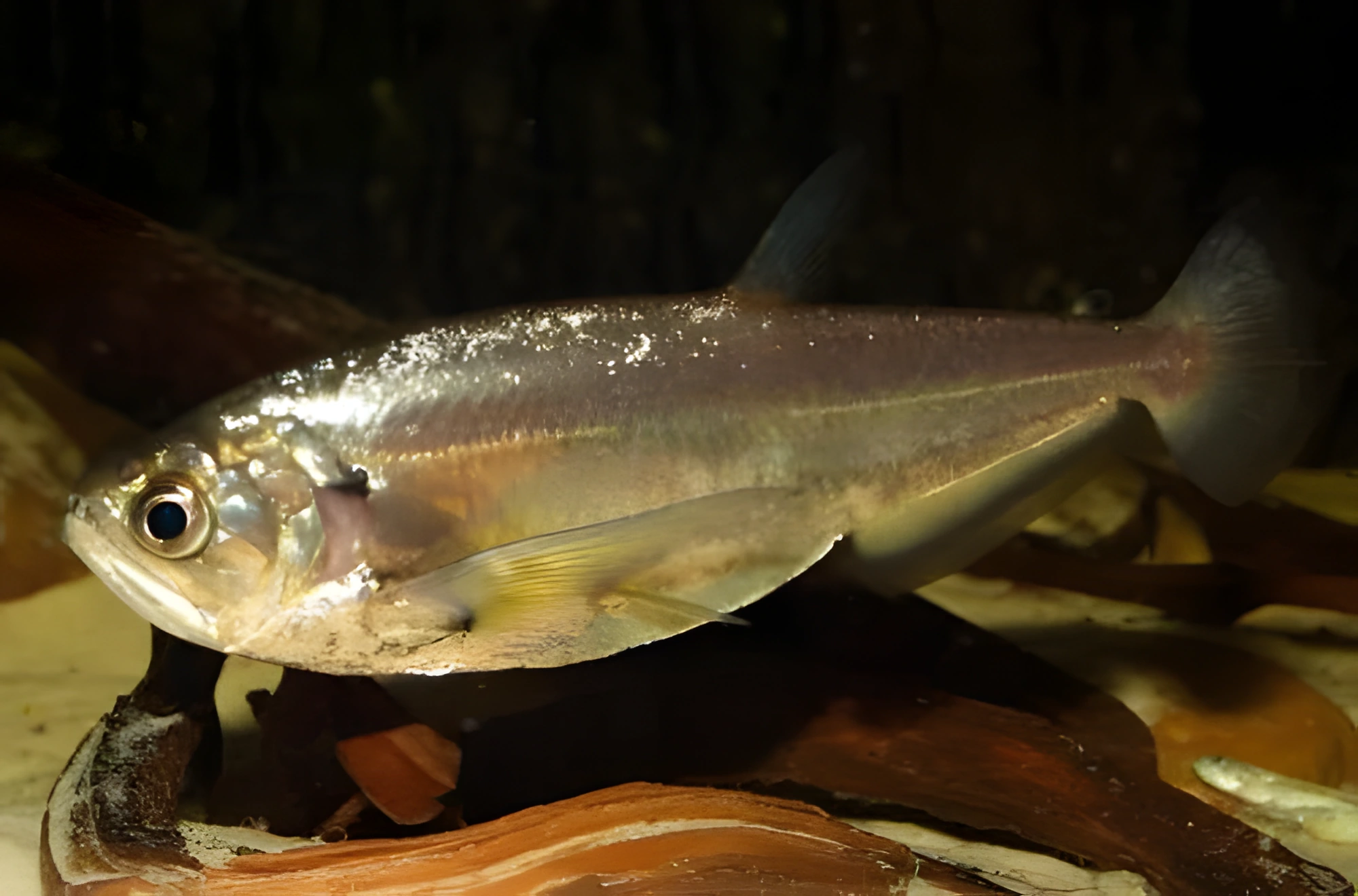
The maximum recorded length of the fish reached 45 cm, although in aquarium conditions it is usually smaller – 25–30 cm. Outwardly, the species resembles its close relative, the Payara, but it should be noted that the Payara is significantly larger and rarely found in home aquariums. Nevertheless, they are often confused during sale. The fish's body is massive and stocky. The dorsal and elongated anal fins are located closer to the caudal part. The pelvic fins, oriented parallel to the bottom, resemble miniature wings, which allows for quick dashes in pursuit of prey. The most characteristic feature, which gave this species its name, are two long, sharp canine teeth on the lower jaw, surrounded by many smaller teeth. Young individuals are distinguished by a more slender build and lighter coloration. They swim slightly tilted, in a “head-down” position.
Habitat
The natural habitat of this fish is the central and upper parts of the Amazon River basin in South America, covering the territories of Brazil, Bolivia, Peru, and Ecuador. They prefer main river channels, especially areas with calm, slow currents. During the rainy season, when the coastline is flooded, these fish enter the water-covered parts of the tropical forests.
Behavior and Compatibility
These fish can live either alone or in groups. Despite their predatory nature, they are quite compatible with other species of similar or larger size. However, any fish small enough to fit into a Vampire Tetra's mouth will inevitably become its prey.
Care and Maintenance
For a small group of these fish, an aquarium of at least 1000 liters is required. An ideal setup would mimic a riverbed, with a sandy or fine-gravel substrate, complemented by large snags and boulders. Shade-loving plants such as Anubias, aquatic mosses, and ferns, which do not require special care, are appropriate among the decor elements. The Vampire Tetra needs clean, flowing water. This species tolerates the accumulation of organic waste poorly and reacts negatively to sudden changes in temperature and hydrochemical parameters. To maintain stable water conditions, the aquarium must be equipped with a powerful filtration system and other necessary equipment. Since such setups are generally expensive, keeping this species at home is mainly accessible to affluent aquarists.
Diet
This is a carnivorous predatory species. Their diet in nature primarily consists of other small fish. Despite their predatory lifestyle, these fish can be trained to eat pieces of meat, shrimp, and shelled mussels. Young individuals readily accept large earthworms.
Breeding and Reproduction
Breeding this species in aquarium conditions is considered an extremely difficult task and is practically unheard of in amateur practice. In their natural habitat, the fish undertake long migrations upstream for spawning, which occurs from November to April. Stimulating the process requires specific water parameters and a significant volume of space, mimicking the natural conditions of flowing bodies of water. Information on the details of spawning behavior, egg care, or the specifics of fry rearing in captivity is insufficient to describe a reliable methodology.
Diseases
Under favorable conditions, fish usually do not experience health problems. Diseases are primarily caused by external factors. For example, in cramped spaces, with high concentrations of pollutants and poor water quality, the onset of diseases is inevitable. If all parameters are brought back to normal, the fish's well-being will improve. If signs of malaise persist, such as lethargy, behavioral changes, or dulling of coloration, medication may be required. More detailed information on symptoms and treatment methods can be found in the "Aquarium Fish Diseases" section.
How to choose
When purchasing a Vampire Tetra, choose individuals that are actively swimming or assume the species-typical "head-down" position in the water column. Inspect the fish for intact fins and the absence of external damage, as this predator is prone to injuries during transport and in cramped aquariums. Avoid specimens with signs of emaciation, sunken bellies, or jaw damage, which can hinder normal feeding. It is important to ask the seller what the fish eats: individuals adapted to captivity should accept frozen or high-quality dry foods, as reliance on live fish can complicate future care.
Frequently asked questions
The essentials: size, tank volume, water parameters and care
How big does Vampire Tetra get?
An adult reaches 25–30 cm in length. Plan the tank around the maximum size: the fish quickly outgrows a cramped setup.
What size aquarium does Vampire Tetra need?
The minimum recommended volume is 1000 L. A smaller tank speeds up nitrate build-up and raises stress levels.
What water parameters does Vampire Tetra need?
Temperature 24–28 °C, pH 6–8, hardness 2–15 dGH. Stability matters more than exact values: sudden swings are harder on the fish than a small deviation from the ideal.
How long does Vampire Tetra live?
Around 2 years when kept properly. Lifespan depends directly on tank volume, water quality and a varied diet.
Is Vampire Tetra aggressive?
Temperament: predator (dangerous to small, incompatible). This is a predatory species — any fish small enough to fit in its mouth will eventually be eaten.
How many Vampire Tetra should be kept together?
Recommended setup: both solitary and in group (flexible). Ignoring this is a common cause of stress and disease.
What does Vampire Tetra eat?
Diet type: for carnivores (live fish, insects, etc.). Feed small portions that are finished within a couple of minutes — overfeeding does more harm than underfeeding.
What is the scientific name of Vampire Tetra?
The scientific name of the species is Hydrolycus scomberoides, family Cynodontidae. It also appears in the literature as: Cynodon pectoralis, Hydrocynus scomberoides, Hydrocyon scomberoides.