Temperature23 – 27 °C
Natural range
- Southern Brazil area
- Paraguay area
CharacinsConservation status: Least concern LC
Other scientific names: Tetragonopterus ulreyi
Hemigrammus ulreyi, known as Ulrey's Tetra, belongs to the family Characidae. This species is an unpretentious and peaceful fish that easily adapts to a community of other aquarium inhabitants of similar size and temperament. Its coloration is not particularly vibrant, so in the aquarium, it often plays a "supporting role," complementing more expressive tankmates.
- Required aquarium volume
- 70 L
- Size in aquarium
- 5 cm
- Temperature
- 23 – 27 °C
- Temperament
- Peaceful (regular)
Parameters
Water pHSlightly acidic (6) – Neutral (7)
Water dHSoft (5) – Hard (12)
Water salinityno salt (freshwater)
Size in aquarium5 cm
Lifespan4 years
TemperamentPeaceful (regular)
Toward small fishnot a predator
Required aquarium volume70 L
Lightingdimmed
Substratecoarse sand / gravel / pebbles
Water flowweak
FeedingAny (universal)
CareGroup (8–10 individuals)
Description
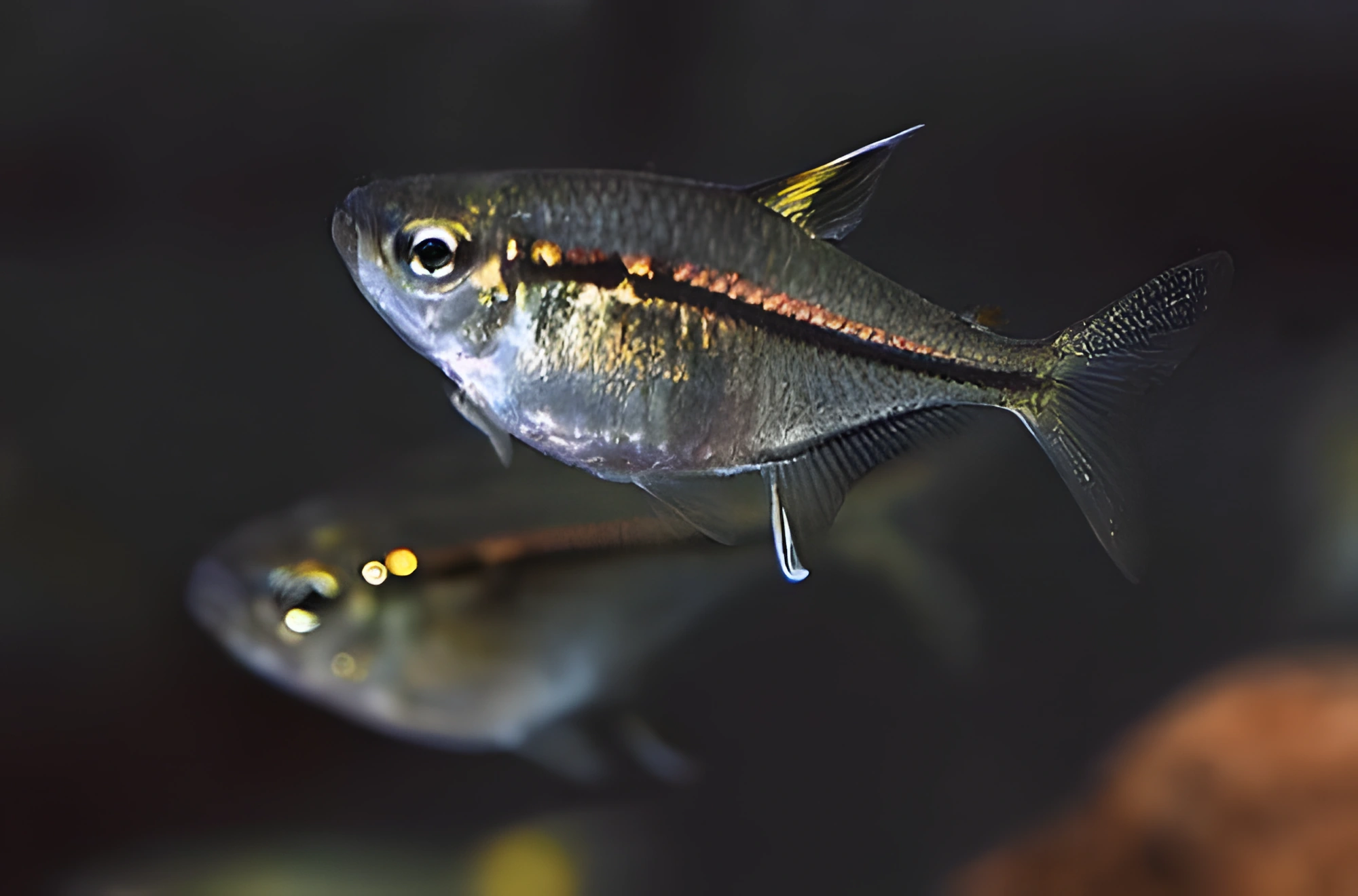
Adults of this tetra typically reach a length of up to 5 cm. Their body is predominantly gray, with a silvery belly and transparent fins. A small yellow streak is noticeable on the dorsal fin. A distinctive feature is a thin horizontal stripe, consisting of black and yellow colors, which runs from the head to the tail. Sexual dimorphism is weakly expressed: females are generally slightly larger than males.
Habitat
The natural habitat of this fish is the Paraguay River basin, a tributary of the larger Paraná River, in southern Brazil and Paraguay. It prefers small streams and channels with calm currents, where aquatic vegetation is abundant.
Behavior and Compatibility
This peaceful and calm species cannot compete with faster and more active fish. Therefore, for tankmates for the Yellow Tetra, it is advisable to choose species of similar size and temperament – these can be other characins, cyprinids, livebearers, and some South American cichlids. Optimal keeping involves a school of at least 6–8 individuals.
Care and Maintenance
For a small school of Ulrey's Tetras, an aquarium of at least 70 liters will suffice. For decoration, sandy substrate can be used, supplemented with shelters made of snags, roots, or tree branches. Plants are recommended to be placed in groups, and floating vegetation will help create additional shading. To recreate conditions close to their natural habitat, peat can be added to the filter, or a small bag of peat can be placed in the aquarium. Peat should only be purchased from pet stores, ensuring it has been pre-treated. Over time, the water will acquire a slight brownish tint. A similar effect can be achieved by using tree leaves, pre-dried and soaked until they begin to sink. Leaves are placed at the bottom of the aquarium and replaced approximately every two weeks. Aquarium care includes weekly replacement of 15–20% of the water volume with fresh water, as well as regular cleaning of the substrate from organic pollutants such as excrement and uneaten food residues.
Diet
The diet of these fish can include all types of dry, frozen, and live foods of appropriate size. A varied diet, such as a combination of dry flakes, pellets with bloodworms or daphnia, not only maintains the vitality of the fish but also enhances the richness of their coloration.
Breeding and Reproduction
Ulrey's Tetra is an egg-laying species, with poorly developed parental instincts. This means that eggs and hatched fry can be eaten by their own parents. Therefore, for successful breeding, it is recommended to use a separate spawning aquarium. Usually, a tank of about 20 liters is used for these purposes; its decoration does not play a significant role. To protect future offspring, the bottom can be covered with a fine-mesh net, a layer of balls 1–2 cm in diameter, or dense thickets of low-growing, small-leaved plants or mosses. The aquarium is filled with water from the main tank immediately before placing the fish there. Only a simple sponge air-lift filter and a heater will be needed. A special lighting system is not required, as Ulrey's Tetras prefer subdued light during spawning. A stimulus for spawning will be establishing pH values between 5.5–6.5 and dGH from 1 to 5, at a temperature of about 26–28°C. The diet of the breeders should predominantly consist of protein-rich food (e.g., bloodworms, daphnia, brine shrimp). After some time, it can be noticed that some females will become significantly rounded – this will indicate that they are full of eggs. After this, the females and the largest, brightly colored males are transferred to the spawning tank. After spawning, the adult fish are returned to the main aquarium. Fry appear after 24–36 hours and begin to swim independently on the 3rd–4th day, after which they require special food for aquarium fish fry.
Diseases
The best guarantee of fish health from any disease is a balanced aquarium biosystem with optimal keeping conditions. Therefore, if you notice changes in behavior, fish coloration, the appearance of uncharacteristic spots, or other symptoms, you should first check the water parameters, and only after that proceed with treatment measures.
How to choose
When choosing Ulrey's Tetras in a store, attention should be paid to the overall activity of the school and the cleanliness of their skin. Healthy individuals should be active, without visible damage, ulcers, white film, or signs of emaciation. Avoid purchasing fish that appear sluggish, stay isolated near the surface, or have an unnaturally bloated abdomen.
Since this species is often confused with other characins, carefully examine the pattern: a characteristic feature is an interrupted black and yellow stripe along the body. Given the rarity of the species in sales, ensure that the conditions in the store's aquarium meet basic requirements, as stress from poor water parameters can provoke the development of hidden diseases after transfer.
Frequently asked questions
The essentials: size, tank volume, water parameters and care
How big does Ulrey's Tetra get?
An adult reaches 5 cm in length. Plan the tank around the maximum size: the fish quickly outgrows a cramped setup.
What size aquarium does Ulrey's Tetra need?
The minimum recommended volume is 70 L. A smaller tank speeds up nitrate build-up and raises stress levels.
What water parameters does Ulrey's Tetra need?
Temperature 23–27 °C, pH 6–7, hardness 5–12 dGH. Stability matters more than exact values: sudden swings are harder on the fish than a small deviation from the ideal.
How long does Ulrey's Tetra live?
Around 4 years when kept properly. Lifespan depends directly on tank volume, water quality and a varied diet.
Is Ulrey's Tetra aggressive?
Temperament: peaceful (regular). Keep this in mind when choosing tank mates.
How many Ulrey's Tetra should be kept together?
Recommended setup: group (8–10 individuals). Ignoring this is a common cause of stress and disease.
What does Ulrey's Tetra eat?
Diet type: any (universal). Feed small portions that are finished within a couple of minutes — overfeeding does more harm than underfeeding.
What is the scientific name of Ulrey's Tetra?
The scientific name of the species is Hemigrammus ulreyi, family Characidae. It also appears in the literature as: Tetragonopterus ulreyi.