Temperature20 – 28 °C
Natural range
- Brazil area
CharacinsConservation status: Least concern LC
Other scientific names: Hemigrammus haraldschultzi
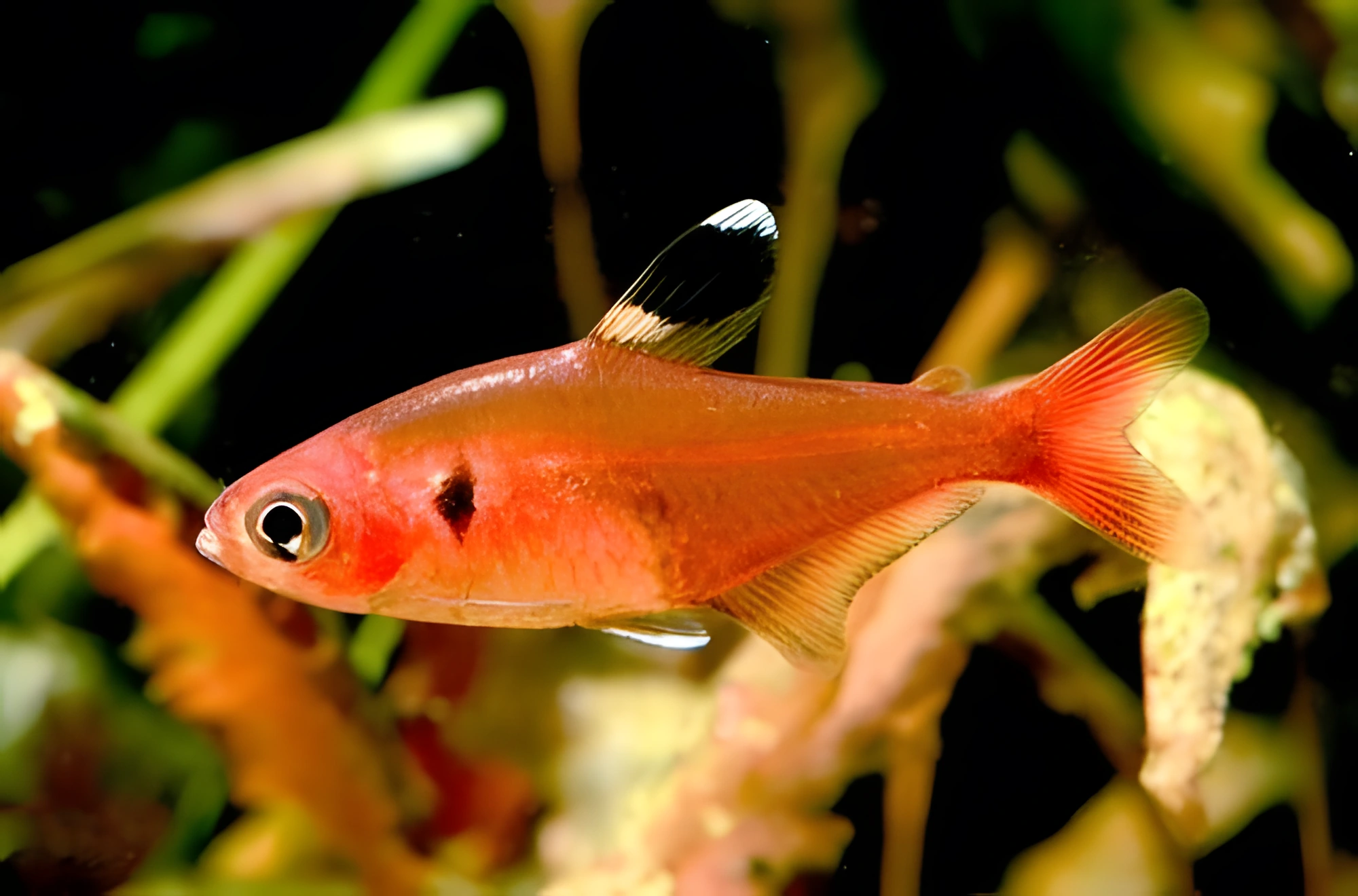
Timari Tetra, or Schultz's Tetra (Hyphessobrycon haraldschultzi), is a member of the Characin family. It is often called the Red Dwarf Tetra due to its striking coloration. This picturesque miniature fish is ideal for nano-aquariums thanks to its modest size. It is undemanding to keep, easy to breed, and harmoniously fits into communities of other small freshwater inhabitants.
- Required aquarium volume
- 40 L
- Size in aquarium
- 2 – 3.5 cm
- Temperature
- 20 – 28 °C
- Temperament
- Peaceful (regular)
Parameters
Water pHSlightly acidic (5) – Neutral (7)
Water dHVery soft (1) – Medium hardness (10)
Water salinityno salt (freshwater)
Size in aquarium2 – 3.5 cm
Lifespan4 years
TemperamentPeaceful (regular)
Toward small fishnot a predator
Required aquarium volume40 L
Lightingdimmed
Substrateany (no restrictions)
Water flowweak
FeedingSmall / appropriate size / pieces
CareGroup (8–10 individuals)
Description
Adults of this fish reach a length of approximately 2 centimeters. Females are usually slightly larger than males, but males have brighter coloration; overall, sexual dimorphism is not strongly pronounced. The distinctive feature of these fish is their rich red body color. The body pattern is minimalistic: there is only one dark spot behind the gill covers. The dorsal fin is adorned with yellow, black, and white hues.
Habitat
Its natural habitat is in South America, in central and western Brazil. Specifically, this species is found in the Araguaia River basin, which is a large tributary of the Tocantins in the lower Amazon basin. Although the exact distribution range of this species is not yet fully understood and likely extends beyond the Araguaia. The fish prefer small streams, backwaters, shallow tributaries, and oxbow lakes, avoiding the main river channels. Their natural waters typically feature soft, slightly acidic water, and the bottom is covered with a thick layer of fallen leaves and branches.
Behavior and Compatibility
This fish is distinguished by its peaceful and friendly disposition, which allows it to be kept with other species of comparable size. To maintain stable behavior, it is recommended to keep a school of at least 10 individuals. In this case, the rule applies: the more, the better.
Care and Maintenance
For comfortable keeping of a school of 8–10 Timari Tetras, an aquarium of at least 40 liters will be required. These fish look great among dense plant thickets with subdued lighting. Sand substrate and various sizes of driftwood are often used as decor elements. Dried leaves of some trees will not only be an ornament but also a useful addition to the decor. Gradually decomposing, they mimic natural processes, releasing tannins that bring the hydrochemical composition of the water closer to natural conditions. In addition, leaves serve as an excellent source for the development of microorganism colonies, such as paramecia, which are a valuable secondary food for fry. The long-term and successful keeping of fish largely depends on water quality. Regular aquarium maintenance and equipping it with the necessary equipment will help maintain stable water parameters within the acceptable range of temperatures and hydrochemical values. It is important to remember that these miniature fish are sensitive to excessive water flow. Since the main cause of this is the operation of filters, models that do not create powerful internal currents should be chosen.
Diet
Being an omnivorous species, this fish readily eats most widely available aquarium foods, appropriately sized. For example, its daily diet may include dry flakes and granules. Live or frozen small invertebrates, such as Artemia or Daphnia, will be an excellent addition to their diet.
Breeding and Reproduction
For generations of fish raised in an artificial environment, the creation of suitable conditions will be the stimulus for spawning. Reproduction is not tied to a specific season. In a large school, fry can appear almost monthly. During spawning, females ready for reproduction scatter eggs among dense vegetation or directly onto the substrate in open areas. Parental instincts are absent in these fish, so care for the offspring is not shown; moreover, the Timari Tetra may eat its own fry. To ensure the survival of the fry, it is recommended to transfer fertilized eggs to a separate tank filled with water from the main aquarium to maintain identical conditions. In the first days of life, the fry feed on the remnants of their yolk sac, and as they grow, they will need microscopic food, such as infusoria, or specialized powdered products.
Diseases
Specific diseases that affect only this particular fish species have not been identified. When kept in suitable conditions, including high water quality, a balanced diet, and peaceful tank mates, health issues usually do not arise. The most common cause of illness is a deterioration of living conditions, which weakens the immune system and makes the fish susceptible to infections that are always present in their environment. Upon noticing initial signs of sickness (such as lethargy, emaciation, refusal to eat, or clamped fins), it is crucial to immediately check the basic water parameters. Often, restoring acceptable living conditions will lead to self-recovery, but if the fish is too weak or has suffered visible damage, medicinal treatment may be required. For more details on symptoms and treatment methods, consult the section “Diseases of Aquarium Fish.”
How to choose
When purchasing, choose active individuals that stay in a school and show natural curiosity. Avoid fish with signs of emaciation, fin damage, white film on the body, or an unnaturally bloated abdomen. Since this species often enters the trade as bycatch during the import of other fish, carefully inspect all inhabitants of the communal aquarium in the store for signs of infectious diseases, as transport stress can trigger disease outbreaks in weakened individuals.
Frequently asked questions
The essentials: size, tank volume, water parameters and care
How big does Schultz's Tetra get?
An adult reaches 2–3.5 cm in length. Plan the tank around the maximum size: the fish quickly outgrows a cramped setup.
What size aquarium does Schultz's Tetra need?
The minimum recommended volume is 40 L. A smaller tank speeds up nitrate build-up and raises stress levels.
What water parameters does Schultz's Tetra need?
Temperature 20–28 °C, pH 5–7, hardness 1–10 dGH. Stability matters more than exact values: sudden swings are harder on the fish than a small deviation from the ideal.
How long does Schultz's Tetra live?
Around 4 years when kept properly. Lifespan depends directly on tank volume, water quality and a varied diet.
Is Schultz's Tetra aggressive?
Temperament: peaceful (regular). Keep this in mind when choosing tank mates.
How many Schultz's Tetra should be kept together?
Recommended setup: group (8–10 individuals). Ignoring this is a common cause of stress and disease.
What does Schultz's Tetra eat?
Diet type: small / appropriate size / pieces. Feed small portions that are finished within a couple of minutes — overfeeding does more harm than underfeeding.
What is the scientific name of Schultz's Tetra?
The scientific name of the species is Hyphessobrycon haraldschultzi, family Characidae. It also appears in the literature as: Hemigrammus haraldschultzi.