Temperature22 – 28 °C
Natural range
- Loreto Region
- Upper Amazon Basin
- Peru area
- Colombia area
CharacinsConservation status: Least concern LC
The Loreto Tetra (Hyphessobrycon loretoensis) is a fish belonging to the Characin family. It is named after the Loreto region in northeastern Peru, where it was first discovered. This species is known for its unpretentiousness, ease of breeding, and good compatibility with various freshwater tankmates.
- Required aquarium volume
- 40 L
- Size in aquarium
- 2 – 2.5 cm
- Temperature
- 22 – 28 °C
- Temperament
- Peaceful (regular)
Parameters
Water pHSlightly acidic (5) – Neutral (7)
Water dHVery soft (1) – Medium hardness (10)
Water salinityno salt (freshwater)
Size in aquarium2 – 2.5 cm
Lifespan4 years
TemperamentPeaceful (regular)
Toward small fishnot a predator
Required aquarium volume40 L
Lightingdimmed
Substrateany (no restrictions)
Water flowweak
FeedingSmall / appropriate size / pieces
CareGroup (8–10 individuals)
Description
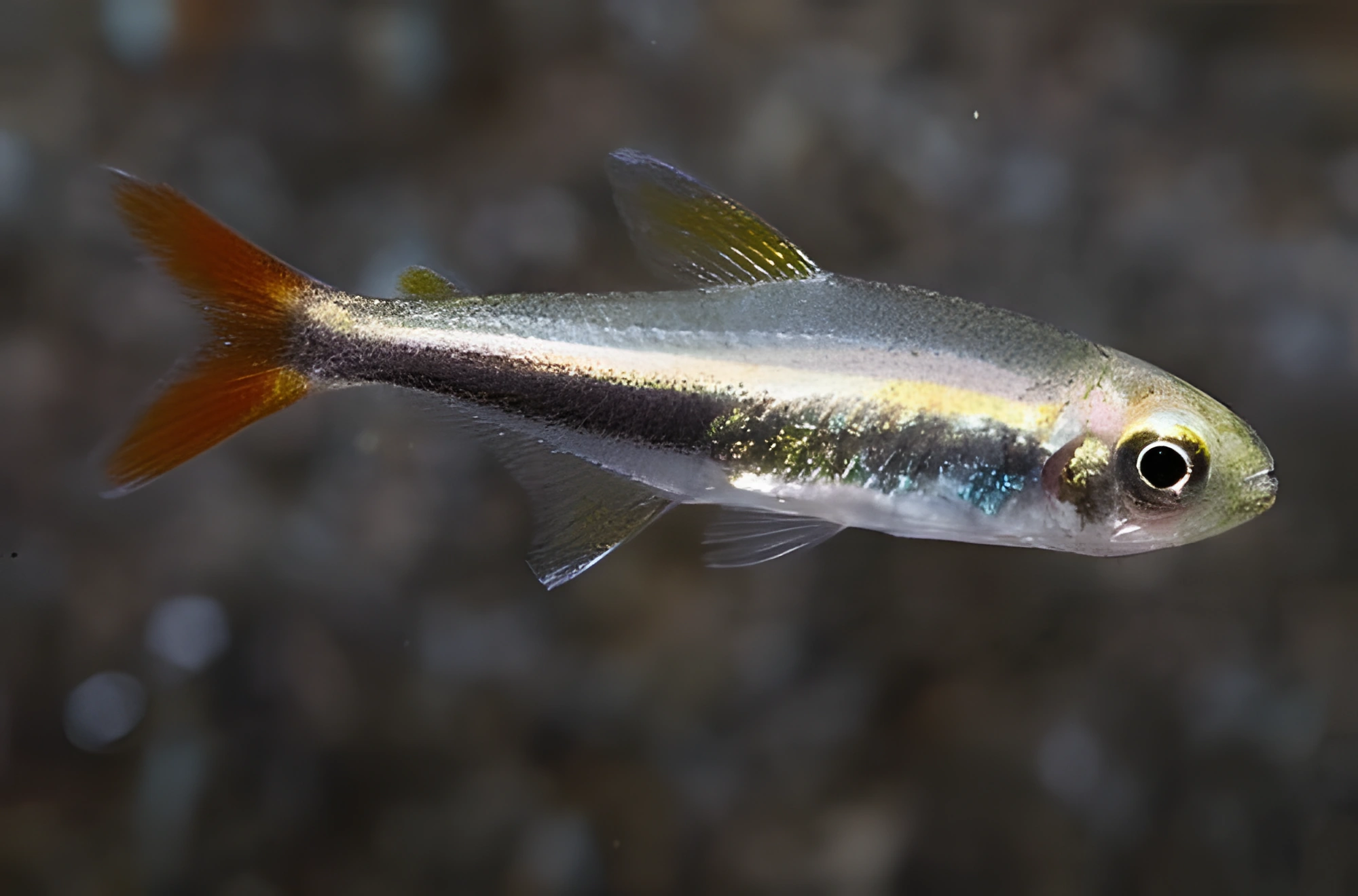
Adult specimens of this fish reach a length of about 2 centimeters. Distinguishing males from females is quite difficult, as sexual dimorphism is weakly expressed, and there are no obvious external differences between them. The body coloration is gray-silver. A wide dark stripe runs along the body, highlighted from above by a golden streak. The base of the caudal fin is often reddish.
Habitat
Its origin is linked to South America, where it inhabits the upper Amazon basin, covering territories in southern Colombia, Peru, and Ecuador. Loreto Tetra habitats are typically small streams and rivers that flow through dense equatorial forests. These bodies of water are characterized by abundant overhanging vegetation along the banks, as well as submerged branches, tree roots, and fallen leaves. The water in these areas often takes on a brownish tint due to the high content of substances released during the decomposition of organic matter.
Behavior and Compatibility
This species is a peaceful schooling fish, and it is advisable to provide them with the company of their own kind. The recommended minimum group size is 8–10 individuals. They get along well with other non-aggressive and non-predatory fish species of comparable size.
Care and Maintenance
For comfortable keeping of a school of 8–10 Loreto Tetras, an aquarium of at least 40–50 liters will be required. The aquarium's design can be anything, but the fish look most organic in an environment that mimics their natural conditions: among snags and dense thickets of aquatic plants. In addition, for decorative effect and to create a suitable chemical composition of the water, leaves of certain tree species are often used. As they decompose, they release tannins, which helps to recreate conditions in the aquarium similar to natural bodies of water. A key aspect of keeping them is maintaining stable water parameters within the optimal range of temperatures and hydrochemical indicators. Sharp fluctuations in pH/dGH should be avoided, and the accumulation of toxic nitrogen cycle substances such as ammonia, nitrites, and nitrates should not be allowed. Maintaining a healthy ecosystem in the aquarium largely depends on regular care, effective filtration system operation, and other equipment.
Diet
Loreto Tetra are omnivorous fish and readily accept a variety of foods. These can include dry flakes and granules, as well as live or frozen brine shrimp, daphnia, and small bloodworms or their chopped pieces. It is important that the food particles are small. Feeding is recommended 2–3 times a day, providing an amount of food that will be completely consumed within 5–10 minutes.
Breeding and Reproduction
Under suitable conditions, Loreto Tetra can spawn year-round, without pronounced seasonality. If there are several dozen fish in a group, it is quite likely that fry will appear monthly. Females scatter eggs among plant thickets or directly on the bottom in an open area, while males fertilize them. Since these fish lack parental instincts, they do not care for their offspring. Moreover, adults often eat both eggs and newly hatched fry. If you plan targeted breeding, fertilized eggs must be transferred to a separate tank. Even a regular three-liter jar filled with water from the main aquarium, equipped with a simple sponge filter (airlift) and a heater, will suffice. Additional lighting is not required for the fry. Since the fry are very small, specialized powdered foods or live microorganisms, such as infusoria, should be used for feeding them.
Diseases
Specific diseases that affect only this particular fish species have not been identified. When kept in suitable conditions, including high water quality, a balanced diet, and peaceful tank mates, health issues usually do not arise. The most common cause of illness is a deterioration of living conditions, which weakens the immune system and makes the fish susceptible to infections that are always present in their environment. Upon noticing initial signs of sickness (such as lethargy, emaciation, refusal to eat, or clamped fins), it is crucial to immediately check the basic water parameters. Often, restoring acceptable living conditions will lead to self-recovery, but if the fish is too weak or has suffered visible damage, medicinal treatment may be required. For more details on symptoms and treatment methods, consult the section “Diseases of Aquarium Fish.”
How to choose
When choosing Loreto Tetras, pay attention to the activity and appearance of the individuals. Healthy fish should have clean fins without signs of erosion or film, smooth scales, and clear eyes. Avoid specimens with sunken bellies, signs of emaciation, or unnatural behavior, such as constantly hovering near the water surface or attempting to stay separate from the school.
- Choose individuals that show curiosity and actively swim in the water column.
- Make sure there are no dead individuals in the aquarium with the fish, as this may indicate water quality problems or the presence of infections.
- Prefer young individuals, as they adapt more easily to new keeping conditions.
Frequently asked questions
The essentials: size, tank volume, water parameters and care
How big does Loreto Tetra get?
An adult reaches 2–2.5 cm in length. Plan the tank around the maximum size: the fish quickly outgrows a cramped setup.
What size aquarium does Loreto Tetra need?
The minimum recommended volume is 40 L. A smaller tank speeds up nitrate build-up and raises stress levels.
What water parameters does Loreto Tetra need?
Temperature 22–28 °C, pH 5–7, hardness 1–10 dGH. Stability matters more than exact values: sudden swings are harder on the fish than a small deviation from the ideal.
How long does Loreto Tetra live?
Around 4 years when kept properly. Lifespan depends directly on tank volume, water quality and a varied diet.
Is Loreto Tetra aggressive?
Temperament: peaceful (regular). Keep this in mind when choosing tank mates.
How many Loreto Tetra should be kept together?
Recommended setup: group (8–10 individuals). Ignoring this is a common cause of stress and disease.
What does Loreto Tetra eat?
Diet type: small / appropriate size / pieces. Feed small portions that are finished within a couple of minutes — overfeeding does more harm than underfeeding.
What is the scientific name of Loreto Tetra?
The scientific name of the species is Hyphessobrycon loretoensis, family Characidae.