Temperature23 – 28 °C
Natural range
- Democratic Republic of the Congo area
Characins
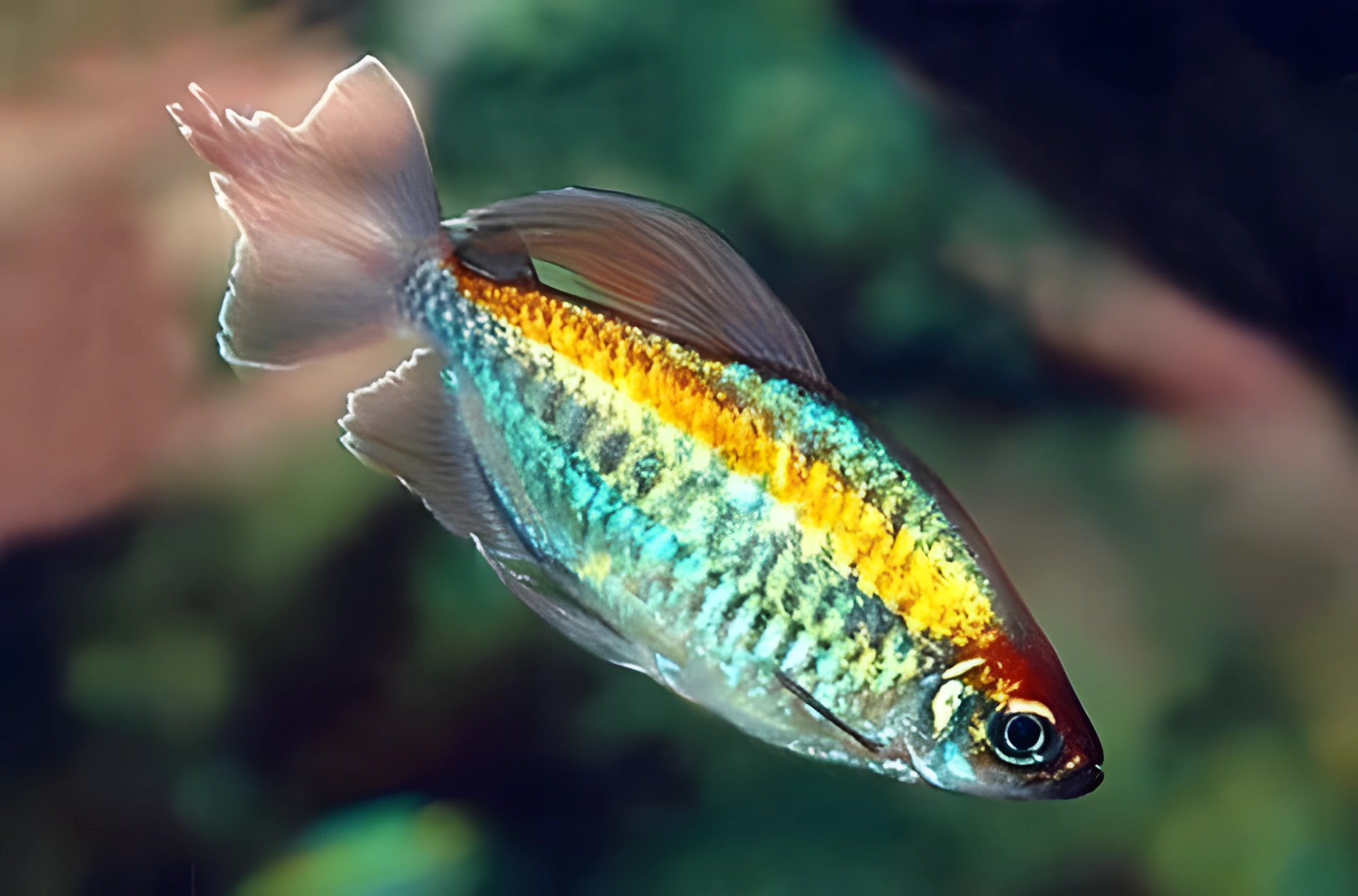
Phenacogrammus interruptus, more commonly known as the Congo Tetra, belongs to the family Alestiidae. This species is considered one of the most attractive among African characins, captivating observers with its iridescent body, shimmering with all the colors of the rainbow, and gracefully developed broad, veiled fins as it moves unhurriedly through the water.
- Required aquarium volume
- 150 L
- Size in aquarium
- 8 cm
- Temperature
- 23 – 28 °C
- Temperament
- Peaceful, active/mobile
Parameters
Water pHSlightly acidic (6) – Slightly alkaline (8)
Water dHVery soft (3) – Very hard (18)
Water salinityno salt (freshwater)
Size in aquarium8 cm
Lifespan5 years
TemperamentPeaceful, active/mobile
Toward small fishnot a predator
Required aquarium volume150 L
Lightingnight lighting
Substratesandy (regular, light)
Water flowmoderate
FeedingPlant-based with meat additives
CareSchooling (usually from 5–6 individuals and more)
Description
The Congo Tetra has a body shape typical of large tetras. Males can reach 8.5 cm in length, while females usually grow up to 6 cm. In a home aquarium, their lifespan is 3 to 5 years. The body coloration features a striking iridescence: from bluish hues on the back to red-orange and golden-yellow on the sides, transitioning back to bluish on the belly. Their fins are translucent, gray-violet, with light edges.
Habitat
This species was discovered in 1899 by researcher Georges Albert Boulenger during his African expedition. The fish's habitat is the upper Congo River basin in Africa, where they prefer acidic and dark waters. In natural conditions, they usually stay in small groups. Their diet consists of worms, crustaceans, insects, as well as plant matter.
Behavior and Compatibility
Keeping these fish requires a group of 4–5 individuals. In general, they coexist well with other peaceful aquarium inhabitants, but can sometimes show aggression and attack smaller fish. Peaceful cichlids and catfish are the best tank mates for Congo Tetras. Avoid cohabitation with fin-nipping species, such as some barbs, as this can injure the Tetras.
Care and Maintenance
The Congo Tetra is actively bred commercially and has successfully adapted to artificial aquarium environments over many decades. Clean water and effective circulation are critically important for their upkeep. A powerful internal filter can address both these tasks. It is recommended to change 25–50% of the water every two weeks. The minimum equipment set includes a filter, aerator, heater, and a low-power lighting system. This species prefers dense plant thickets along the aquarium walls and a dark substrate. River sand is ideal as a substrate, and driftwood, pieces of wood, or intertwined roots can be used for decoration. Adding a few dried leaves will give the water a light brown tint characteristic of their natural environment; these should be replaced every two weeks.
Diet
In a home aquarium, these fish are omnivorous. To maintain an optimal nutritional balance, their diet should include a variety of live, dry, and plant-based foods. It is recommended to offer high-quality dry food (in natural or frozen form), and occasionally treat them with bloodworms and small earthworms. Consistent addition of plant components, such as vegetable flakes, chopped lettuce, or spinach leaves, is very important to prevent possible damage to aquarium plants.
Breeding and Reproduction
Breeding this species is not particularly difficult with an additional tank. A spawning tank of approximately 40 liters is sufficient for this task. It is important that the water parameters in it match those of the main aquarium. Equipment required includes a filter, heater, and lighting system. The setup must include plants with both large and small leaves. A change in pH to an acidic 6 units and increased lighting brightness serve as a spawning trigger. After a pair forms, they are placed in a separate tank where spawning occurs. The female lays about 300 eggs on the substrate, covered by leaves. Fry appear within 24 hours and are already able to feed. The parents must be removed immediately after spawning, as they tend to eat their own eggs.
Diseases
The Congo Tetra is quite hardy and rarely encounters diseases with proper care. More detailed information on symptoms and treatment methods can be found in the "Aquarium Fish Diseases" section.
How to choose
When choosing Congo Tetras, it is important to pay attention to the activity and appearance of the individuals. Healthy fish should swim in the water column, show curiosity, and have no signs of apathy or damage to their scales. Avoid specimens with clamped fins, whitish spots, ulcers, or an unnaturally swollen belly, which may indicate infectious diseases or parasites.
Since this species has a slow growth rate, young individuals in the store often look drab and lack the characteristic elongated fins. This is a normal state for juveniles, not a sign of illness. When purchasing, it is preferable to choose a group of 6–10 individuals, as fish kept alone become timid and are subject to severe stress. Be sure to ask the seller what the fish are fed to ensure a smooth transition to a new diet at home.
Frequently asked questions
The essentials: size, tank volume, water parameters and care
How big does Congo Tetra get?
An adult reaches 8 cm in length. Plan the tank around the maximum size: the fish quickly outgrows a cramped setup.
What size aquarium does Congo Tetra need?
The minimum recommended volume is 150 L. A smaller tank speeds up nitrate build-up and raises stress levels.
What water parameters does Congo Tetra need?
Temperature 23–28 °C, pH 6–8, hardness 3–18 dGH. Stability matters more than exact values: sudden swings are harder on the fish than a small deviation from the ideal.
How long does Congo Tetra live?
Around 5 years when kept properly. Lifespan depends directly on tank volume, water quality and a varied diet.
Is Congo Tetra aggressive?
Temperament: peaceful, active/mobile. Keep this in mind when choosing tank mates.
How many Congo Tetra should be kept together?
Recommended setup: schooling (usually from 5–6 individuals and more). Ignoring this is a common cause of stress and disease.
What does Congo Tetra eat?
Diet type: plant-based with meat additives. Feed small portions that are finished within a couple of minutes — overfeeding does more harm than underfeeding.
What is the scientific name of Congo Tetra?
The scientific name of the species is Phenacogrammus interruptus, family Alestiidae.