Temperature24 – 28 °C
Natural range
- Mato Grosso State
- Brazil area
CharacinsConservation status: Least concern LC
The Kitty Tetra, scientifically known as Hyphessobrycon heliacus, belongs to the family Characidae. This fish originates from South America, where it is found in the Telis Pires River basin. This river, in turn, is a tributary of the Tapajós River, which flows predominantly through the Brazilian state of Pará.
- Required aquarium volume
- 40 L
- Size in aquarium
- 2 – 3 cm
- Temperature
- 24 – 28 °C
- Temperament
- Peaceful (regular)
Parameters
Water pHSlightly acidic (6) – Neutral (7.5)
Water dHVery soft (3) – Hard (12)
Water salinityno salt (freshwater)
Size in aquarium2 – 3 cm
Lifespan4 years
TemperamentPeaceful (regular)
Toward small fishnot a predator
Required aquarium volume40 L
Lightingdimmed
Substratesoft sandy (including silted)
Water flowweak
FeedingSmall / appropriate size / pieces
CareGroup (8–10 individuals)
Description
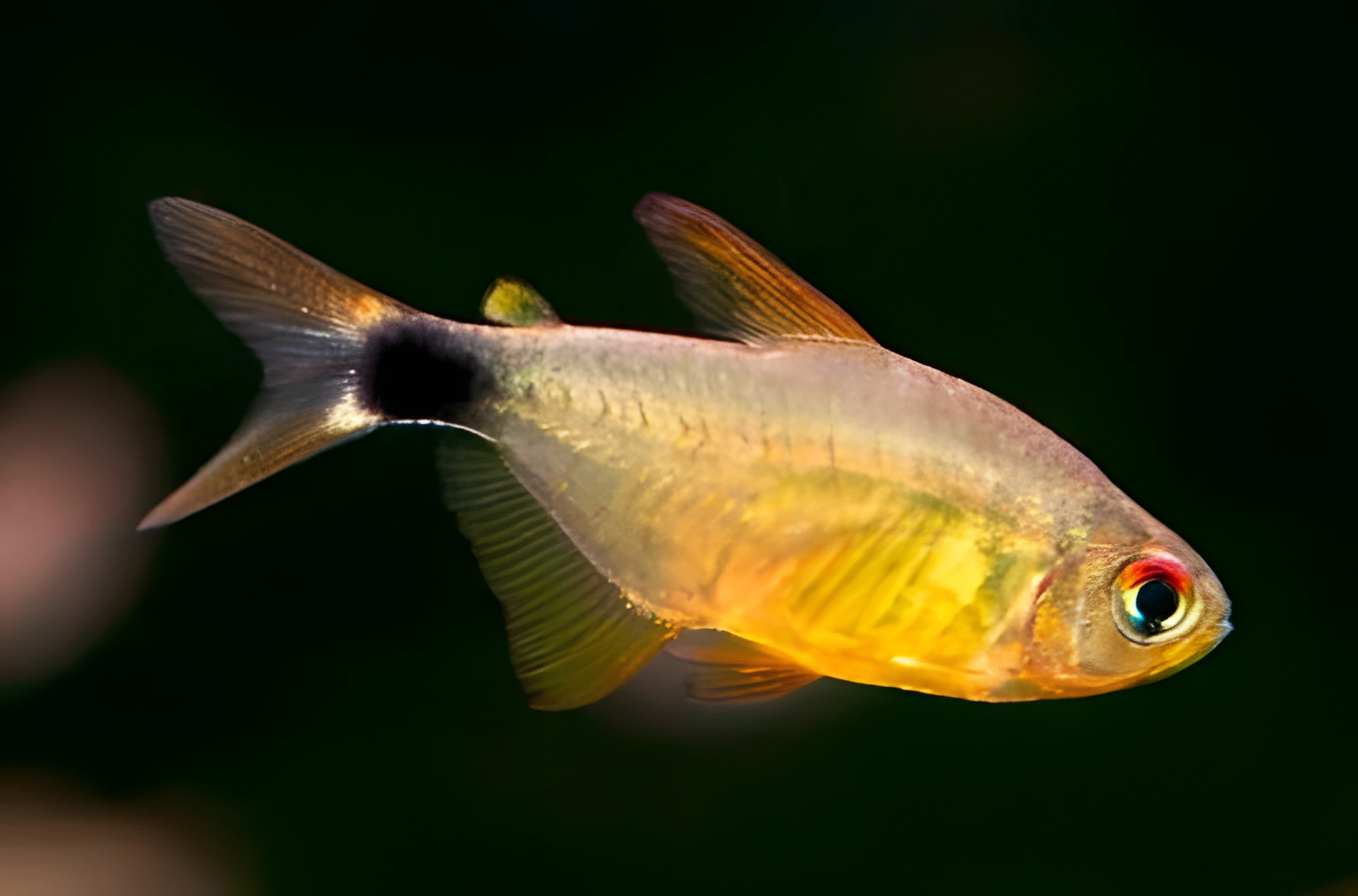
Adults of this species reach a length of about 3 cm and are characterized by a high, rhomboid body. Their coloration is golden, and the edges of their translucent fins and tail have a reddish tint. A prominent black spot adorns the base of the caudal peduncle. As males age, a noticeable elongation of the fins, especially the dorsal fin, is observed.
Habitat
The Kitty Tetra inhabits South America, in the upper Tapajós River basin (Telis Pires River tributaries), Mato Grosso state, Brazil. The fish populate areas of rivers with slow or stagnant currents, often found in zones with muddy bottoms and dense aquatic vegetation. In their natural environment, the water is relatively clear, and the depth of their habitat varies from 0 to 2 meters.
Behavior and Compatibility
This peaceful fish prefers to live in schools. For comfortable existence, it is necessary to maintain a group size of 8 to 10 individuals. If the number of fish is smaller, or if they are in the company of larger species, the Kitty Tetra may become excessively timid. Good compatibility is observed with other non-aggressive small fish, such as Tetras, miniature Cyprinids, South American cichlids, as well as Corydoras catfish and others.
Care and Maintenance
For a school of 8–10 fish, the minimum aquarium volume is 40 liters. Although these fish can adapt to various conditions, they demonstrate the greatest comfort in an environment that closely resembles their natural habitat. For decor, it is recommended to use a dark, soft substrate, abundant vegetation, including floating plants to create shade, and various shelters, for example, from natural driftwood. Additionally, a layer of fallen leaves from certain tree species can be placed on the bottom. As for water parameters, it is desirable to maintain soft, slightly acidic pH and GH values with a high concentration of tannins. Sources of tannins in the aquarium can be the aforementioned tree leaves, natural driftwood, or special emulsions added to the water according to instructions. Keeping these fish is not difficult, as the Kitty Tetra is undemanding. The aquarist will only need to perform regular standard maintenance: remove waste, perform partial water changes, and carry out equipment prophylaxis. This is an omnivorous species. Their diet can consist of popular dry foods, as well as frozen or live foods, such as daphnia and artemia.
Diet
As an omnivorous species, these fish readily accept popular dry foods. Their diet can also be diversified with frozen and live foods, including daphnia and artemia.
Breeding and Reproduction
For breeding, a separate spawning tank of 10–20 liters is needed, with a separator grid on the bottom and fine-leaved plants such as Java moss. Stimulation is provided by soft, slightly acidic water (pH around 6.4, dGH 1.5) and a temperature of 27°C. The fish are egg-layers, scattering their eggs among the plants. After spawning is complete, the parents should be removed to prevent them from eating the eggs. Fry hatch after 24–36 hours and begin free-swimming on days 3–4, after which they are fed infusoria and artemia nauplii.
Diseases
The species has moderate resilience but is sensitive to sudden changes in water parameters and high levels of nitrogenous compounds. Commonly encountered problems are related to stress due to incorrect school size, which reduces immunity and provokes the development of bacterial infections or ich. Prevention involves maintaining water cleanliness, regular water changes, and keeping them in a group of 6–10 individuals.
How to choose
When purchasing, choose active fish with bright coloration, without visible fin damage, ulcers, or white film on the scales. Healthy individuals should stay in a school and show no signs of emaciation. Avoid buying fish from tanks where there are dead specimens or cloudy water, as this indicates poor keeping quality and a high risk of hidden diseases.
Frequently asked questions
The essentials: size, tank volume, water parameters and care
How big does Kitty Tetra get?
An adult reaches 2–3 cm in length. Plan the tank around the maximum size: the fish quickly outgrows a cramped setup.
What size aquarium does Kitty Tetra need?
The minimum recommended volume is 40 L. A smaller tank speeds up nitrate build-up and raises stress levels.
What water parameters does Kitty Tetra need?
Temperature 24–28 °C, pH 6–7.5, hardness 3–12 dGH. Stability matters more than exact values: sudden swings are harder on the fish than a small deviation from the ideal.
How long does Kitty Tetra live?
Around 4 years when kept properly. Lifespan depends directly on tank volume, water quality and a varied diet.
Is Kitty Tetra aggressive?
Temperament: peaceful (regular). Keep this in mind when choosing tank mates.
How many Kitty Tetra should be kept together?
Recommended setup: group (8–10 individuals). Ignoring this is a common cause of stress and disease.
What does Kitty Tetra eat?
Diet type: small / appropriate size / pieces. Feed small portions that are finished within a couple of minutes — overfeeding does more harm than underfeeding.
What is the scientific name of Kitty Tetra?
The scientific name of the species is Hyphessobrycon heliacus, family Characidae.