Temperature24 – 27 °C
Natural range
- Paraguay River Basin
- Brazil area
- Paraguay area
- Argentina area
CharacinsConservation status: Least concern LC
Hyphessobrycon elachys, known by its scientific name, belongs to the Characidae family. This fish is native to South America, where it can be found in the Paraguay River basin. This river flows through the country of the same name and also affects the southern states of Brazil. It prefers to inhabit swampy areas of rivers abundant in dense vegetation.
- Required aquarium volume
- 40 L
- Size in aquarium
- 2 – 3 cm
- Temperature
- 24 – 27 °C
- Temperament
- Peaceful (regular)
Parameters
Water pHSlightly acidic (6) – Neutral (7.2)
Water dHVery soft (1) – Hard (15)
Water salinityno salt (freshwater)
Size in aquarium2 – 3 cm
Lifespan4 years
TemperamentPeaceful (regular)
Toward small fishnot a predator
Required aquarium volume40 L
Lightingdimmed
Substratesoft sandy (including silted)
Water flowweak
FeedingSmall / appropriate size / pieces
CareGroup (8–10 individuals)
Description
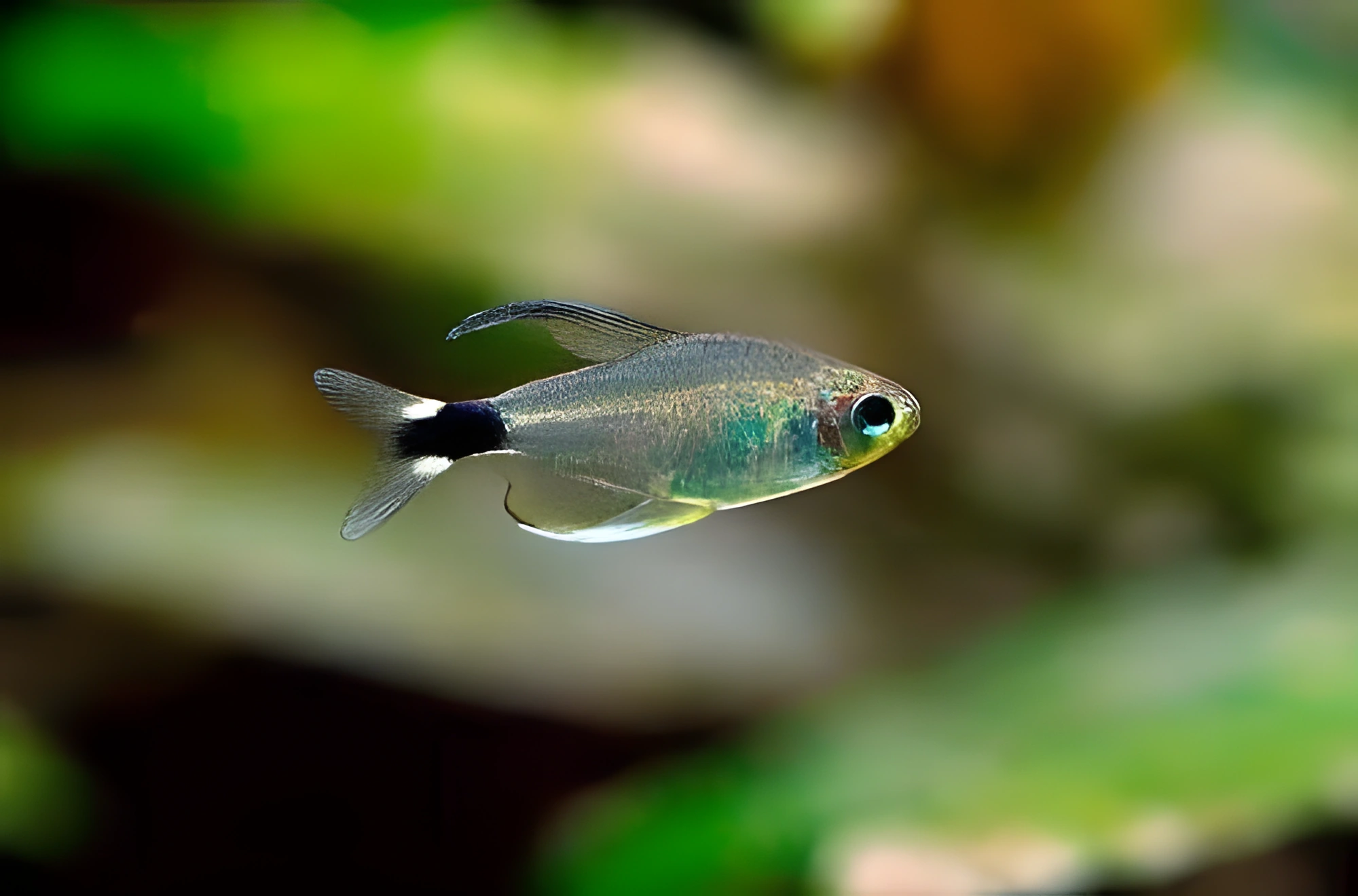
Adults of these fish typically reach 2–3 cm in length. They have the classic body shape characteristic of many aquarium species. A distinguishing feature of males is the elongated first rays of the dorsal and pelvic fins. Additionally, females generally appear slightly larger. Their silvery body coloration and a striking black spot at the base of the caudal peduncle, accentuated by white dashes, are characteristic features of the species.
Habitat
The species inhabits the Paraguay River basin in Brazil, Paraguay, and Argentina [fishbase.se]. In nature, the fish populate shallow areas of slow-flowing waters, where they stay among dense aquatic vegetation [housaqua.com].
Behavior and Compatibility
These fish lead a peaceful, schooling lifestyle. In their natural environment, they can often be observed alongside Corydoras, which root through the substrate, while Hyphessobrycon elachys pick up floating food particles. Thus, Corydoras catfish will make excellent companions in the aquarium. High compatibility is also noted with other non-aggressive Tetras, Apistogramma, and other species of similar size.
Care and Maintenance
For a school of 8–10 fish, an aquarium of 40–50 liters is considered optimal. An important part of the decor is numerous shelters created from driftwood, dense plant thickets, including floating plants, and other elements capable of providing refuge. It is advisable to maintain subdued lighting. Using a dark substrate will help effectively highlight the fish's silvery coloration. Although soft, acidic water is considered a comfortable environment for Hyphessobrycon elachys, this species, like many other Tetras, can adapt to harder water, provided that GH parameters change gradually. Aquarium care is standard and includes a number of mandatory procedures: weekly partial water changes with fresh water, removal of organic waste, cleaning of the substrate and decor elements, and equipment maintenance. The fish are omnivorous and readily accept most common foods. These can include dry flakes and granules of appropriate size, as well as live or frozen foods such as daphnia, small bloodworms, Artemia, and others.
Diet
Since the species is omnivorous, the fish will accept most popular foods. This can be dry food in the form of flakes and granules of appropriate size, as well as live or frozen foods, such as daphnia, small bloodworms, Artemia, and so on. Under favorable conditions and with a sufficient number of hiding places, the likelihood of spawning and successful development of fry to adulthood without active aquarist intervention is quite high. However, it should be noted that Tetras tend to eat their own eggs and fry, leading to low offspring survival. Added to this are the difficulties in providing fry with sufficient food. A more structured breeding process can be organized in a separate aquarium, where sexually mature males and females should be placed. For the setup of such a tank, many small-leaved, low-growing plants, mosses, and ferns are used to cover its bottom. Lighting should be subdued. The use of a simple air-driven filter is optimal for the filtration system, as it does not create strong currents and reduces the risk of eggs and fry being sucked in. After the fish are in the spawning tank, one only needs to await the start of breeding. This may happen unnoticed by the aquarist, so it is worth checking the bottom and plant thickets daily for the presence of eggs. After eggs are found, the adults can be returned. The incubation period lasts several days. The hatched fry remain in place for some time, feeding on the remnants of their yolk sac. After another couple of days, they begin to swim freely in search of food. Specialized powdered foods, suspensions, and, if available, infusoria and Artemia nauplii can be used as food.
Breeding and Reproduction
Under favorable living conditions and with a sufficient number of shelters, the likelihood of spontaneous spawning significantly increases, with fry reaching adulthood without direct intervention from the aquarist. However, given the Tetras' tendency to eat their own eggs and offspring, fry survival in a community tank will be low. Additionally, fry may struggle to obtain enough food in general conditions. For more organized breeding, it is recommended to use a separate spawning aquarium, where sexually mature males and females are transferred. For the setup of such an aquarium, abundant amounts of small-leaved, low-growing plants, mosses, and ferns are used to cover the bottom. Lighting should be dim. A simple air-driven filter will be most suitable as a filtration system, as it does not create strong currents and minimizes the risk of accidentally sucking in eggs or fry. Once the fish are in the spawning aquarium, one only needs to await the start of breeding. This process may go unnoticed by the aquarist, so it is important to inspect the bottom and plant thickets daily for the presence of eggs. After eggs are found, the adult fish can be returned to the main aquarium. The incubation period lasts about two days. The hatched fry remain motionless for some time, feeding on the contents of their yolk sac. After another couple of days, they begin to swim actively in search of food. As initial food, specialized powdered foods, suspensions, and, if possible, infusoria and Artemia nauplii can be used.
Diseases
No specific diseases unique to this species have been described. Like other members of the Characidae family, Hyphessobrycon elachys is sensitive to water quality and prone to infections if kept in unsuitable conditions. The main threats are bacterial infections, fungal infections, and ichthyophthiriasis, often arising from temperature fluctuations or the accumulation of organic waste.
To prevent diseases, it is necessary to maintain stable environmental parameters and ensure regular water changes. The fish are extremely sensitive to sharp changes in hydrochemical parameters, so adaptation during introduction must be carried out gradually. When kept in an aquarium with insufficient filtration or overcrowding, the immunity of individuals quickly decreases, making them vulnerable to pathogens.
How to choose
When choosing, prefer active individuals with clean fins and no visible damage or white spots on the body. It is important to ensure that the fish in the store are kept in conditions close to those recommended, as this species is sensitive to abrupt changes in water parameters [aquaportail.com]. Avoid purchasing individuals that appear emaciated, sluggish, or stay exclusively at the water surface, which may indicate gill problems or general health issues [housaqua.com].
Frequently asked questions
The essentials: size, tank volume, water parameters and care
How big does Hyphessobrycon elachys get?
An adult reaches 2–3 cm in length. Plan the tank around the maximum size: the fish quickly outgrows a cramped setup.
What size aquarium does Hyphessobrycon elachys need?
The minimum recommended volume is 40 L. A smaller tank speeds up nitrate build-up and raises stress levels.
What water parameters does Hyphessobrycon elachys need?
Temperature 24–27 °C, pH 6–7.2, hardness 1–15 dGH. Stability matters more than exact values: sudden swings are harder on the fish than a small deviation from the ideal.
How long does Hyphessobrycon elachys live?
Around 4 years when kept properly. Lifespan depends directly on tank volume, water quality and a varied diet.
Is Hyphessobrycon elachys aggressive?
Temperament: peaceful (regular). Keep this in mind when choosing tank mates.
How many Hyphessobrycon elachys should be kept together?
Recommended setup: group (8–10 individuals). Ignoring this is a common cause of stress and disease.
What does Hyphessobrycon elachys eat?
Diet type: small / appropriate size / pieces. Feed small portions that are finished within a couple of minutes — overfeeding does more harm than underfeeding.
What is the scientific name of Hyphessobrycon elachys?
The scientific name of the species is Hyphessobrycon elachys, family Characidae.