Temperature23 – 28 °C
Natural range
- Amapá area
- Brazil area
CharacinsConservation status: Least concern LC
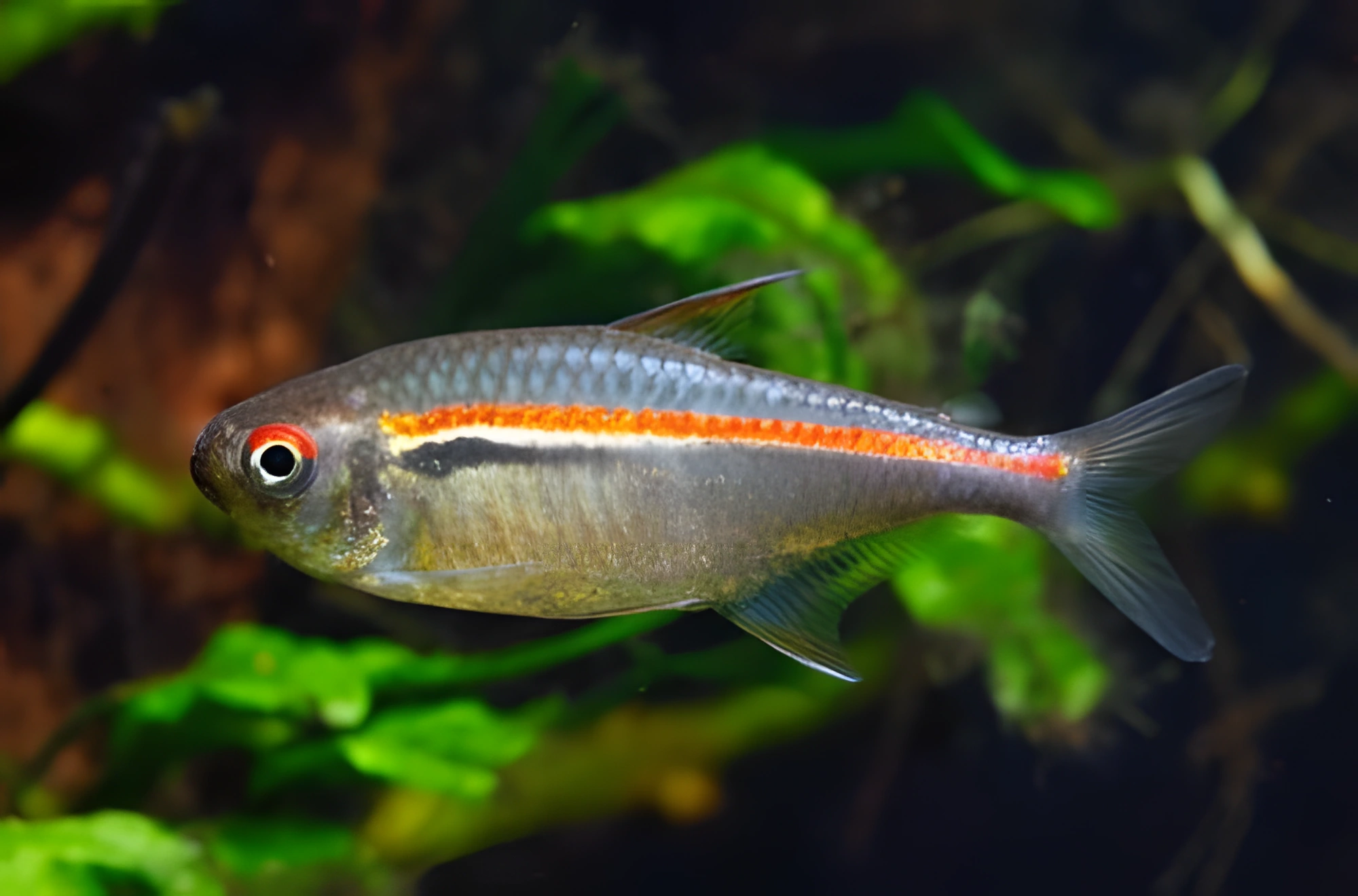
The Amapa Tetra, also known as the Red-striped Tetra, scientifically named Hyphessobrycon amapaensis, belongs to the family Characidae. Its name refers to the Brazilian state of Amapá, where it was first discovered. This fish is considered undemanding to care for, easy to breed, and highly compatible with other peaceful aquarium inhabitants.
- Required aquarium volume
- 40 L
- Size in aquarium
- 2 – 3 cm
- Temperature
- 23 – 28 °C
- Temperament
- Peaceful (regular)
Parameters
Water pHSlightly acidic (5) – Neutral (7)
Water dHVery soft (1) – Medium hardness (10)
Water salinityno salt (freshwater)
Size in aquarium2 – 3 cm
Lifespan4 years
TemperamentPeaceful (regular)
Toward small fishnot a predator
Required aquarium volume40 L
Lightingdimmed
Substrateany (no restrictions)
Water flowweak
FeedingAny (universal)
CareGroup (8–10 individuals)
Description
Adults reach a length of 2 to 3 cm. Sexual dimorphism in these fish is weakly expressed; males and females are very similar in appearance. Their coloration is predominantly gray, with a silvery belly. A characteristic feature is a narrow, red-and-white horizontal stripe running from head to tail, beneath which a thin black dash is located.
Habitat
Its origin is associated with South America, where it is found in limited areas of the Brazilian state of Amapá, located in the east of the country, near the Amazon delta. The fish inhabits small rivers and streams that flow through savanna pastures. These bodies of water are characterized by clear, light brown water, and their bottom is covered with sand or gravel.
Behavior and Compatibility
This peaceful schooling fish prefers to be in a group of its kind, with a minimum number of 8–10 individuals. It is perfectly compatible with other non-aggressive species of similar size.
Care and Maintenance
For a school of 8–10 Amapa Tetras, an aquarium volume of 40–50 liters will be optimal. The fish looks most harmonious in an setup that mimics its natural habitat. Such an setup includes decorative elements like a sandy substrate, driftwood, and aquatic plants, including floating ones. Although not mandatory, dried leaves from certain trees, placed on the substrate, can be a beneficial addition. They serve not so much a decorative function as they contribute to the formation of water chemistry similar to natural bodies of water. As they decompose, the leaves release tannins, which act as natural antimicrobial and antifungal agents, positively impacting the health of the aquarium ecosystem. Success in long-term keeping of the Amapa Tetra largely depends on maintaining stable water parameters within acceptable ranges of temperature and hydrochemical indicators. This is achieved through the effective operation of the filtration system and other equipment, as well as regular standard aquarium maintenance procedures. These procedures include weekly partial water changes with fresh water, timely removal of organic waste (food remnants, excrement), leaf replacement, and preventive equipment maintenance.
Diet
This omnivorous species is not demanding about food and successfully adapts to feeding exclusively on dry foods, such as flakes or granules. However, live or frozen foods, such as Daphnia, Artemia, and bloodworms, will be a significant addition to their diet.
Breeding and Reproduction
Breeding the Amapa Tetra is considered easy, and under favorable conditions, the fish can regularly produce offspring. In an artificial aquarium environment, there is no seasonal breeding, so the fish can be ready to spawn throughout the year. Typically, in a large school, one or more females are constantly ready to spawn. They do not have developed parental instincts, and there is no care for the offspring; moreover, adults may feast on their own eggs and fry. To preserve the brood, it should be moved to a separate tank with identical water conditions, where the newborn fish will spend the first few months of life until they grow to a sufficient size.
Diseases
Cottelata brittani is a hardy and undemanding fish. When suitable keeping conditions are met, health problems usually do not arise. Diseases can appear in cases of injury, contact with already sick fish, or a significant deterioration of habitat parameters (for example, in a dirty aquarium or with poor nutrition). More detailed information on symptoms and treatment methods can be found in the section "Diseases of aquarium fish."
How to choose
When choosing Amapa Tetras, pay attention to the activity and appearance of the individuals. Healthy fish should have clean fins without signs of damage, coatings, or sores, as well as even scales without spots. It is important to check the condition of their eyes: they should be clear, without cloudiness. Avoid purchasing fish with deformed spines or signs of emaciation, where the belly appears severely sunken.
Assess the behavior of the school in the store: healthy tetras should swim actively, display vibrant coloration, and react quickly to external stimuli. Lethargic fish that stay near the water surface or, conversely, constantly lie on the bottom, may be a sign of stress or illness. It is recommended to purchase a group of 8–10 individuals at once, as solitary keeping causes severe stress in this species, negatively affecting their immunity and lifespan.
Frequently asked questions
The essentials: size, tank volume, water parameters and care
How big does Amapa Tetra get?
An adult reaches 2–3 cm in length. Plan the tank around the maximum size: the fish quickly outgrows a cramped setup.
What size aquarium does Amapa Tetra need?
The minimum recommended volume is 40 L. A smaller tank speeds up nitrate build-up and raises stress levels.
What water parameters does Amapa Tetra need?
Temperature 23–28 °C, pH 5–7, hardness 1–10 dGH. Stability matters more than exact values: sudden swings are harder on the fish than a small deviation from the ideal.
How long does Amapa Tetra live?
Around 4 years when kept properly. Lifespan depends directly on tank volume, water quality and a varied diet.
Is Amapa Tetra aggressive?
Temperament: peaceful (regular). Keep this in mind when choosing tank mates.
How many Amapa Tetra should be kept together?
Recommended setup: group (8–10 individuals). Ignoring this is a common cause of stress and disease.
What does Amapa Tetra eat?
Diet type: any (universal). Feed small portions that are finished within a couple of minutes — overfeeding does more harm than underfeeding.
What is the scientific name of Amapa Tetra?
The scientific name of the species is Hyphessobrycon amapaensis, family Characidae.