Temperature20 – 28 °C
Natural range
- Tocantins State
- Mato Grosso State
CharacinsConservation status: Least concern LC
Other scientific names: Hemigrammus amandae
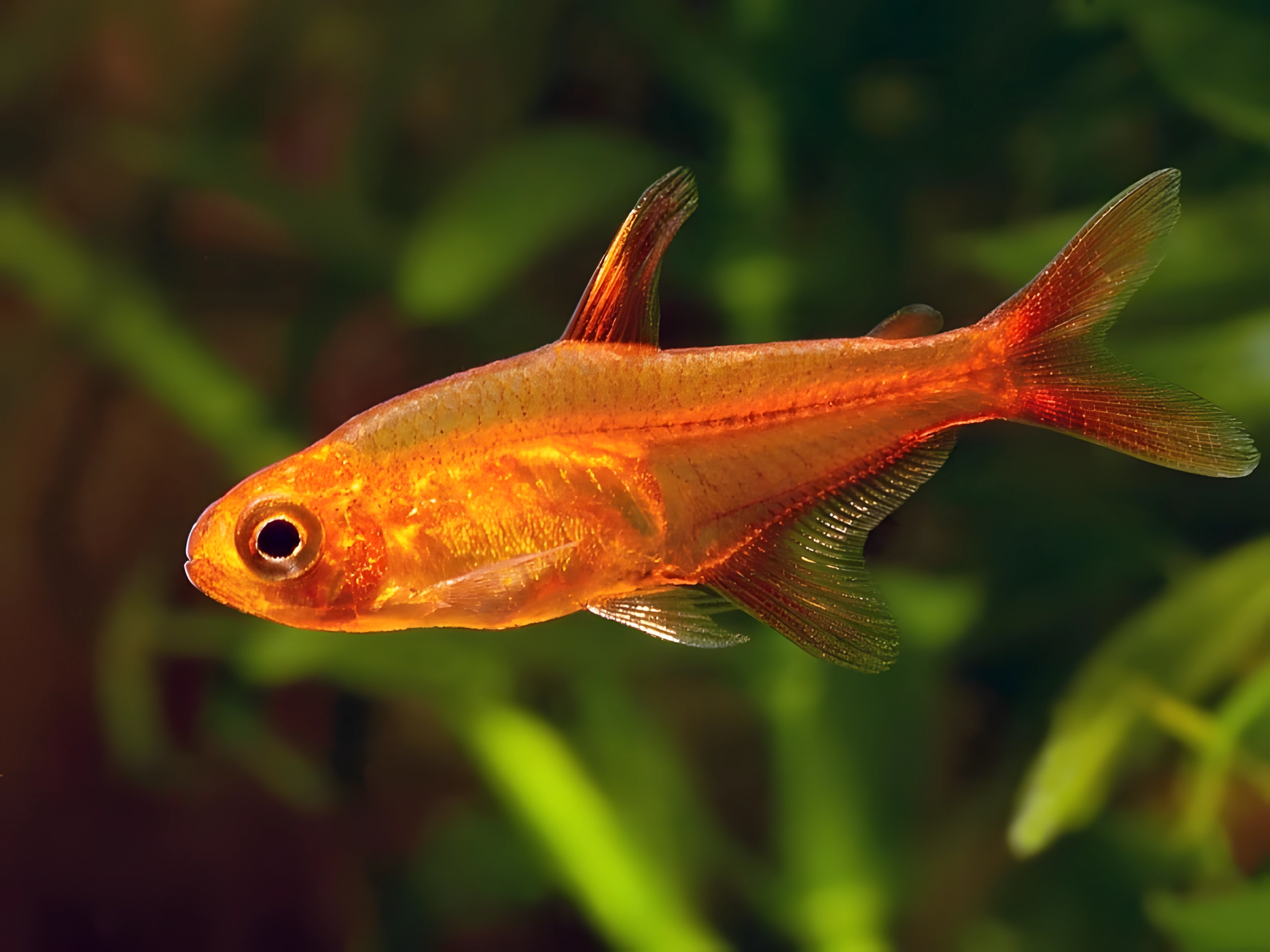
Amanda's Tetra, also known as the Dwarf Red Tetra, has the scientific name Hyphessobrycon amandae and belongs to the family Characidae. This fish species was named in honor of researcher Amanda Géry, who scientifically described it in 1987. It is considered quite undemanding in terms of keeping and breeding, coexisting well with other inhabitants of freshwater aquariums.
- Required aquarium volume
- 40 L
- Size in aquarium
- 2 cm
- Temperature
- 20 – 28 °C
- Temperament
- Peaceful (regular)
Parameters
Water pHSlightly acidic (5) – Neutral (7)
Water dHVery soft (1) – Medium hardness (10)
Water salinityno salt (freshwater)
Size in aquarium2 cm
Lifespan3 years
TemperamentPeaceful (regular)
Toward small fishnot a predator
Required aquarium volume40 L
Lightingdimmed
Substrateany, but dark
Water flowweak
FeedingSmall / appropriate size / pieces
CareGroup (8–10 individuals)
Description
Adults of this fish reach a length of 1.5 to 2 cm. Sexual dimorphism is weakly expressed, making males and females almost indistinguishable. The coloration of these fish is bright, uniformly red or orange.
Habitat
The origin of this fish is associated with South America, where it inhabits the Tocantins River basin and its large tributary, the Araguaia, located in the central regions of Brazil (Tocantins, Mato Grosso, and Pará states). Its natural habitat includes small tributaries, shallow streams, as well as rivers and oxbow lakes. The water in these places is usually soft and slightly acidic, and the bottom is covered with a sandy substrate, strewn with fallen leaves and branches.
Behavior and Compatibility
This peaceful and active fish feels more comfortable in a shoal of 8 to 10 individuals; with fewer, it may become overly timid. It coexists perfectly with other non-aggressive species of similar size. In nature, Amanda's Tetras are often found alongside Apistogrammas, making the latter quite suitable aquarium companions.
Care and Maintenance
An aquarium of 40 liters or more is suitable for keeping these fish. The setup should include many aquatic plants, including floating ones, as well as a dark substrate, against which the fish will appear most striking. Additionally, a layer of fallen leaves from certain trees can be used; their decomposition will not only help create a water chemistry close to natural conditions but also provide an additional food source for fry, as paramecia can develop among the leaves. Caring for Amanda's Tetra is not very difficult and is limited to standard procedures: weekly partial water changes with fresh water, removal of organic waste (food remnants, excrement), and equipment maintenance. Strong filtration should be avoided, as excessive current can negatively affect the fish; often, a simple air-driven sponge filter is sufficient.
Diet
Amanda's Tetras are not particular about their diet: they readily accept most common foods, provided they are of suitable size. The daily diet can consist of dry flakes or granules, supplemented with live or frozen crustaceans, such as brine shrimp or daphnia.
Breeding and Reproduction
Breeding these fish is not difficult, but raising the fry can be challenging, as the parents do not care for their offspring and may eat them. Furthermore, the newly hatched fry are very small and require microscopic food, such as infusoria. During the spawning period, females scatter their eggs among plants, which are then fertilized by several males. If you plan to breed, the eggs should be carefully moved to a separate tank filled with water from the main aquarium. This tank should be equipped with an air-driven filter and a heater, and special lighting is not required—sufficient light penetrating from outside is enough.
Diseases
Specific diseases that affect only this particular fish species have not been identified. When kept in suitable conditions, including high water quality, a balanced diet, and peaceful tank mates, health issues usually do not arise. The most common cause of illness is a deterioration of living conditions, which weakens the immune system and makes the fish susceptible to infections that are always present in their environment. Upon noticing initial signs of sickness (such as lethargy, emaciation, refusal to eat, or clamped fins), it is crucial to immediately check the basic water parameters. Often, restoring acceptable living conditions will lead to self-recovery, but if the fish is too weak or has suffered visible damage, medicinal treatment may be required. For more details on symptoms and treatment methods, consult the section “Diseases of Aquarium Fish.”
How to choose
When choosing Amanda's Tetras, prefer individuals with bright, rich coloration, as paleness often indicates severe stress or unsatisfactory living conditions. It is important to carefully inspect the fish for external signs of disease: intact fins, absence of white spots, ulcers, or unnatural film on the body. Healthy fish should be active and stay in a shoal, not hiding in a corner or near the water surface.
- avoid purchasing individuals that appear emaciated or have visible body deformities
- try to acquire a group of fish from the same aquarium to minimize stress during adaptation
- check that the fish actively react to movement near the glass, as sluggish behavior can be a sign of hidden health problems
Frequently asked questions
The essentials: size, tank volume, water parameters and care
How big does Amanda's Tetra get?
An adult reaches 2 cm in length. Plan the tank around the maximum size: the fish quickly outgrows a cramped setup.
What size aquarium does Amanda's Tetra need?
The minimum recommended volume is 40 L. A smaller tank speeds up nitrate build-up and raises stress levels.
What water parameters does Amanda's Tetra need?
Temperature 20–28 °C, pH 5–7, hardness 1–10 dGH. Stability matters more than exact values: sudden swings are harder on the fish than a small deviation from the ideal.
How long does Amanda's Tetra live?
Around 3 years when kept properly. Lifespan depends directly on tank volume, water quality and a varied diet.
Is Amanda's Tetra aggressive?
Temperament: peaceful (regular). Keep this in mind when choosing tank mates.
How many Amanda's Tetra should be kept together?
Recommended setup: group (8–10 individuals). Ignoring this is a common cause of stress and disease.
What does Amanda's Tetra eat?
Diet type: small / appropriate size / pieces. Feed small portions that are finished within a couple of minutes — overfeeding does more harm than underfeeding.
What is the scientific name of Amanda's Tetra?
The scientific name of the species is Hyphessobrycon amandae, family Characidae. It also appears in the literature as: Hemigrammus amandae.