Temperature25 – 30 °C
Natural range
- Malay Peninsula area
- Sumatra area
- Malaysia area
- Indonesia area
Labyrinth fishConservation status: Least concern LC
Other scientific names: Betta fasciata
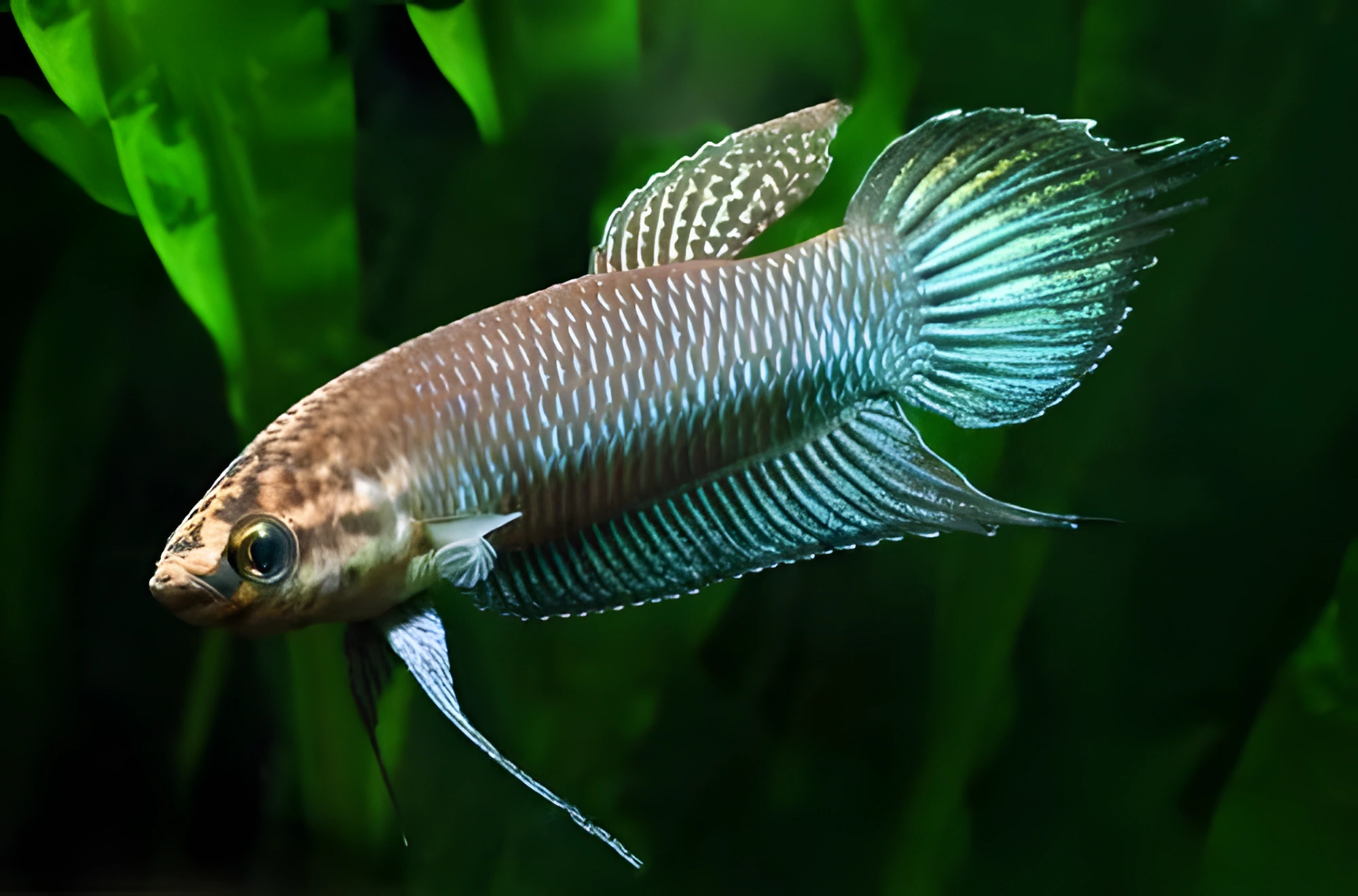
Betta bellica, or the slender betta, belongs to the Osphronemidae family. It is one of the first fighting fish known to Europeans, having been brought to Europe in 1905. However, it did not achieve the same fame as the Siamese fighting fish, possibly due to the less pronounced aggression of males during skirmishes. This species is known for its hardiness and relatively large size. In its natural habitat, the fish can survive in moist forest litter after a water body dries up. Keeping it in a home aquarium will not cause much trouble, provided the necessary water parameters are maintained and it is fed correctly.
- Required aquarium volume
- 80 L
- Size in aquarium
- 9 cm
- Temperature
- 25 – 30 °C
- Temperament
- Semi-peaceful (including aggression during spawning / intraspecific conflicts)
Parameters
Water pHAcidic (4) – Neutral (7)
Water dHVery soft (1) – Medium hardness (8)
Water salinityno salt (freshwater)
Size in aquarium9 cm
Lifespan3 years
TemperamentSemi-peaceful (including aggression during spawning / intraspecific conflicts)
Toward small fishnot a predator
Required aquarium volume80 L
Lightingdimmed
Substrateany (no restrictions)
Water flownone or stagnant (no flow)
FeedingHigh protein (predominantly meat)
CarePair (male/female)
Description
Adults reach a length of up to 9 cm. Their coloration is brown, dotted with numerous greenish-blue spots. Sexual dimorphism is weakly expressed; males can be distinguished from females by their more intense color and enlarged fins. How to Determine the Age of Bettas (Siamese Fighting Fish)
Habitat
Wild populations inhabit Southeast Asia, including the modern territories of Malaysia, Indonesia, and the island of Sumatra. They live in forest peat swamps and their adjacent tributaries, where vegetation is very dense. Sunlight barely penetrates to the water's surface through the thick tree canopies. The water in these areas is highly acidic due to the abundance of decomposing organic matter: tree leaves, grass, roots, and branches. During some periods of the year, forest water bodies can almost completely dry up, and then the fish spend several weeks in semi-moist soil, waiting for the rainy season.
Behavior and Compatibility
This species belongs to the fighting fish. Intraspecific relationships are based on male dominance within a certain territory. Males engage in skirmishes with each other, which in the confined space of an aquarium can lead to injuries. Although the slender betta is less aggressive compared to other fighting fish, it is still recommended to keep males separately. The ideal option is one male and one or several females. They are usually quite peaceful towards other fish species and can successfully live with calm fish of comparable size.
Care and Maintenance
For a single pair of fish, an aquarium of at least 80 liters is required. Dark, soft substrate is used for decoration, along with shelters in the form of driftwood (e.g., intertwined roots or branches) and dense thickets of shade-loving plants. To recreate conditions close to natural ones, the bottom of the aquarium can be covered with dried fallen leaves. Oak leaves are excellent for this. Before use, they should be thoroughly rinsed and soaked in water until they sink; otherwise, they will float on the surface. Leaves not only serve as a decorative element but also have a beneficial effect on the hydrochemical composition of the water. Gradually decomposing, they stain the water a light brown hue and enrich it with tannins. Leaves should be replaced weekly or bi-weekly. Water parameters should be characterized by acidic pH and low carbonate hardness. It is recommended to use a filter with peat media or carefully acidify the water with phosphoric acid, strictly observing the proportions. The filtration system should be set up so that internal water currents are minimal. The aquarium must be equipped with a lid to create a warm air layer above the surface, which is critically important for the health of labyrinth fish. Aquarium care includes weekly water changes of 10–15% of the volume and regular cleaning of the substrate from organic debris.
Diet
In their natural environment, fish feed on small insects and their larvae, which they find near the water's surface. During hunting, they often jump out of the water to catch low-flying prey or snatch it from leaves and branches overhanging the water. In the aquarium, their diet should primarily consist of live or frozen foods, such as bloodworms, brine shrimp, and mosquito larvae. Specialized betta fighting fish foods, which also include the slender betta, can be an excellent alternative, as they contain all the necessary trace elements. It is recommended to choose products from reputable manufacturers to avoid poor-quality food.
Breeding and Reproduction
When the breeding season begins, males build a bubble nest using broad leaves, dense floating vegetation, or cave-like shelters at the bottom of the aquarium. During construction, the male can be quite rough with the female, not allowing her near the nest until the work is complete. Before spawning, the female's color dulls, and dark horizontal stripes appear on her sides. Spawning itself occurs in characteristic "embraces," where the fish, as if entwining, hold onto each other. At the climax, milt and several eggs are released, which are then placed in the nest. This process repeats many times until all eggs are laid. Afterward, the female swims away, leaving the male to guard and care for the future offspring. Fry appear after 24–48 hours and remain in the nest for another 3–4 days. During this time, the male carefully returns any fry that accidentally fall out or swim away from the nest. As soon as the fry begin to swim freely, the male loses interest in them. Adult fish do not exhibit cannibalism and usually do not eat their offspring. However, this does not apply to other aquarium inhabitants, so it is advisable to transfer the fry to a separate tank with identical water conditions. They should be fed specialized fry food. An unusual behavior has been observed in this species: if the fry grow up with their parents, upon reaching sexual maturity of the adult fish, the parents lose their color, become sluggish and slow, as if rapidly aging. However, if the fry grow up in a separate aquarium, the adult fish retain their activity and vibrant coloration.
Diseases
One of the main causes of most fish diseases is inadequate living conditions and a low-quality diet. If the first signs of illness are noticed, it is first necessary to check the water parameters to rule out elevated levels of dangerous compounds (ammonia, nitrites, nitrates, and others). If deviations are found, the indicators should be stabilized to normal, and only then should targeted treatment begin. More detailed information on the symptoms of various diseases and methods of their therapy is available in the section "Diseases of Aquarium Fish."
How to choose
When choosing a Slender Betta, attention should be paid to the fish's activity and the condition of its skin. Healthy individuals should be active, without visible damage to fins, ulcers, or film on the body. Avoid purchasing fish that appear emaciated, have sunken bellies, or stay at the water's surface, breathing heavily, as this may indicate chronic stress or infectious diseases. When inspecting in a store, it is important to consider the following signs:
- absence of signs of fin rot and scale damage;
- clear, clean eyes without cloudiness;
- normal plumpness, absence of spinal deformities;
- calm but not apathetic behavior in the aquarium.
Since the species is territorial, males are often kept separately in stores, which is normal. If the fish are in a communal tank, make sure they do not have bite marks from tank mates. It is recommended to ask the seller what the fish eats to ensure there are no problems with food acceptance.
Frequently asked questions
The essentials: size, tank volume, water parameters and care
How big does Slender Betta get?
An adult reaches 9 cm in length. Plan the tank around the maximum size: the fish quickly outgrows a cramped setup.
What size aquarium does Slender Betta need?
The minimum recommended volume is 80 L. A smaller tank speeds up nitrate build-up and raises stress levels.
What water parameters does Slender Betta need?
Temperature 25–30 °C, pH 4–7, hardness 1–8 dGH. Stability matters more than exact values: sudden swings are harder on the fish than a small deviation from the ideal.
How long does Slender Betta live?
Around 3 years when kept properly. Lifespan depends directly on tank volume, water quality and a varied diet.
Is Slender Betta aggressive?
Temperament: semi-peaceful (including aggression during spawning / intraspecific conflicts). Keep this in mind when choosing tank mates.
How many Slender Betta should be kept together?
Recommended setup: pair (male/female). Ignoring this is a common cause of stress and disease.
What does Slender Betta eat?
Diet type: high protein (predominantly meat). Feed small portions that are finished within a couple of minutes — overfeeding does more harm than underfeeding.
What is the scientific name of Slender Betta?
The scientific name of the species is Betta bellica, family Osphronemidae. It also appears in the literature as: Betta fasciata.