Temperature20 – 30 °C
Natural range
- India area
- Bangladesh area
- Myanmar area
- South Asia area
UnusualConservation status: Near threatened NT
Other scientific names: Ambassis lala, Chanda lala, Pseudambassis lala
The Lala Glassfish, known scientifically as Parambassis lala, belongs to the Ambassidae family, or Glassfish. This species originates from Asia; it can be found in the territories of modern India, Bangladesh, and Myanmar. It inhabits stagnant bodies of water such as lakes, swamps, ponds, as well as ditches and canals.
- Required aquarium volume
- 40 L
- Size in aquarium
- 4 cm
- Temperature
- 20 – 30 °C
- Temperament
- Peaceful (regular)
Parameters
Water pHSlightly acidic (6) – Neutral (7)
Water dHSoft (5) – Hard (12)
Water salinityno salt (freshwater)
Size in aquarium4 cm
Lifespan3 years
TemperamentPeaceful (regular)
Toward small fishnot a predator
Required aquarium volume40 L
Lightingdimmed
Substrateany, but dark
Water flowweak
FeedingAny (universal)
CareGroup (8–10 individuals)
Description
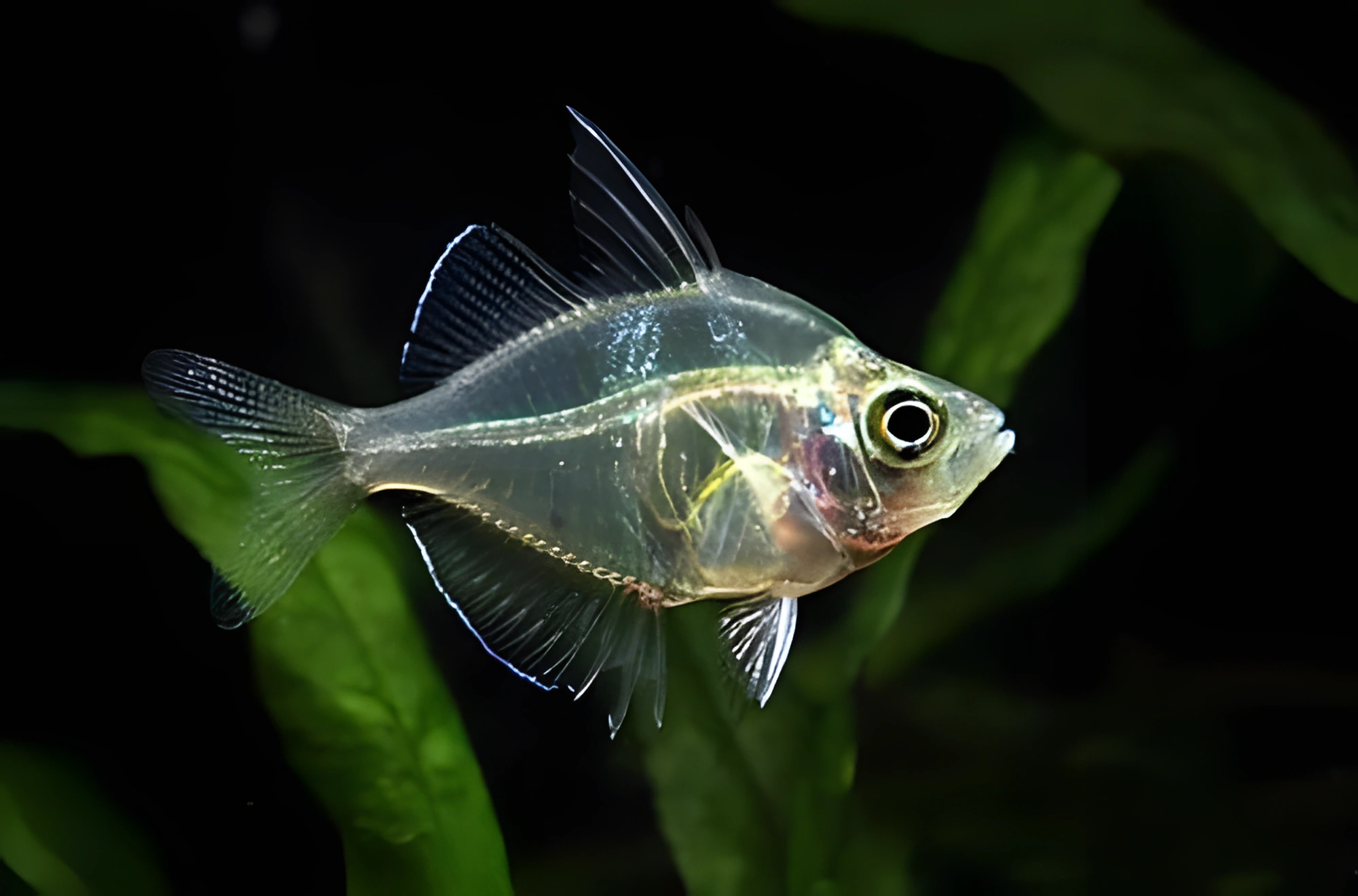
Adults of this species reach approximately 4 cm in length. The fish's body has a rhomboid shape, with distinctive features being a large head and pointed fins. The translucent body coverings are a characteristic feature of the Lala Glassfish, through which its spine, ribs, and internal abdominal organs are clearly visible. Males are distinguished from females by the presence of a bluish edging on their fins.
These fish are popular in Asian countries, but they are supplied not in their natural coloration, but with various patterns, bright designs, or in unusual saturated colors such as red, yellow, green, and others. Such coloration is created artificially using dye injections. Thus, local breeders aim to make them more attractive to buyers. In European and American countries, the practice of dyeing fish is prohibited by law, so only fish in their natural state, without Asian modifications, are available for sale.
Habitat
The Lala Glassfish inhabits freshwater bodies in South Asia, including India, Bangladesh, and Myanmar. In nature, it lives in stagnant or slow-moving waters: ponds, ditches, and vegetated areas of rivers. The species prefers densely planted areas where it stays in schools in the water column.
Behavior and Compatibility
Distinguished by their peaceful nature, these fish live in large schools in their natural habitat. For aquarium keeping, it is recommended to acquire a group of 8–10 individuals or more. They coexist perfectly with other species of similar size and temperament.
Care and Maintenance
For a small school of Lala Glassfish, the optimal aquarium volume starts from 40 liters. The aquarium setup can be arbitrary but must include areas with dense plant thickets. The only thing that might cause difficulties is their feeding. These fish feed exclusively on live or frozen foods; they usually ignore dry foods. They prefer soft, slightly acidic water. Regular aquarium maintenance combined with uninterrupted filtration will help maintain the necessary hydrochemical composition of the water and prevent the accumulation of organic waste.
Diet
In its natural environment, it is a predator, feeding on small invertebrates. In aquarium conditions, it is extremely important to use live or high-quality frozen foods, such as daphnia, artemia, or small bloodworms. Dry commercial foods are usually ignored by the fish, so their use as a primary diet is not recommended.
Breeding and Reproduction
Spawning is paired and occurs among fine-leaved plants, where the female lays her eggs. The fish do not show pronounced parental care. Breeding is considered difficult due to specific requirements for initial food: the larvae are extremely small and require microscopic live organisms, such as nauplii of certain copepod species, for successful rearing.
Diseases
The species is sensitive to water quality and stress factors, which often provoke the development of bacterial infections and parasitic diseases. Common symptoms include:
- appearance of whitish coatings or spots on the body
- fin rot
- rapid breathing
- refusal to eat and apathy
Prevention involves maintaining stable environmental parameters and regular water changes.
How to choose
When purchasing, avoid individuals with signs of emaciation, fin damage, or unnatural behavior. It is crucial to refrain from acquiring fish with artificially injected fluorescent dyes, as this procedure causes serious harm to their health and significantly shortens their lifespan. A healthy fish should be active, have clear eyes, and characteristic body transparency.
Frequently asked questions
The essentials: size, tank volume, water parameters and care
How big does Lala Glassfish get?
An adult reaches 4 cm in length. Plan the tank around the maximum size: the fish quickly outgrows a cramped setup.
What size aquarium does Lala Glassfish need?
The minimum recommended volume is 40 L. A smaller tank speeds up nitrate build-up and raises stress levels.
What water parameters does Lala Glassfish need?
Temperature 20–30 °C, pH 6–7, hardness 5–12 dGH. Stability matters more than exact values: sudden swings are harder on the fish than a small deviation from the ideal.
How long does Lala Glassfish live?
Around 3 years when kept properly. Lifespan depends directly on tank volume, water quality and a varied diet.
Is Lala Glassfish aggressive?
Temperament: peaceful (regular). Keep this in mind when choosing tank mates.
How many Lala Glassfish should be kept together?
Recommended setup: group (8–10 individuals). Ignoring this is a common cause of stress and disease.
What does Lala Glassfish eat?
Diet type: any (universal). Feed small portions that are finished within a couple of minutes — overfeeding does more harm than underfeeding.
What is the scientific name of Lala Glassfish?
The scientific name of the species is Parambassis lala, family Asian Glassfish (Ambassidae). It also appears in the literature as: Ambassis lala, Chanda lala, Pseudambassis lala.