Temperature20 – 28 °C
Natural range
- Peninsular Malaysia area
- Borneo area
UnusualConservation status: Least concern LC
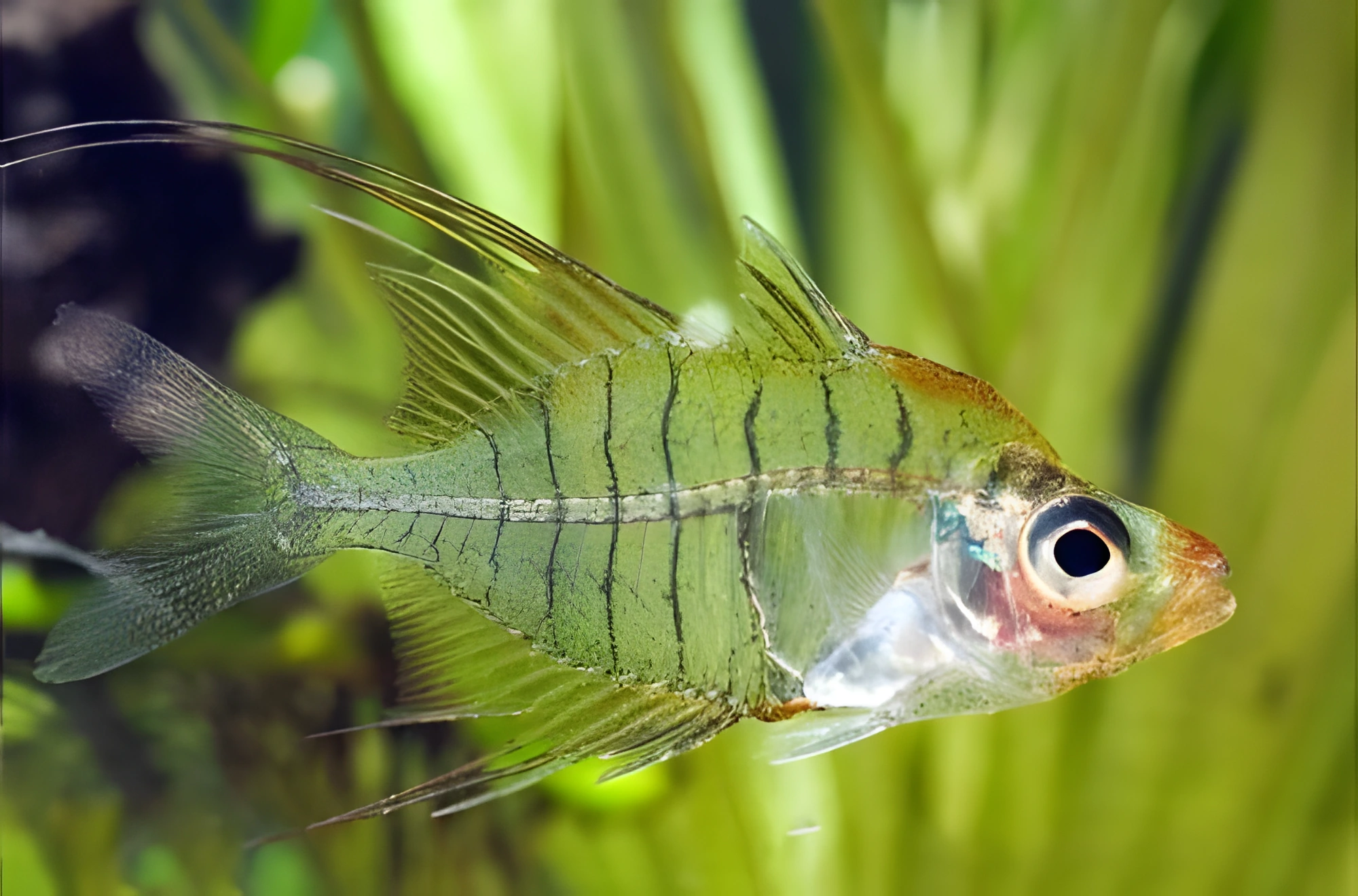
The fish known as the "Glass Angel" or Filamentous Glass Perch (scientific name Gymnochanda filamentosa) belongs to the family Ambassidae, or Asian Glassfish. Its name accurately conveys the key feature of this fish – its extraordinary appearance. Keeping it in an aquarium requires some experience, and the selection of tank mates must be particularly careful, so this species is not recommended for beginners.
- Required aquarium volume
- 100 L
- Size in aquarium
- 2.2 – 3.8 cm
- Temperature
- 20 – 28 °C
- Temperament
- Peaceful (regular)
Parameters
Water pHAcidic (4) – Slightly acidic (6)
Water dHVery soft (1) – Soft (5)
Water salinityno salt (freshwater)
Size in aquarium2.2 – 3.8 cm
Lifespan3 years
TemperamentPeaceful (regular)
Toward small fishnot a predator
Required aquarium volume100 L
Lightingdimmed
Substratesoft silted
Water flownone or stagnant (no flow)
FeedingAny (universal)
CareGroup (8–10 individuals)
Description
Adults reach approximately 3 cm in length. They are characterized by a high body, a large head with prominent eyes, and males have long, filamentous dorsal and anal fins. In females, these fins are significantly shorter. The fish's integuments are so transparent that internal organs and the spine are visible. The fish's head has a reddish tint, and vertical rows of dark stripes are noticeable along the body.
Habitat
The natural habitat of this species is in Southeast Asia. The fish is found in the river systems of peninsular Malaysia, as well as on the island of Kalimantan (Borneo), in the Kapuas River basin. It prefers to live in peat swamps and swampy sections of rivers, characterized by slow or no current, and abundantly overgrown with aquatic vegetation. A silty bottom, covered with plant debris and snags, contributes to the release of tannins, which give the water a characteristic brown tint and form a special chemical composition. Here is a brief overview of this fish:.
Behavior and Compatibility
This is a peaceful schooling fish that prefers to be in a group of at least 8–10 individuals. In their natural environment, they do not encounter overly active or large fish, so coexisting with such species in a confined aquarium can cause them significant stress. They are compatible only with calm fish of similar size.
Care and Maintenance
For a school of 8–10 fish, the minimum aquarium volume is 100 liters. As decorative elements, it is recommended to use many aquatic plants, including floating ones, as well as snags and other decorations that can serve as shelters. Additionally, the bottom can be covered with dry leaves of some trees. Besides their decorative function, they release tannins, helping to recreate the hydrochemical composition characteristic of natural bodies of water. More detailed information can be found in the article "Which tree leaves can be used in an aquarium." The "Glass Angel" fish is extremely sensitive to fluctuations in pH and dGH, which must remain within a fairly narrow permissible range. Ensuring the stability of the aquatic environment is a top priority. To achieve this, in addition to installing the necessary equipment, regular aquarium maintenance should be carried out, including weekly partial water changes with fresh water. When choosing a filter, it is worth opting for models that do not create excessive current; sometimes, installing several simple air-driven sponge filters as the filtering material can be an optimal solution.
Diet
The species is omnivorous. Individuals acclimated or bred in captivity readily accept most types of foods popular in aquaristics, including dry, frozen, and live foods.
Breeding and Reproduction
As of the preparation of this information, successful cases of breeding the "Glass Angel" in home amateur aquariums have not been recorded. These fish are exported either by catching them from natural bodies of water or from commercial fish farms.
Diseases
Most health problems in fish often arise from unsuitable keeping conditions. Maintaining a stable and comfortable habitat is a key factor for successful keeping. If symptoms of illness appear, the first step is to check the water quality. If deviations are found, it is important to take immediate measures to eliminate them. If the symptoms do not disappear or worsen, medicinal treatment may be required. More detailed information on symptoms and treatment methods can be found in the "Diseases of Aquarium Fish" section.
How to choose
When selecting individuals, caution should be exercised, as this species is considered delicate and difficult to adapt. It is recommended to purchase fish only from trusted suppliers who can confirm the conditions of keeping and quarantine. Avoid buying individuals that appear emaciated, have damaged fins, or show signs of apathy. Healthy fish should have a transparent body, without cloudy spots or skin lesions.
- prioritize active individuals that stay in a school
- check the integrity of the filamentous fin rays, as their damage may indicate poor water quality
- clarify whether the fish is accustomed to eating frozen foods, as adaptation at home becomes significantly more difficult if they refuse them
- avoid specimens with signs of infectious diseases, such as rapid breathing or unnatural growths on the body
Frequently asked questions
The essentials: size, tank volume, water parameters and care
How big does Glass Angel get?
An adult reaches 2.2–3.8 cm in length. Plan the tank around the maximum size: the fish quickly outgrows a cramped setup.
What size aquarium does Glass Angel need?
The minimum recommended volume is 100 L. A smaller tank speeds up nitrate build-up and raises stress levels.
What water parameters does Glass Angel need?
Temperature 20–28 °C, pH 4–6, hardness 1–5 dGH. Stability matters more than exact values: sudden swings are harder on the fish than a small deviation from the ideal.
How long does Glass Angel live?
Around 3 years when kept properly. Lifespan depends directly on tank volume, water quality and a varied diet.
Is Glass Angel aggressive?
Temperament: peaceful (regular). Keep this in mind when choosing tank mates.
How many Glass Angel should be kept together?
Recommended setup: group (8–10 individuals). Ignoring this is a common cause of stress and disease.
What does Glass Angel eat?
Diet type: any (universal). Feed small portions that are finished within a couple of minutes — overfeeding does more harm than underfeeding.
What is the scientific name of Glass Angel?
The scientific name of the species is Gymnochanda filamentosa, family Asian Glassfish (Ambassidae).